The Great East African Migration is the largest terrestrial mammalian migration in the earth.More than 2 million Wilderbeest ,Zebras and some antelopes take part in this annual event,through some of the most breathtaking ecosystem in the world.
The route of migration is like the hands of a clock, taking them across the African landscape,in search of food and water.Animals also have to give birth to the future generations, that will keep alive the cycle of annual migration. It is a classical game of survival of the fittest.
Rain is the one ingredient that dictates the nature of migration. Starting from Ngorongoro in Tanzania, where they give birth,the herd moves to Serengeti,where they have to cross the Grumeti River.Once this is accomplished, they then move to the turbulent Mara River,where crocodiles wait for them.This is a daunting task.Once achieved,they reach the fertile grasslands of Masaimara,where a large number of lions await their arrival.In a couple of months the young ones are grown up and they again make their way back in the process of reverse migration.The whole process starts in February March and ends in September October.
Watching the migration and the crossing is in the bucket list of all avid teavellers. A huge amount of tourists descend on Kenya mostly during July August to witness this spectacle. Rates rise by 50 % or more from July and premium resorts are booked year in advance.In 2014 during my first visit,we could not see much of the migration as we were there in late June.
So in Early August 2019 when Mithu,whom I knew from my college days,and who stays in Nairobi,phoned me to say that there were two vacant slots in a migration safari due to the incumbents falling sick,we jumped at the opportunity.
Going to Kenya is hassle-free.Visa is on arrival and you need a certificate of vaccination for polio and yellow fever. Immigration and customs are dealt with swiftly. Roads were devoid of jams at 7PM and we arrive at our hosts place in an hour.
We are staying with Mithu.Her husband is a Chartered Accountant and they have been staying in Kenya for the last 12 years.Sudip,Mithu’s husband could have made a career in music.He is trained in classical music and is a very sought after figure in the bengali as well as indian community in Nairobi because of his music prowess. They have a lovely 3 bedroom flat.Mithu is an excellent cook and her fridge was full of food she had prepared for us.Unfortunately due to a severe dental pain, I was not able to do justice to her cooking.
At her place we meet our co passengers for the trip.
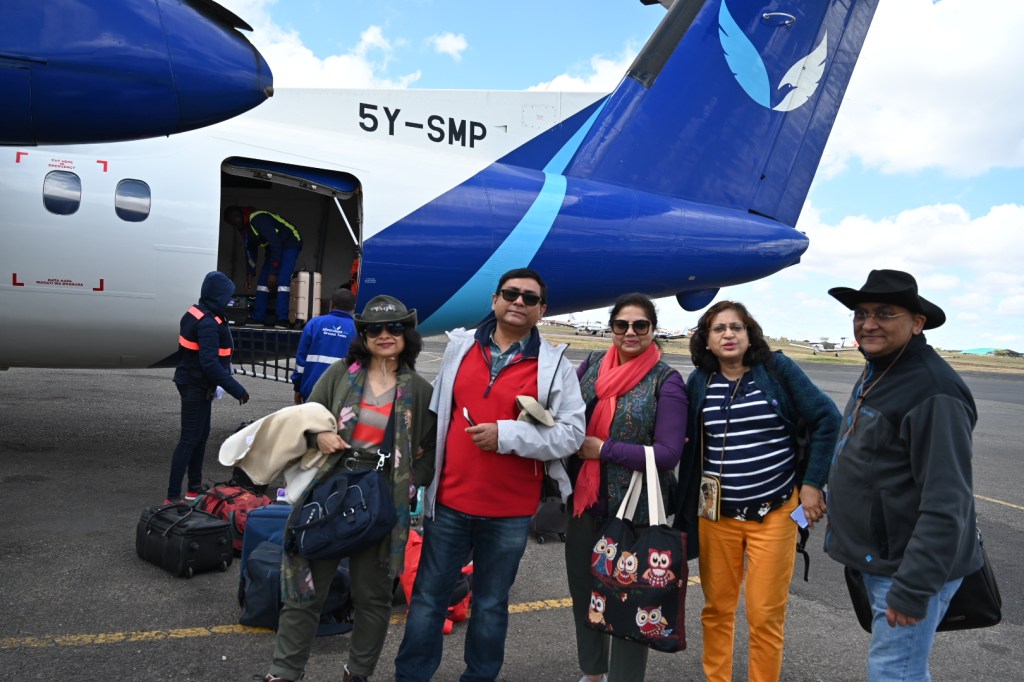
Manobina and her Husband Sudipto,who is in the hospitality industry,and their cousins from USA,Sudeshna and Sourav.
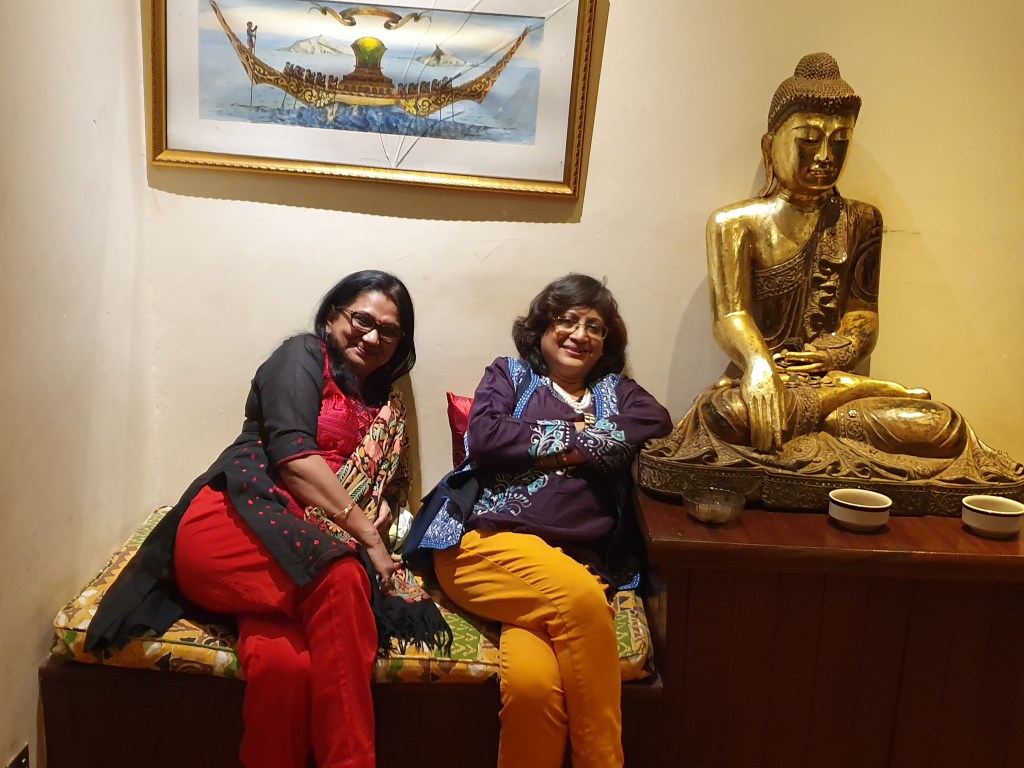
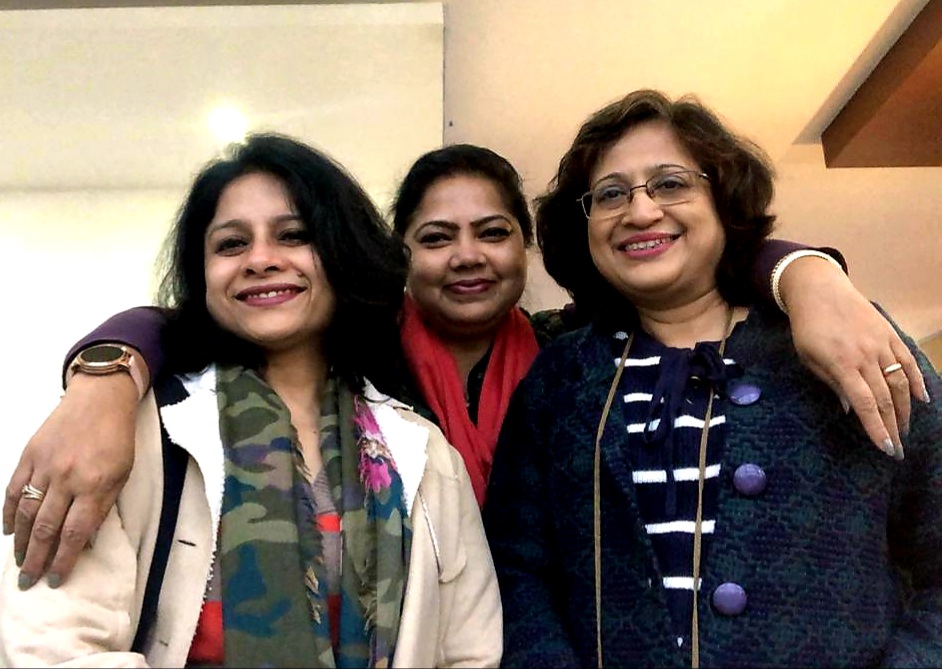
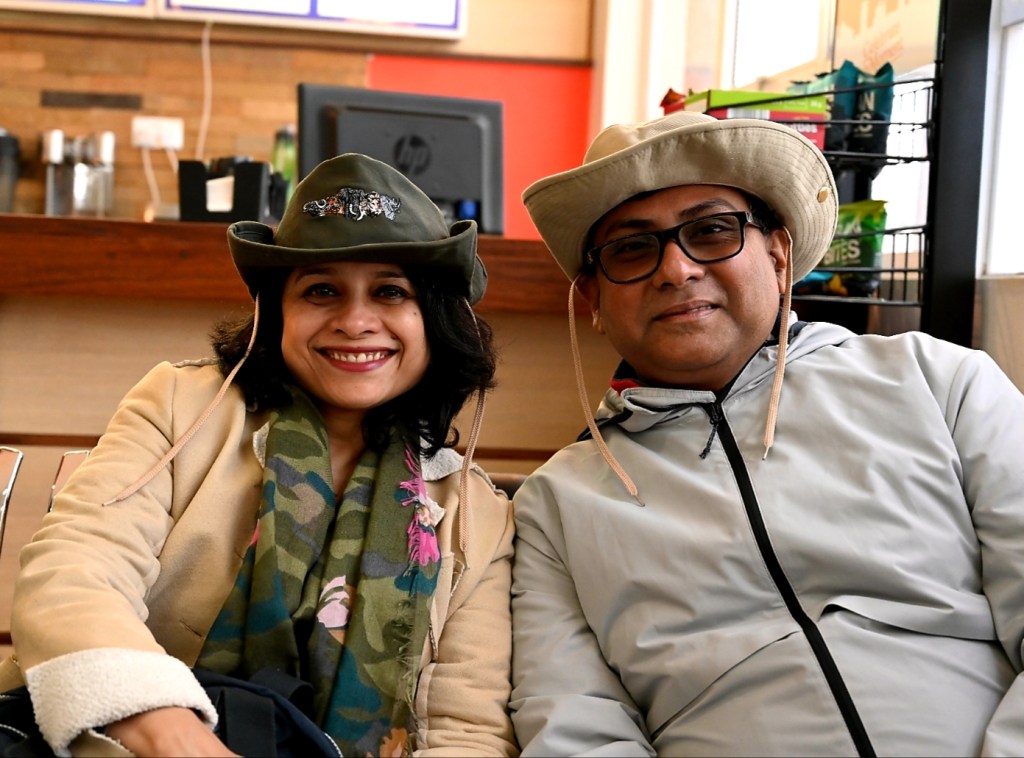
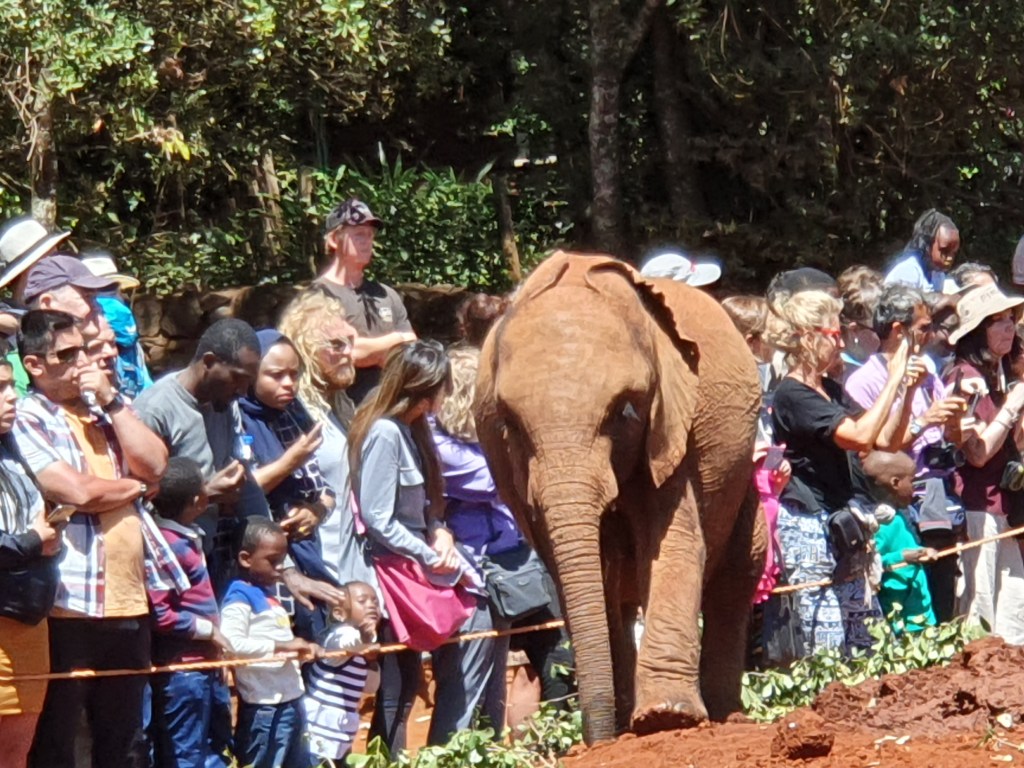
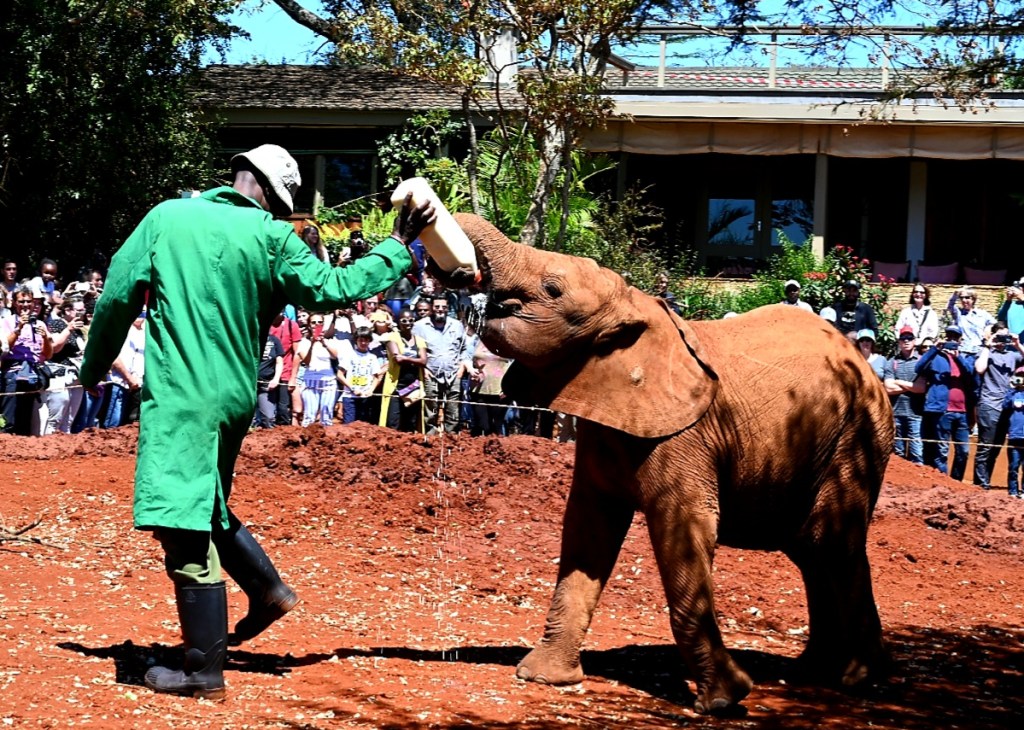
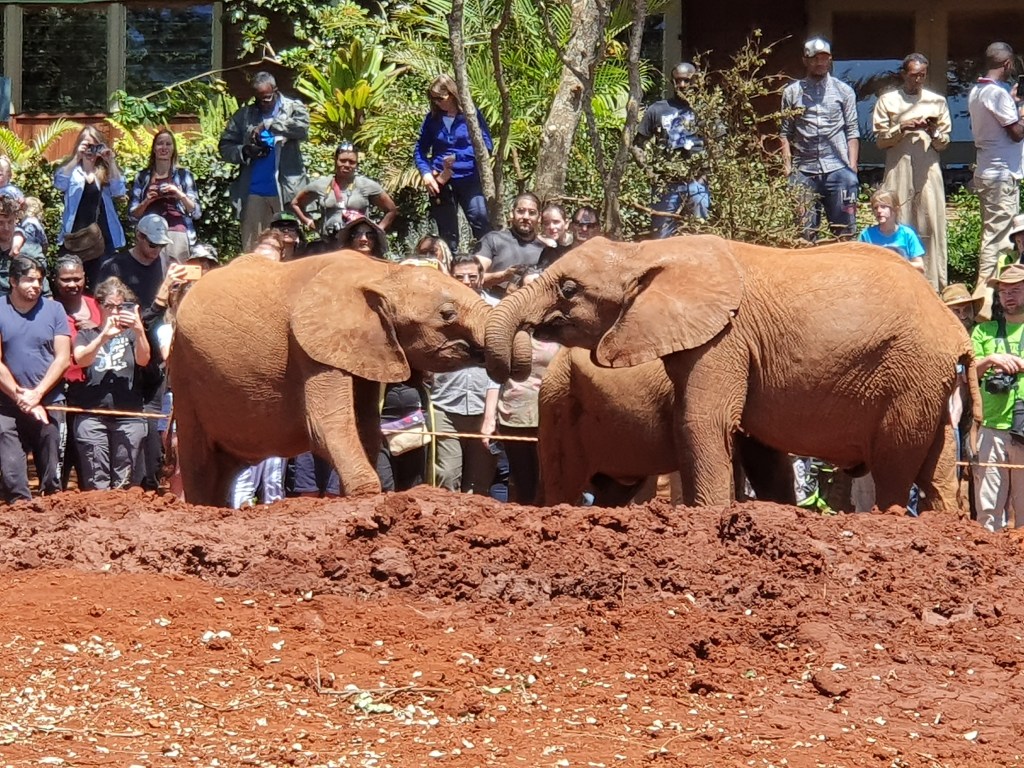
Next morning, it is time for local Nairobi sightseeing, something we missed during our last visit. After breakfast, we first visit the Elephant orphanage,where baby elephants whose mothers have died or deserted are taken care of before they grow up and are released to the wild again.
There were 9 such babies at this time ,of varying maturities,starting from 3 months. They came rushing from their holding pens, looking for giant sized milk bottles, and gulping them down in a flash. Then there was time for play and eating other treats.The project is run on donations and is highly impressive .
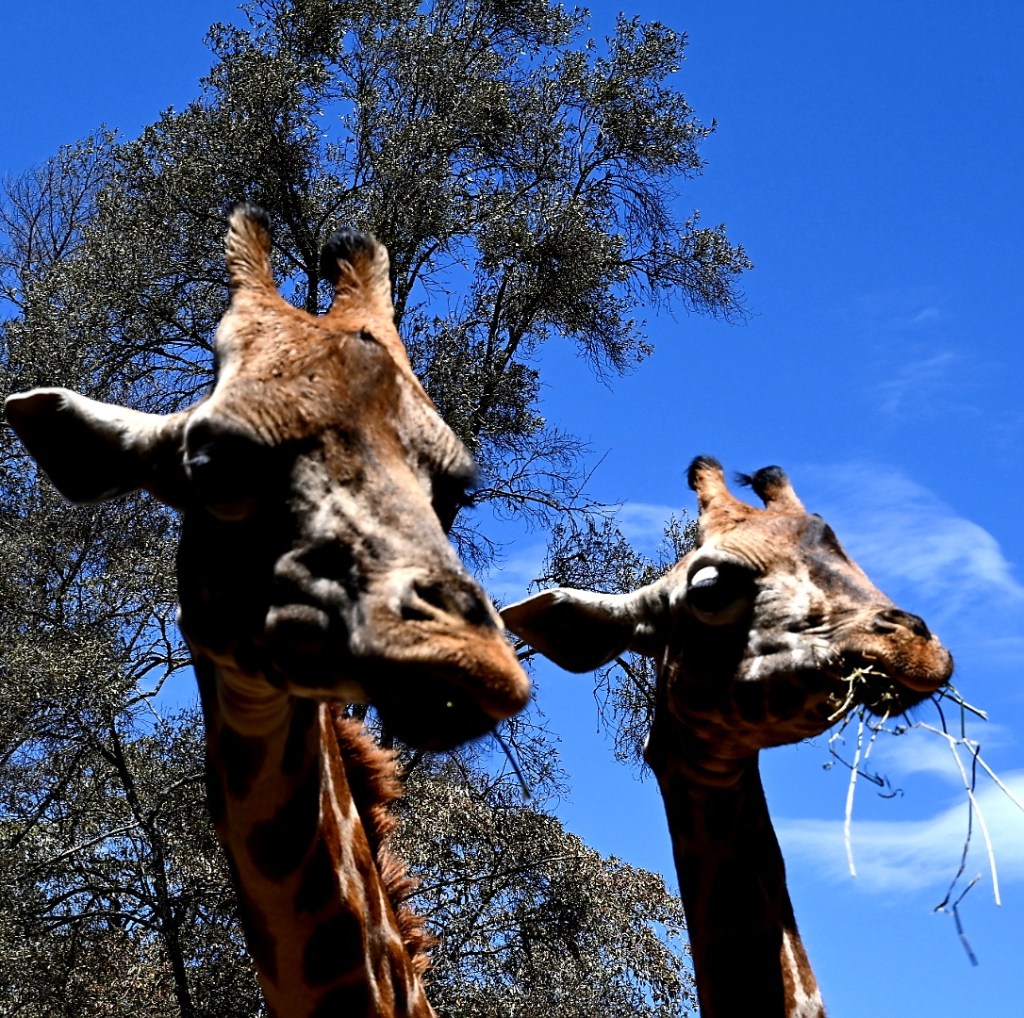
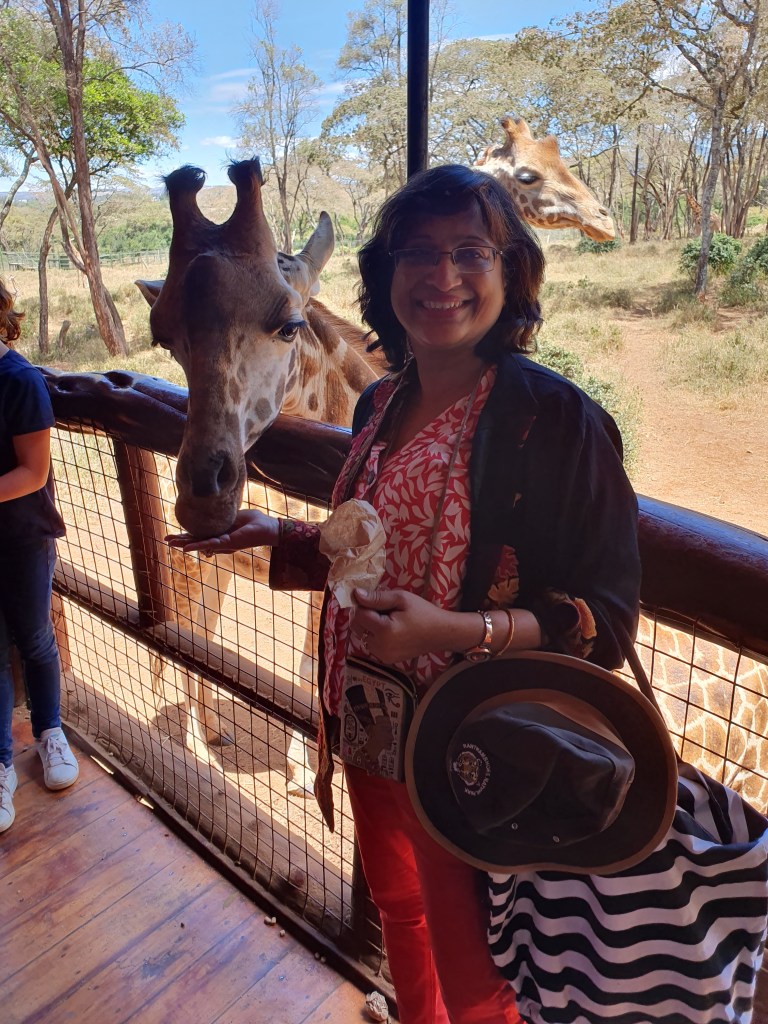
Next we go to the giraffe center,where there is a sizable collection of rescued giraffes and a chance to feed them ,with the ubiquitous Cafe and gift shop thrown in,thronging with tourists.In kenya there are three types of Giraffes,out of total nine varieties.Reticulated,Masaimara and Rothschild.
Tourism is the major source of revenue for Kenya. Floriculture,coffee ,and other agriculture based activities bring the rest.60 percent of the countries population stay in Nairobi. Because of the long history of British colonial rule,there are lot of old colonial style buildings.But there are a lot of modern budings,new roads,and education is on the upswing.
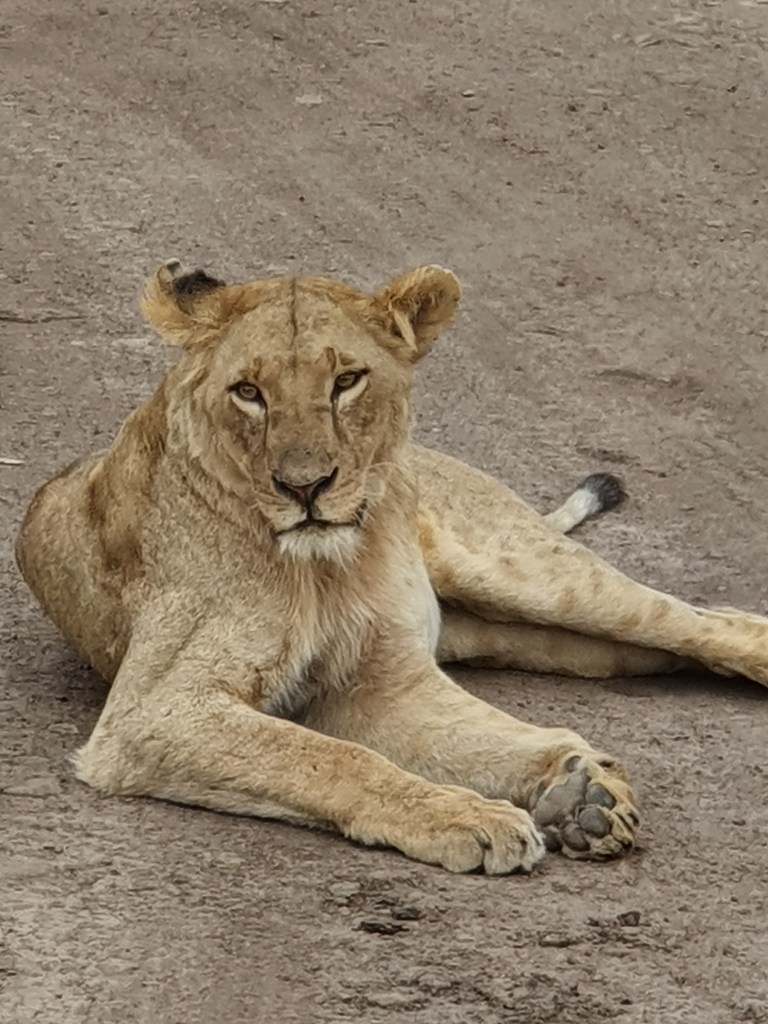
Next we visit the Nairobi national park, which is a large area on the outskirts of Nairobi. The Park has a number of lions and other fauna and birds.
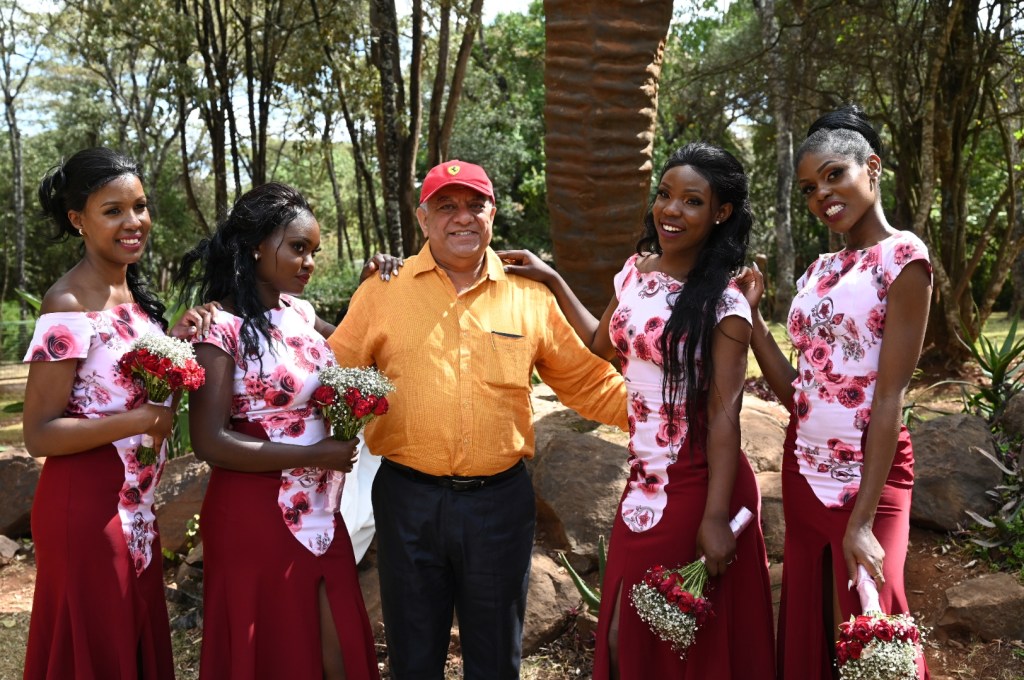
Our next stop is at Macbronze,a studio manufacturing Bronze artifacts .It us an unique place, full if exquisite pieces.I take this opportunity to take a photo with some Kenyan beauties who are there as bridesmaids at a marriage
Next day we meet at the airport to catch the flight to Masaimara. The airport is small and devoid of the security that today’s airports entail.The weather is bright, the aircraft small and the flight time us Forty-five minutes. In no time we have landed at our of the airports of Masaimara.
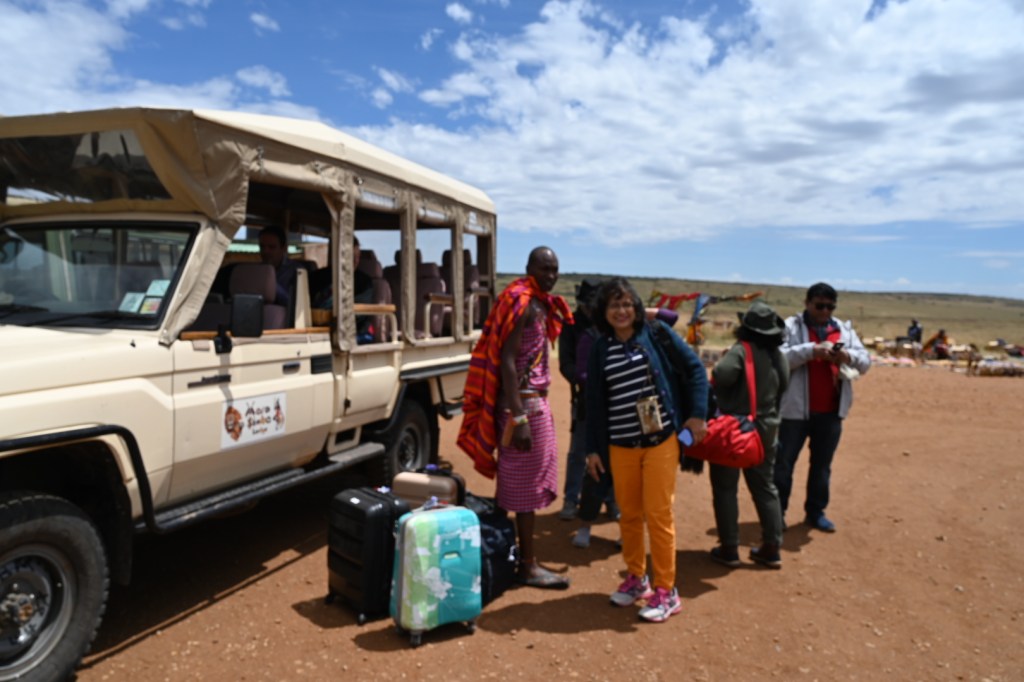
Our Masai driver and guide ,Benson,is six and a half feet tall.He welcomes us with a Toyota land cruiser,and we are off.
Most of Masaimara comprises the savanna.The African Savanna ecosystem is a tropical grassland with warm temperatures year-round and with its highest seasonal rainfall in the summer.The savanna is characterized by grasses and small or dispersed trees that do not form a closed canopy, allowing sunlight to reach the ground.Visibility is excellent.
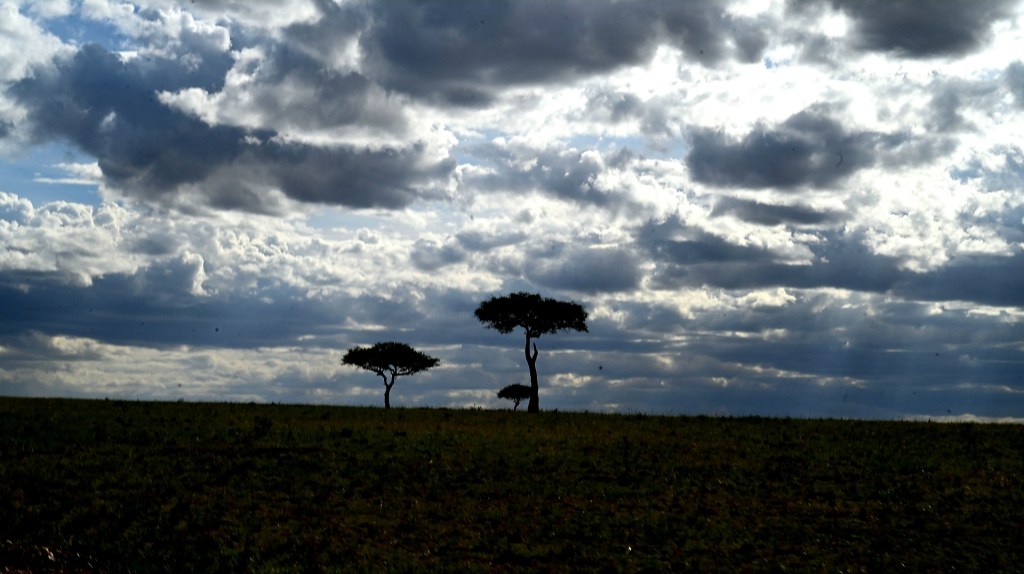
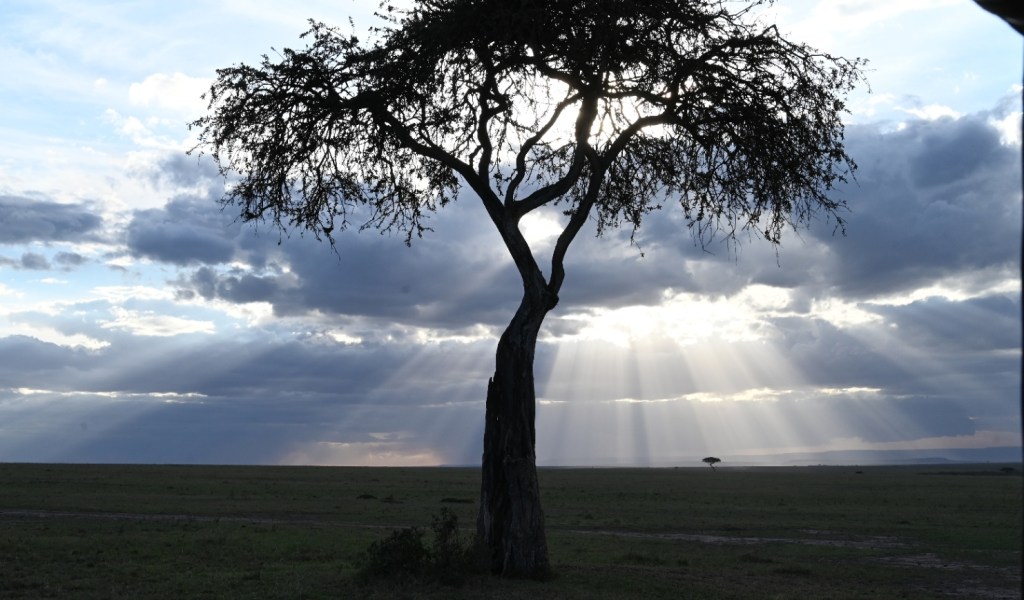
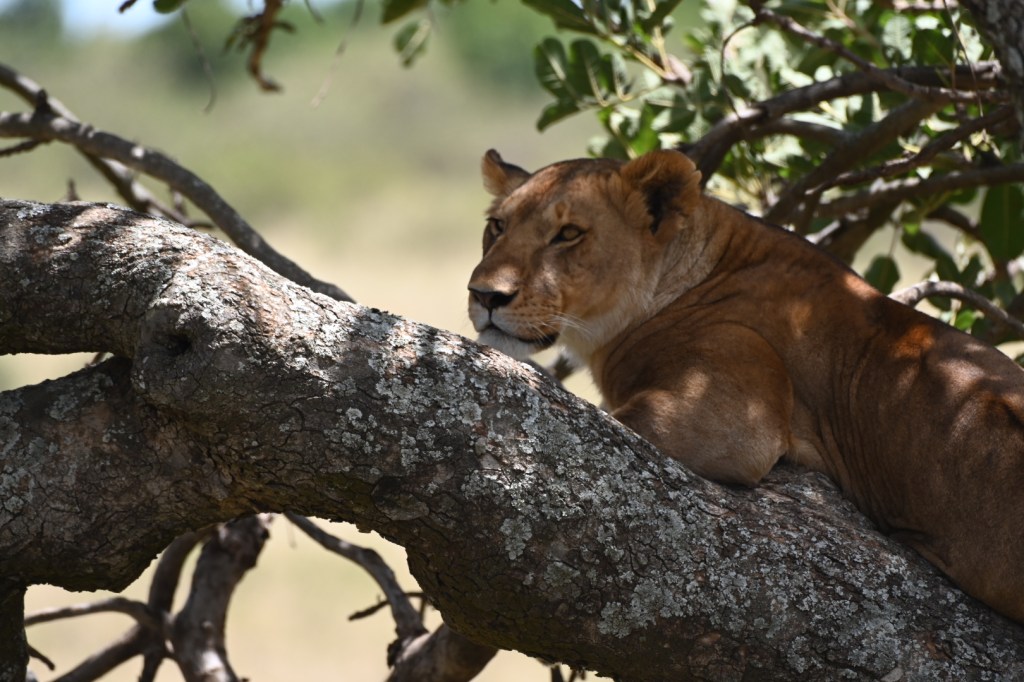
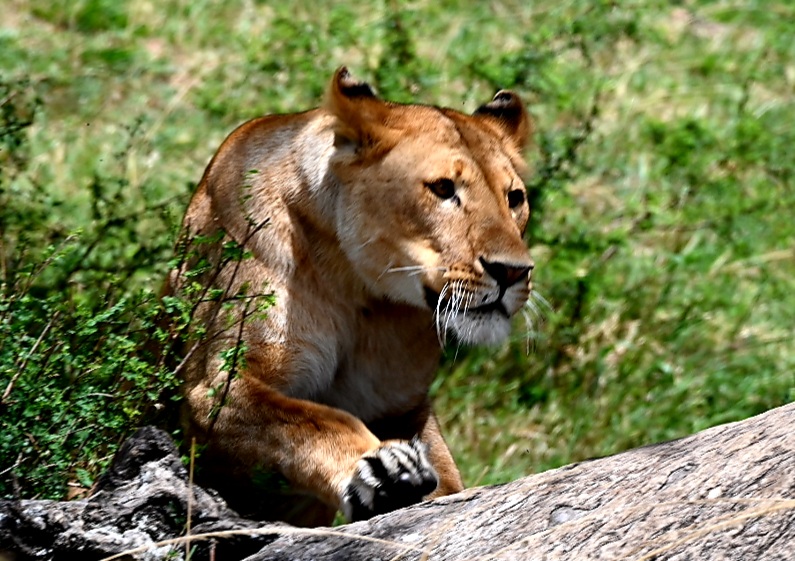
Our resort is around 40 minutes drive from the airport.On the way we come across some antelopes and a family of lions.
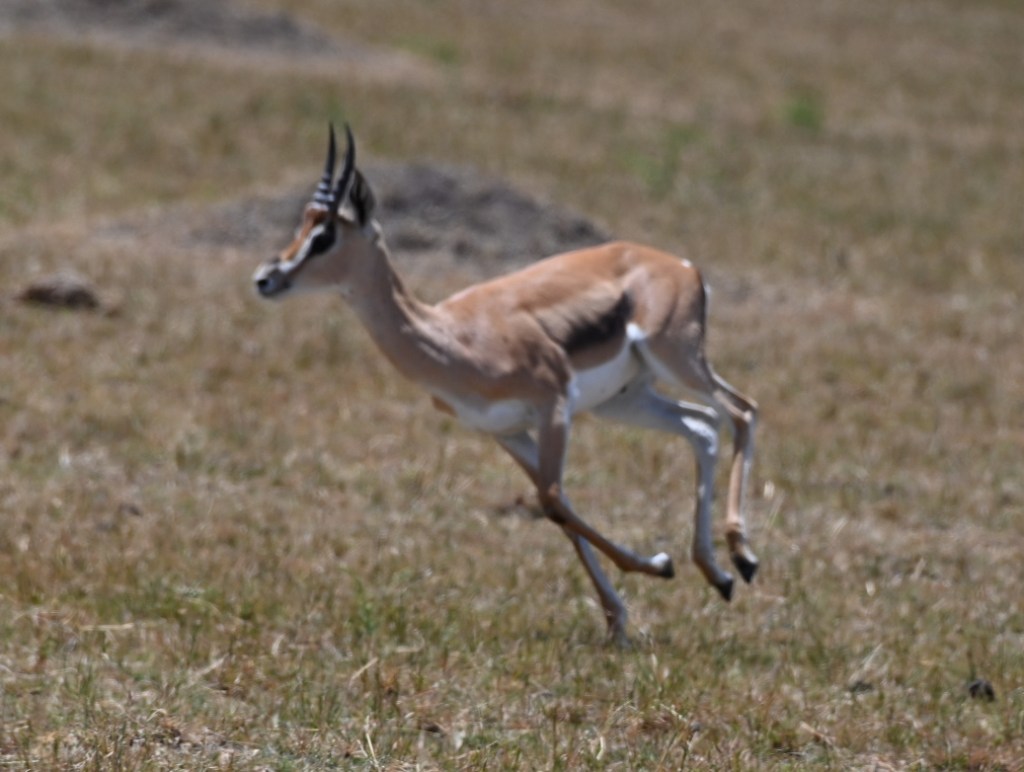
Resorts in Kenya are of a standard quality.A lot iof them are owned by people of indian origin,so there is a section devoted to Indian food.The best part of our rooms was its proximity to the dining area.There was a small stream adjacent to the resort,with a resident croc.
After Lunch it is time for our afternon game drive.The thong about wildlife in Africa is the huge numbers that they are available.Apart from the 2 million migrating animals,the grasslands of Masaimara are homr to a large numbers of carnivores,herbivores as well as birds.The great five,Lion,Buffalo,Elephant,Leopard and Rhinos are there,as well as antelopes Giraffes and other animals.
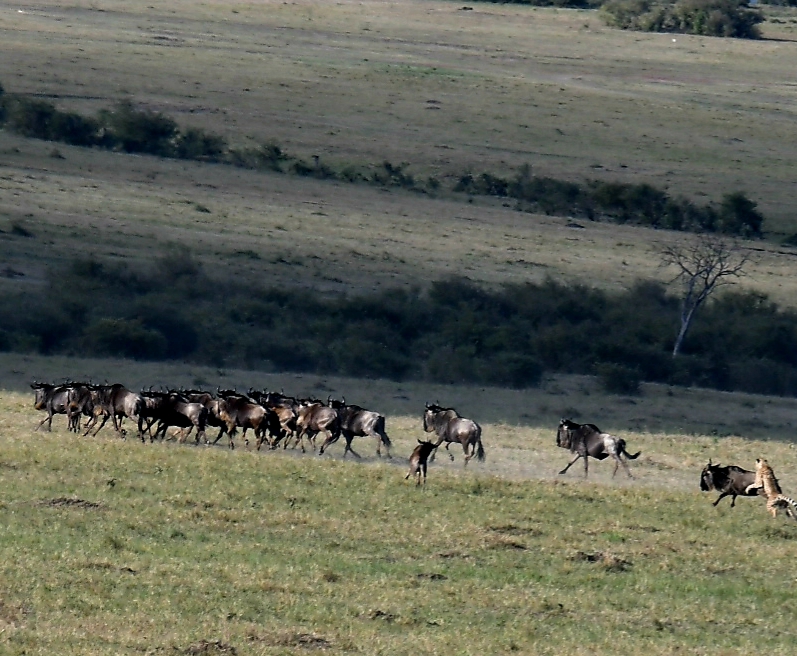
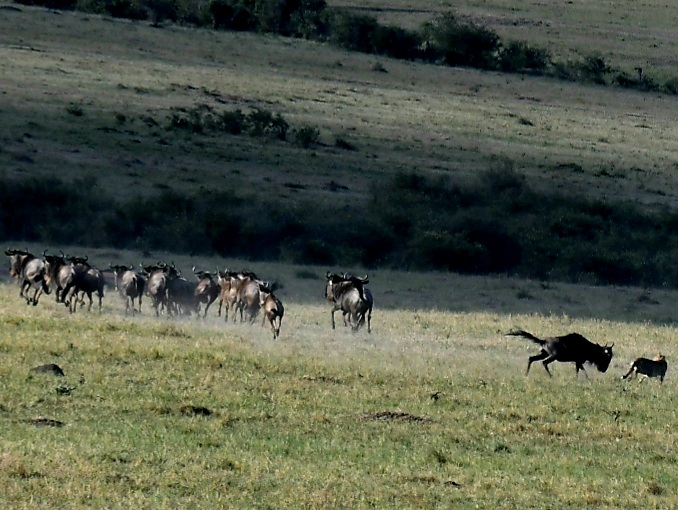
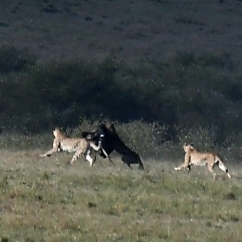
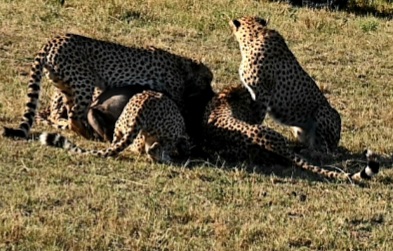
After couple of hours of game viewing,we suddenly come across a large number of safari vehicles congregating at a place.They stand two cars deep.We are told that a chase is on view.Benson takes a wide detour and moves one km away to the other side of the open grassland.Five Cheetahs are chasing a herd of Wildebeest.It is a high speed chase,and we also join them in a parralal chase,half a km away.Suddenly a male wildebeest turns around,confronting the chasing pack,allowing the rest of the herd to run to safety.The brave animal however is caught by the pack and brought down.All the vehicles run for a photoshoot of the kill,though it is not permitted to go that close to a kill.We all disperse quickly before the rangers arrive.
For the tourists,the great east afican migration has two components.
The Migration, whereby you come across the large number of animals taking part in the annual migration.
And the Crossing,where animals cross the Mara river in large numbers.
Aprat from couple of very expensive resorts situated on the serengeti side of Mara river,all other resorts are at least 2 hours of drive away.One has to start early in the morning after breakfast,carrying a packed lunch and lots of water,and lots and lots of patience.On the way apart from the usual viewing,the greatly incresaed number of wildebeests and zebras is eyecatching.In large groups they all are moving inexorably towards the Mara river.The closer you get to the river,their numbers keep on increasing.From the last vintage point,one can see the whole plains beloww covered with dark specs.Then it is time to go down to the riverside.
Watching the crossing is a trial of your patience.Animals will cross the river at ttheir own convenient time.The crossing takes place over a long length of the meandering river.They may change the site frequently.Crossings can take place simultaneously at two adjacent or distant places.Park Rangers usually are there to prevent visitors from getting too close.We waited for around two hours.The animls gradually gathered in large numbers by the riverbank.They were pering down the incline.We thought the crossing was going to start.Then suddenly the leading group turned arond and started waking back,and the others all followed suit,and the bank ws clear.We were heartbroken,but decided to stay back.Many vehicles gradually left,after sometime the Rangers left also.It was along wait but we were desperate.Suddenly from far away,a large group o,of animals started turning back to the river bank,and others followed suit.Soon a houge number of them had aggregated at the river side.Suddenly the lead animal jumped down and others followed.All hell broke loose,ther was tremendous noise,a lot of dust,ad we also lurched forward for a better view.Itvwas an experience of a lifetime.The whole process went on for about half an hour,involving at least ten thousand animals.then it was silent again.
We turned back,planning to go back.Suddenly one of the ladies pointed to a group of animals at least a mile away.They seemed to be making a crossing.So we rushed to the site and had another 15 minutes of crossing view.Then it was time to go back,stopping for lunch on the way.
 Memories and musings
Thank you for this very detailed reporting. Very informative .Lovely pictures.
LikeLike
Such a lucid tour
LikeLike
Sidharthada , really enjoyed it. The whole trip was so so exiting for all of us right from day one sighting the lions at Nairobi national park, the small plane journey , the almost cinematic scene of cheetahs attacking the wilder beast, then of course the thrilling scene of migration. Your blog and the photographs refreshed the exciting memories and made us excited again. Your and boudi s company made it all the more memorable to us. Pls come again when this harsh situation is over. Regards!
Monobina Sudipto
LikeLike