রাত দুটোর সময় জিডএ এসে বলল,একটা বাচ্চা খারাপ আছে।ওয়ারড এ গিয়ে দেখি,একটা জ্ব্ররের রুগী।ওর বাবা দাড়িয়ে আছে কথা বলার জন্য।সেই আমার প্রথম সামাদের সাথে দেখা।
সামাদ এলাকার টপ ক্রিমিনাল। পুলিশ এর কেস থাকার জন্য সে দিনের বেলা ঘোরাঘুরি করতে পারে না।তাই এত রাতে।সামাদের চোখ পাথরের মত স্থির।অত রাতে আমার বুকটা কেমন যেন করে উঠল।বাচ্চাটা ভালো হয়ে বাড়ি গেলো।সামাদের কেসগুলো মিটমাট হোল।সামাদ প্রায়ই দেখা করতে আসত।একদিন ওর হাইড্রোসিল অপারেশন করলাম।
একদিন সামাদ এসে জানালো যে সে রাইভাল গ্যং দের সাথে শালিষি মিটিং এ যাচ্ছে।আমি ওকে বারণ করেছিলাম, আমার কাছে অন্যরকম খবর ছিলো। ডিসেম্বর মাস।শান্তিনিকেতনের পোউষমেলায় গিয়েছি।ফিরে এসে শুনলাম মিটিংয়ে সামাদের গলা কেটে খুন করা হয়েছে।ওর দলের লোকেরাই করেছে।
হেলথ সেন্টার এর পোস্টিং এর দশদিনের দিন।বাইরে খুব হট্টগোল। একজন প্রসুতি চেচিয়ে বাজার মাত করে দিচ্ছে।সে যত চেচাচ্ছে,তার বাড়ির লোক ততোধিক।বাচ্চা মারা গেছে।এসে আটকে আছে।বের আর হচ্ছে না।এম্বুলেন্স টা বহরমপুর,কি করা যায়।সিস্টার বলে একটা ফরসেপ আছে,তিন বছর ব্যবহার হয় নি।দেখলাম ঠিক আছে। এপিসিওটমি দিয়ে ফরসেপস লাগালাম,চট করে কাজ হয়ে গেলো। চারিদিকে সবাই শান্ত।
কিছুক্ষণ পর কাজের ছেলে টা বলে,কেউ এক্টা দেখা করবে।দেখি পিছনের দরজায় রুগীর স্বামি।হাতে চারটে মোরগ।হাসিমুখে দিয়ে নমস্কার করে গেল।চারিদিকে প্রচার।আমার গাইনি প্র্যক্টিস শুরু।ফরসেপস এর রেট গ্রামের লোকেরা ঠিক করে দিয়েছিল।চারটে মোরগ।ভানু আমাদের কাজের ছেলে,একটা বড় বানশের ঘর বানায়,তাতে অবেক মোরগ মুরগি,প্রতি শনিবার অন্যান্য হেলথ সেন্টার থেকে ডাক্তাররা আস্তে শুরু করল,টানা রামী আর মস্তি,সোমবার সকাল অবধি।ওই দুটো দিন কলবুক ওরাই দেখে দিতো।সকাল থেকে রাত শুধু চিকেন আর চিকেন।
১৯৮৫ তে যখন চাকরি সুত্রে গ্রামএ গেলাম,তখন খুব poisoning এর রুগী আসত।একটু কিছুতেই বিষ খেয়ে নেওয়া,বিশেষ করে মেয়েরা।তখন রাস্তা ঘাট ভালো না,গরুর গাড়ি বা খাটিয়ায় মানুষের কান্ধে চেপে দূর দূরান্ত থেকে রুগী আসতো।আমার হাতে বেশিরভাগ রুগী ভালো হয়ে যেতো।মারা গেলে পোস্ট মরটেমের ভয়ে রুগীকে বাড়িতে নিয়ে যাবার একটা চল ছিলো। এর জন্য একটা কাগজে আমরা রেফার লিখে রাখতাম।রুগী খারাপ হয়ে গেলে বাড়ির লোকেরা বাড়িতে নিয়ে চলে যেত।
একদিন এমনই একটি মেয়েকে শুনলাম সিস্টারের কাছে,বাড়ির লোকেরা নিয়ে চলে গেছে।খারাপ লাগলো। কম বয়সের ঝকঝকে চেহারার মেয়ে,অবিবাহিত।
দু মাস পর। ঘরে বসে রুগী দেখছি।একটা লাল শাড়ী পরা ঘোমটাপরা মেয়ে, অনেক সময় ধরে বসে আছে,জিজ্ঞেস করলে বলছে সবার শেষে দেখাবে,ভাবলাম কিছু গোপন কথা।
ঘর যখন একদম ফাঁকা, মেয়েটিকে জিজ্ঞেস করলাম,কি হয়েছে।বলল,ডাক্তারবাবু,আমি সেই মেয়ে,আয়েষা,যাকে মরে যাবে বলে আপনি রেফার করে দিয়েছিলেন। আমি মরি নি।
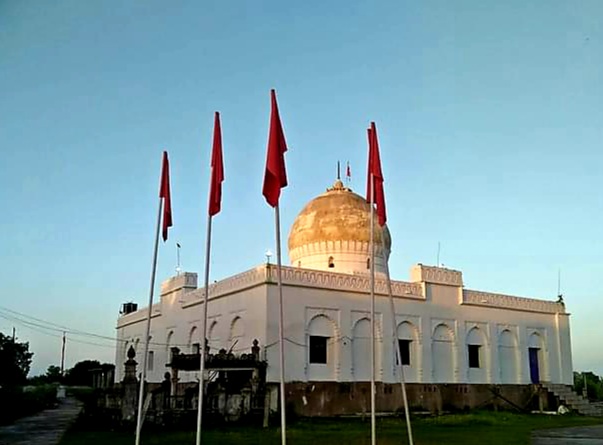
Imambara is a place,or a building,where people congregate for “Majlis”(Mourning Congregation) of Imam Hussain and martyrs of Karbala.An Inambara is different from a mosque as it is meant for Majlis.
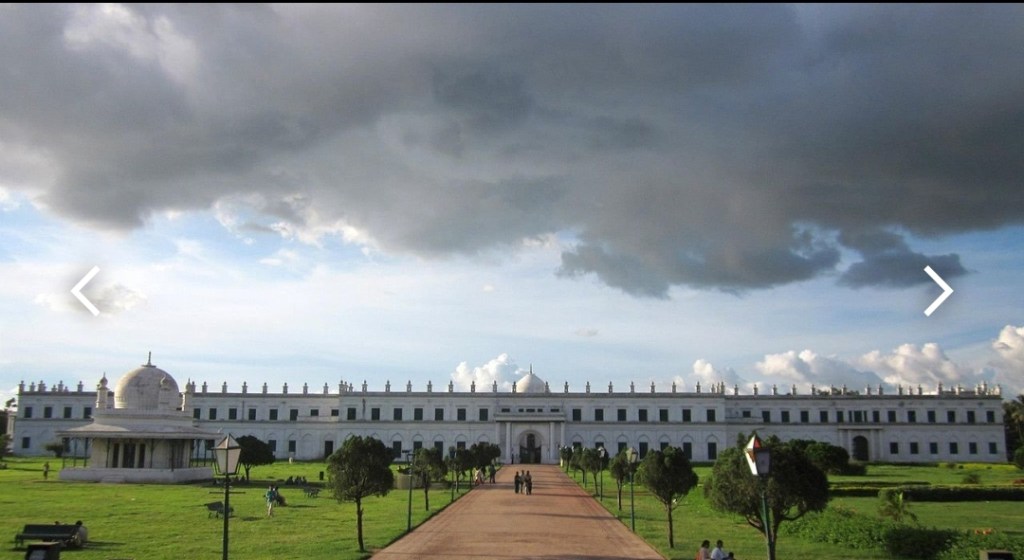
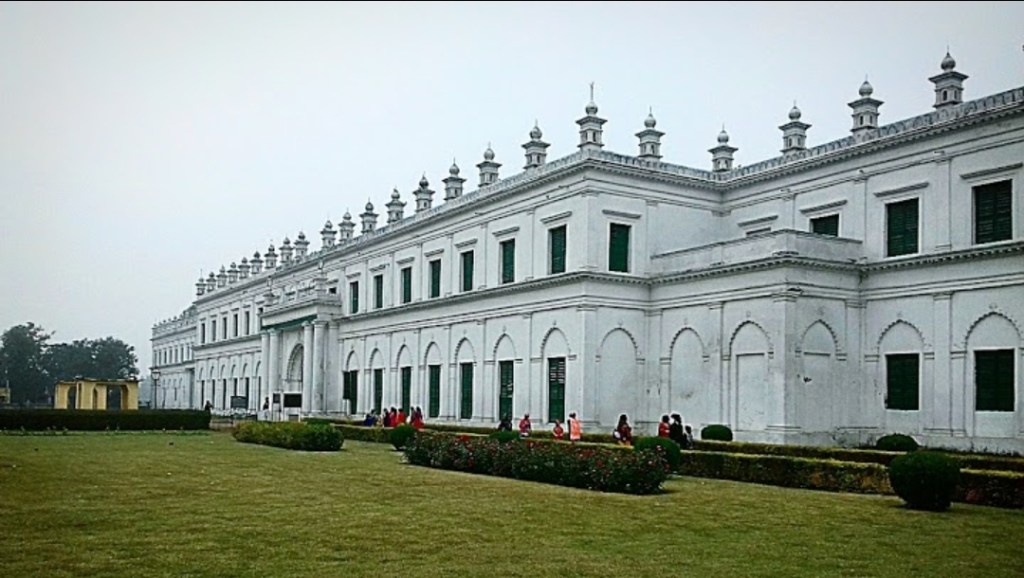
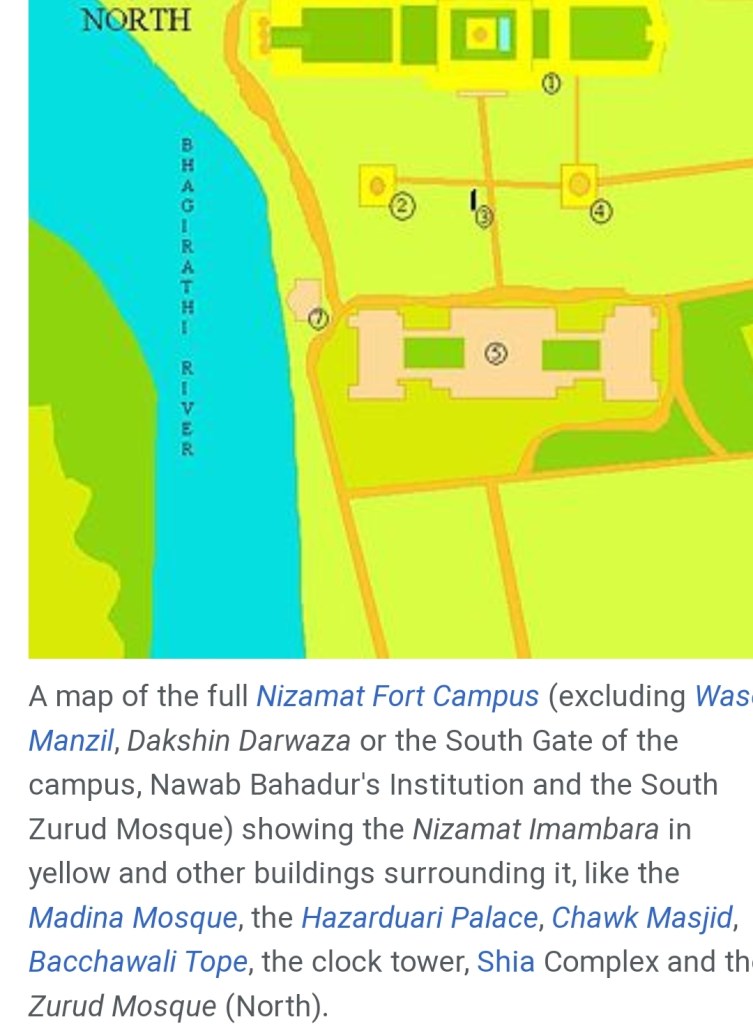
Nizamat Imambara at Murshidabad is the largest Imambara in India. Situated within Killa Nizamat,it is 70 mts north of the grand Hazarduari palace,on the banks of the Bhagirathi .
The Old Imambara
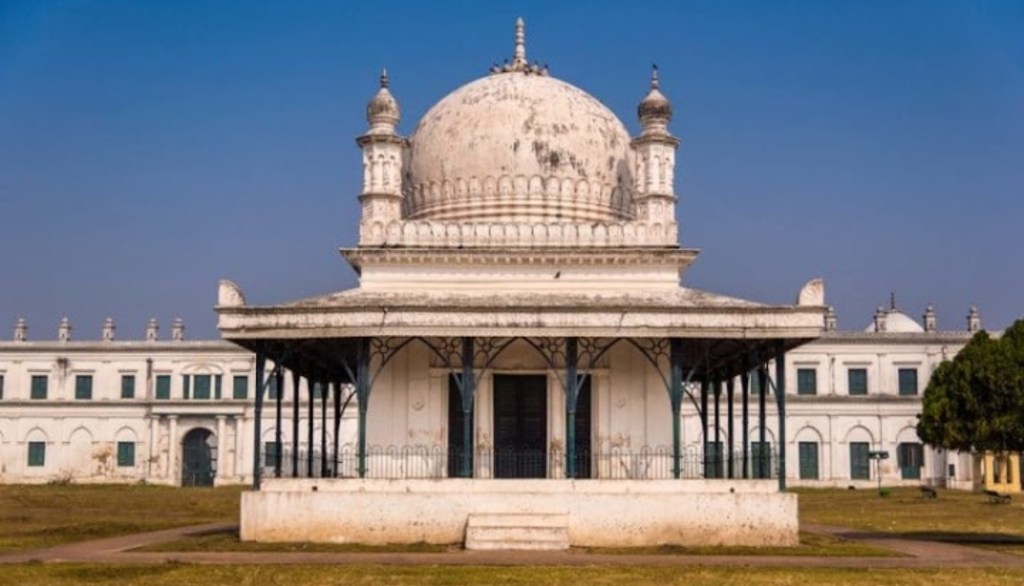
The old Imambara was built by Nawab Siraj-ud-Daula.It was principally made of wood.For building the foundation of the building, the Nawab himself carried the brick and mortar. The ground was dug up to a depth of six feet and filled with soil from from Mecca so that the people could have an experience of Haj.The building was destroyed once in 1842 and the second time very badly in 1846 due to fireworks during the weaning ceremony of five year old Hasan Ali Mirza.The fire started at midnight,and nothing survived apart from the old Madina Mosque.
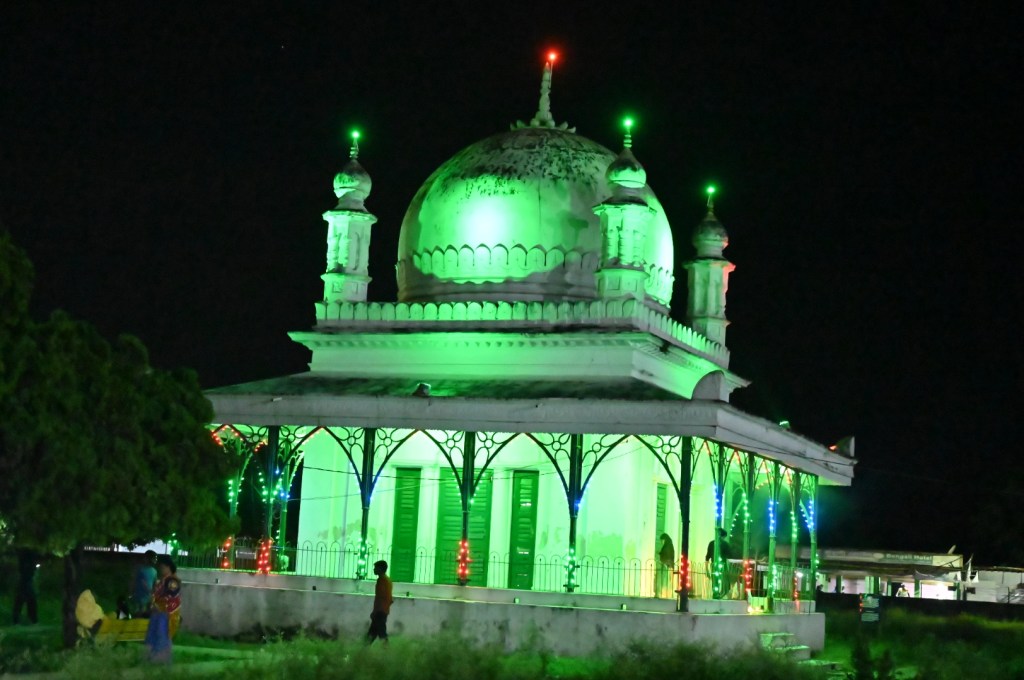
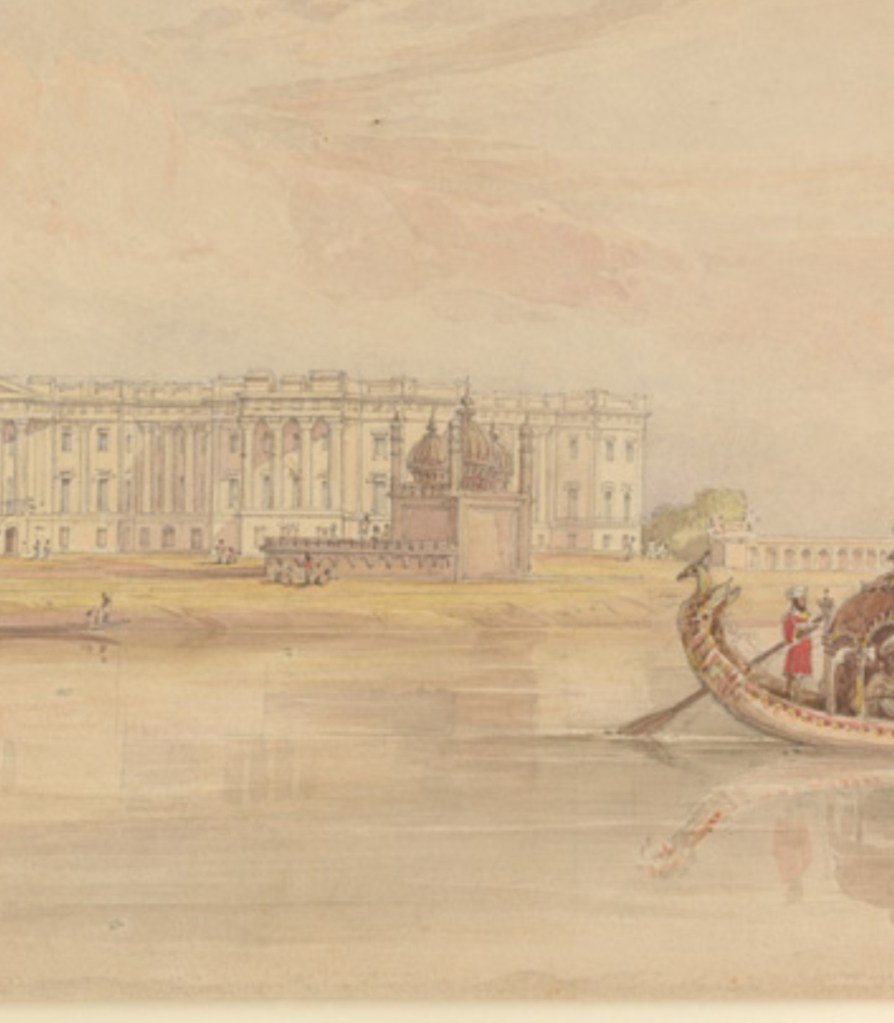
The olb MadinaThe old Madina at night during MuharramThe original Madina ,as seen in a painting from the 19th century
The New Imambara
The current building was constructed by Nawab Mansur Ali Khan in 1847 ,under the supervision of architect Sadiq Ali Khan.It was finished in a record time of eleven months.The workers were given free rations apart from their wages so they could work round the clock.
The Building
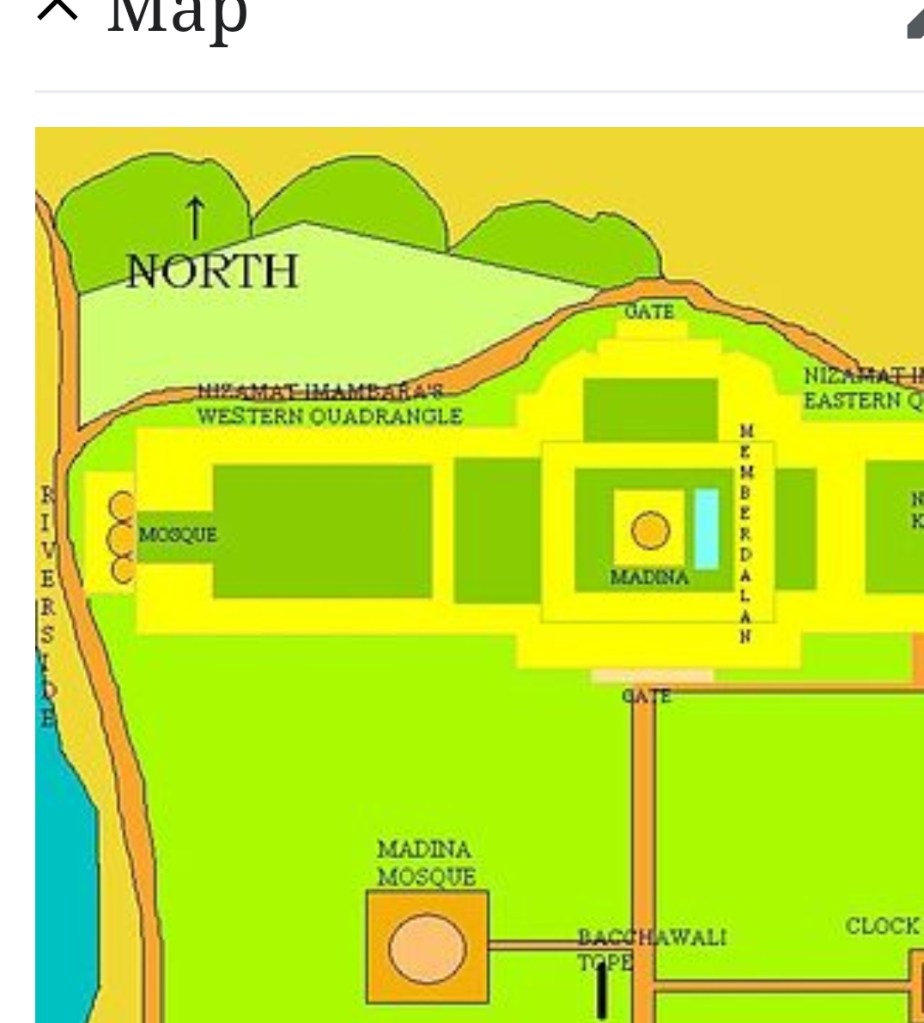
The new building is 680 ft long with varying widths.It is situated at a little distance north of the Hazarduary palace with the old Madina in between and to the west by the side of the river.It is made of three quadrangles.
The central quadrangle has the Madina and the Memberdalan.
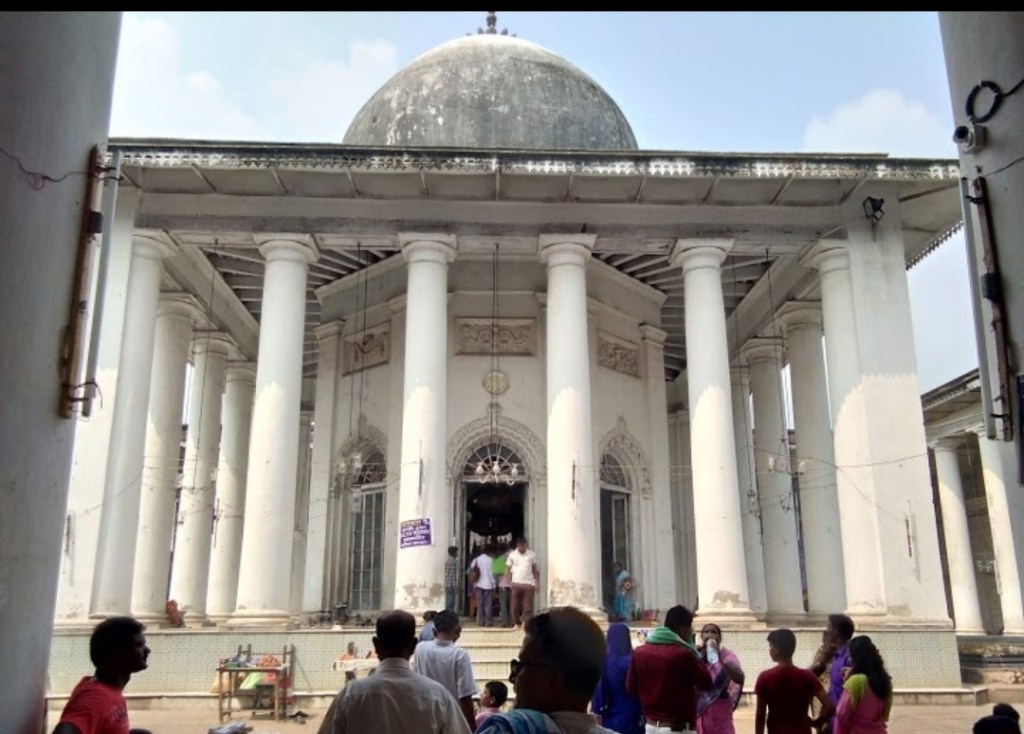
The Madina
The Eastern quadrangle has the Naubatkhana.
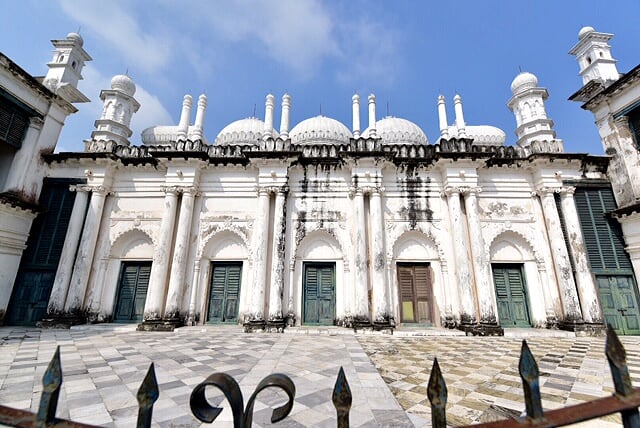
The western quadrangle has a double storied Mosque, standing on the mint ghat right on the riverbank.
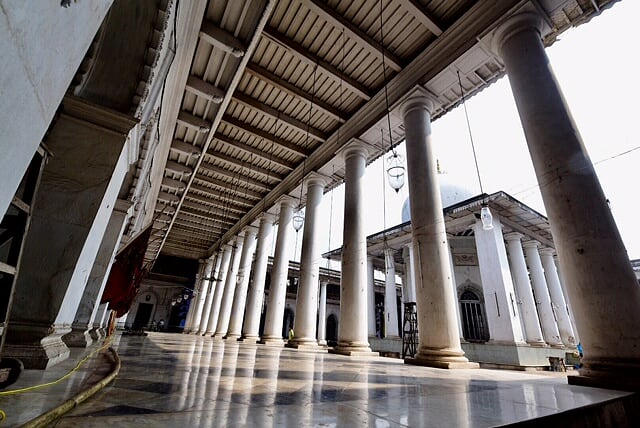
The memberdalan,which literally means a hall for members,is a hall for waiting.It has a large room for ladies and is separated from the Madina by a vat which used to have faucets with silver fittings.It also has a large verandah.
The entrance of the Naubatkhana is a large gate which is surrounded by the naubatkhana.
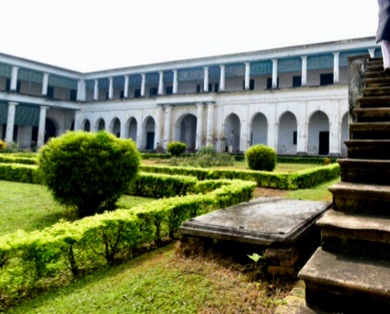
The western quadrangle has a large two storied mosque containing several chandeliers gifted by the East Indian Company. There are also rooms in a two storied building surrounding a central garden.
Madina,from the western dalan,known as siddhaMadina,from the western verandah. Mosque in the western quadrangle,also known locally as the Sada(White) MosjidSteps leading to the mosque.The black stone bed is where bodies of departed royalty were cleaned and anointed before burial.
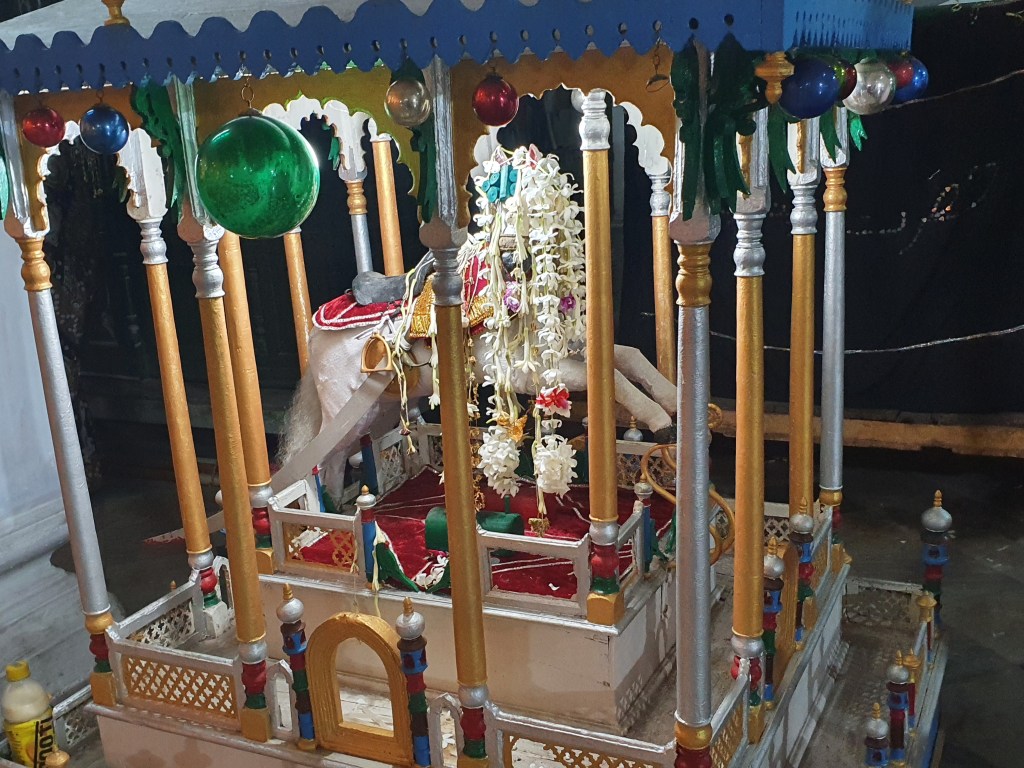
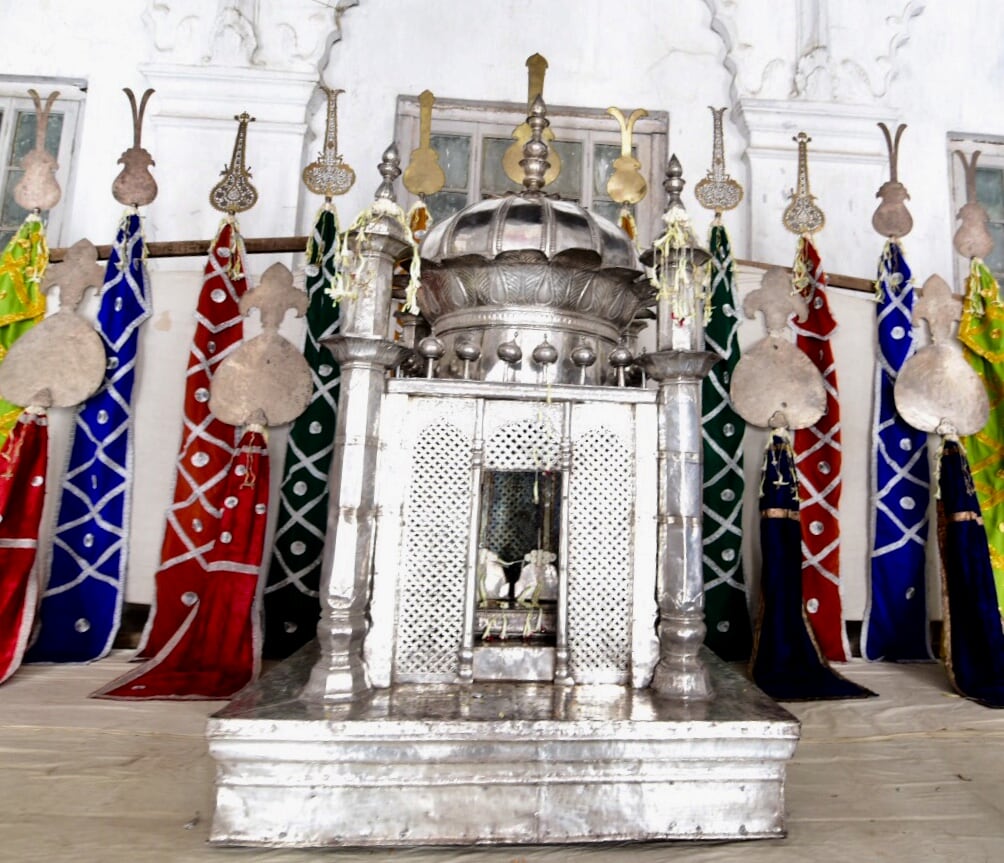
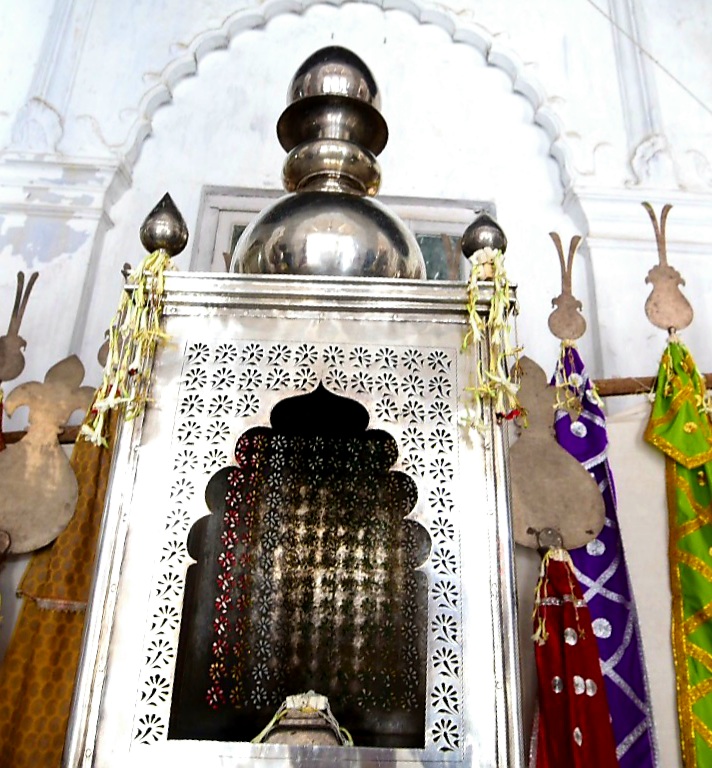
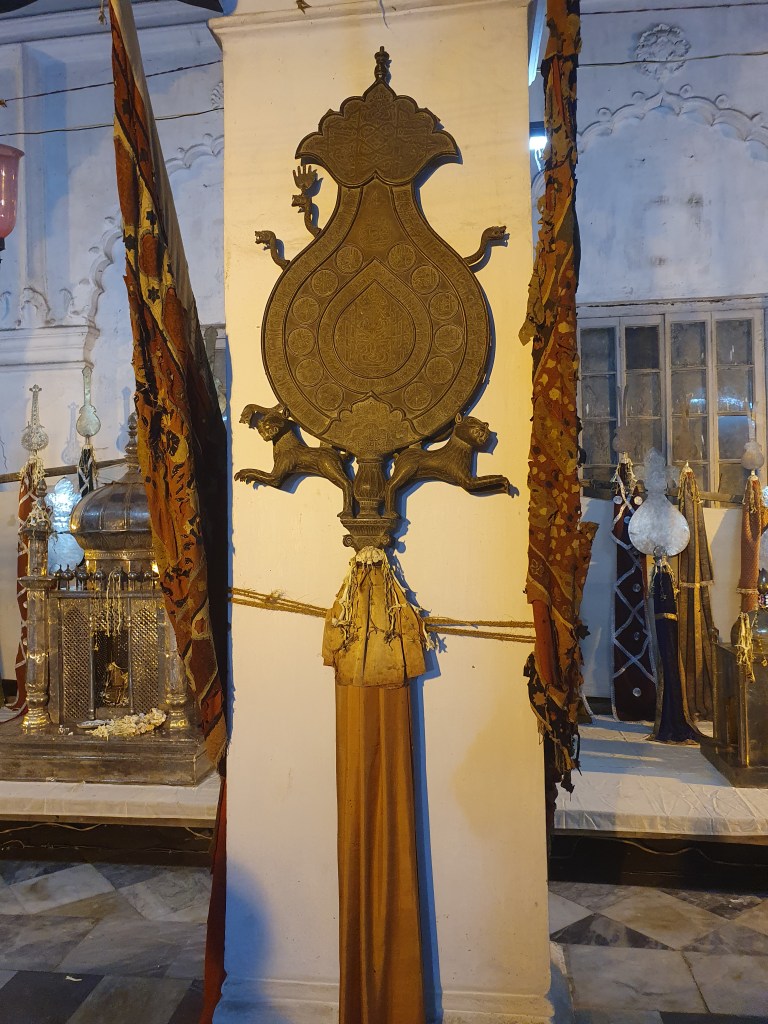
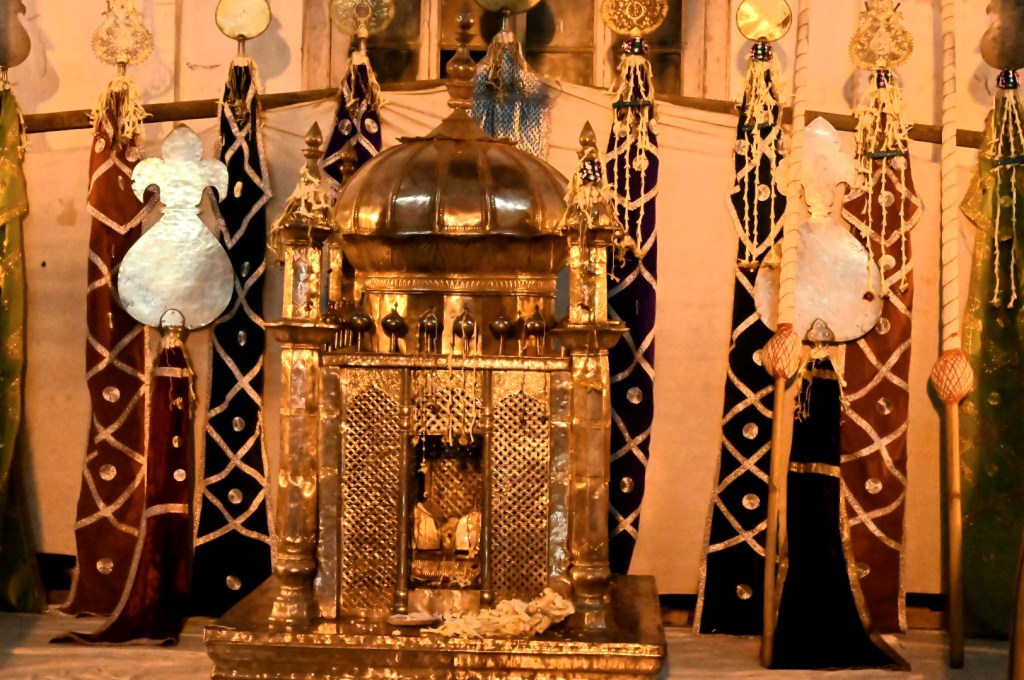
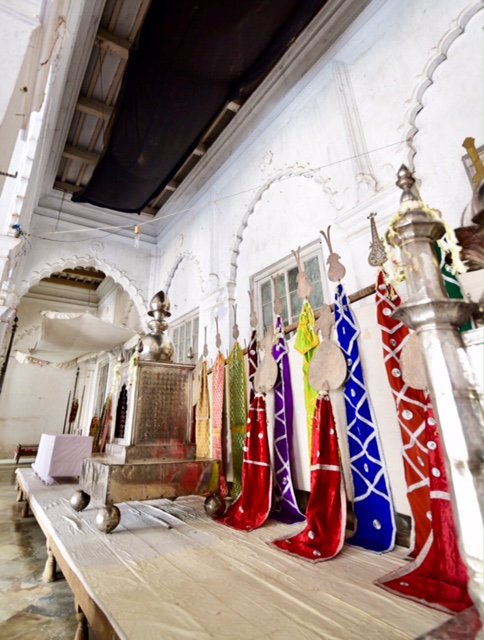
The Imambara contains lots of valuables and artefacts ,which are the property of the Murshidabad Estate,which is managed by the Judicial Department of the Government of West Bengal. They are kept in safe custody, and Displayed only during the period of Muharram.
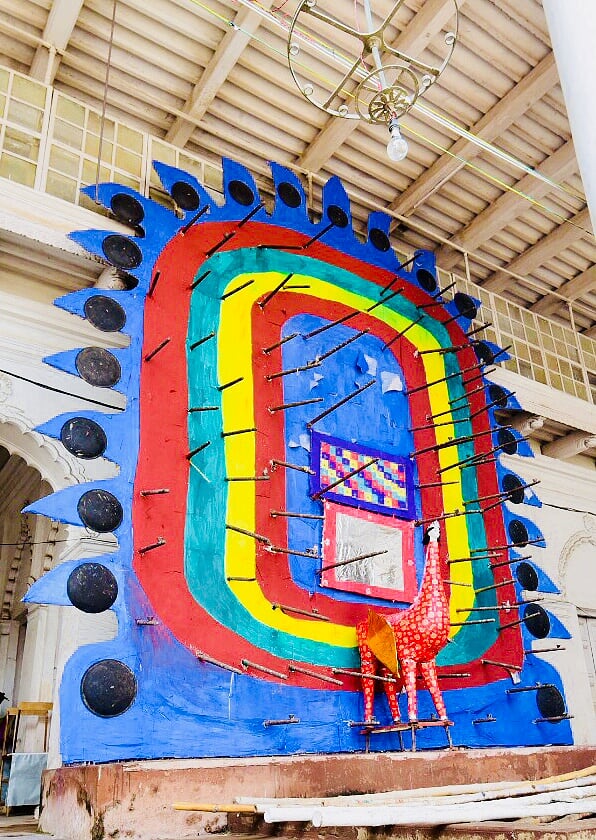
Husain’s white horseSilver articleDisplays at night
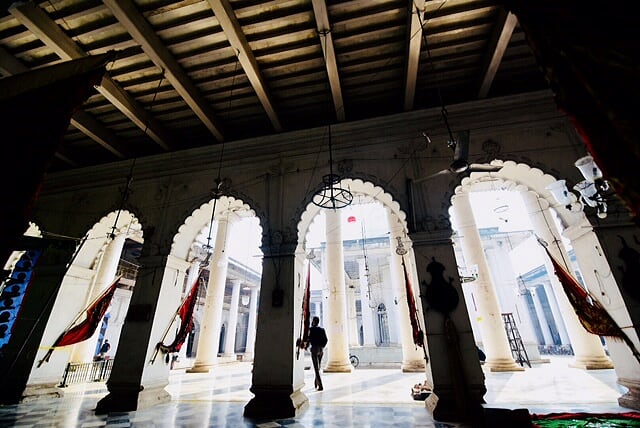
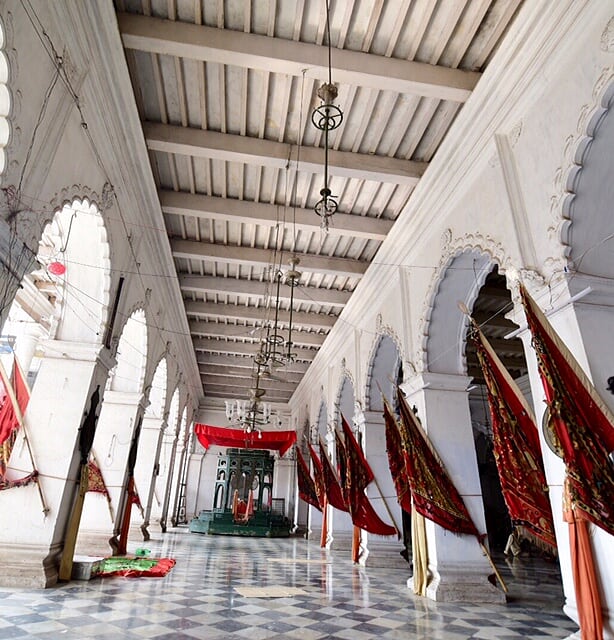
The verandahs in the western quadrangle are decorated during this period with flags and artifacts adorned with flowers and incense as devotees pay their respects.
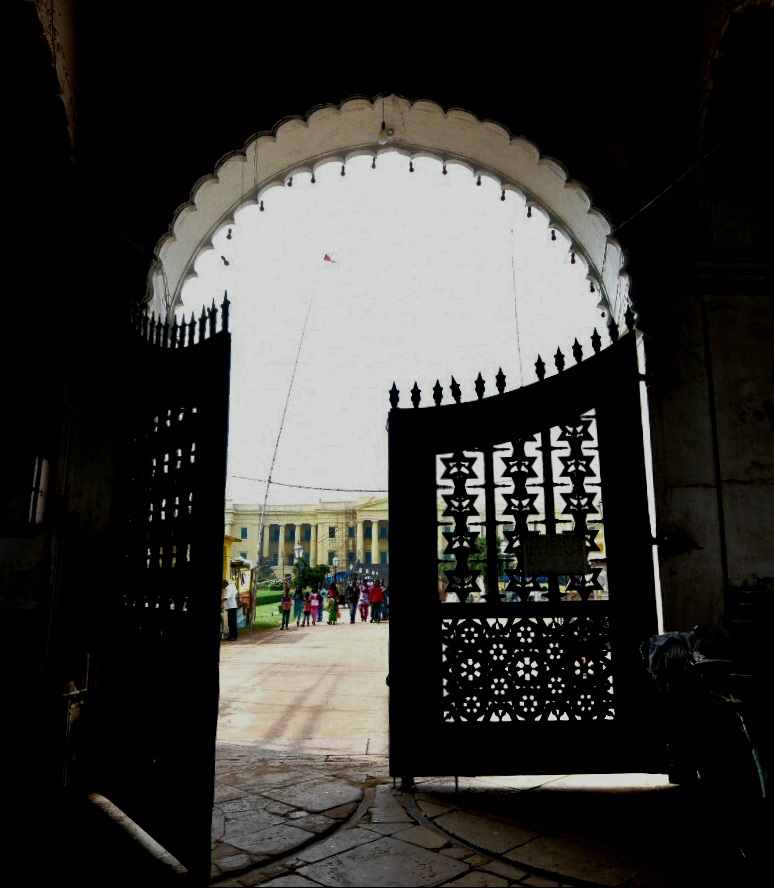
Vurraque, vehicle for transporting PaigambarsDisplaysThe verandah dressed upA view of the Hazarduary palace from the gate of Imambara Karbala at Murshidabad, where the procession of Muharram ends.
Visitors to the Killa Nizamat complex are often not aware of the history of the Imambara. I hope this writeup will be helpful .
The Great East African Migration is the largest terrestrial mammalian migration in the earth.More than 2 million Wilderbeest ,Zebras and some antelopes take part in this annual event,through some of the most breathtaking ecosystem in the world.
The route of migration is like the hands of a clock, taking them across the African landscape,in search of food and water.Animals also have to give birth to the future generations, that will keep alive the cycle of annual migration. It is a classical game of survival of the fittest.
Rain is the one ingredient that dictates the nature of migration. Starting from Ngorongoro in Tanzania, where they give birth,the herd moves to Serengeti,where they have to cross the Grumeti River.Once this is accomplished, they then move to the turbulent Mara River,where crocodiles wait for them.This is a daunting task.Once achieved,they reach the fertile grasslands of Masaimara,where a large number of lions await their arrival.In a couple of months the young ones are grown up and they again make their way back in the process of reverse migration.The whole process starts in February March and ends in September October.
Watching the migration and the crossing is in the bucket list of all avid teavellers. A huge amount of tourists descend on Kenya mostly during July August to witness this spectacle. Rates rise by 50 % or more from July and premium resorts are booked year in advance.In 2014 during my first visit,we could not see much of the migration as we were there in late June.
So in Early August 2019 when Mithu,whom I knew from my college days,and who stays in Nairobi,phoned me to say that there were two vacant slots in a migration safari due to the incumbents falling sick,we jumped at the opportunity.
Going to Kenya is hassle-free.Visa is on arrival and you need a certificate of vaccination for polio and yellow fever. Immigration and customs are dealt with swiftly. Roads were devoid of jams at 7PM and we arrive at our hosts place in an hour.
We are staying with Mithu.Her husband is a Chartered Accountant and they have been staying in Kenya for the last 12 years.Sudip,Mithu’s husband could have made a career in music.He is trained in classical music and is a very sought after figure in the bengali as well as indian community in Nairobi because of his music prowess. They have a lovely 3 bedroom flat.Mithu is an excellent cook and her fridge was full of food she had prepared for us.Unfortunately due to a severe dental pain, I was not able to do justice to her cooking.
At her place we meet our co passengers for the trip.
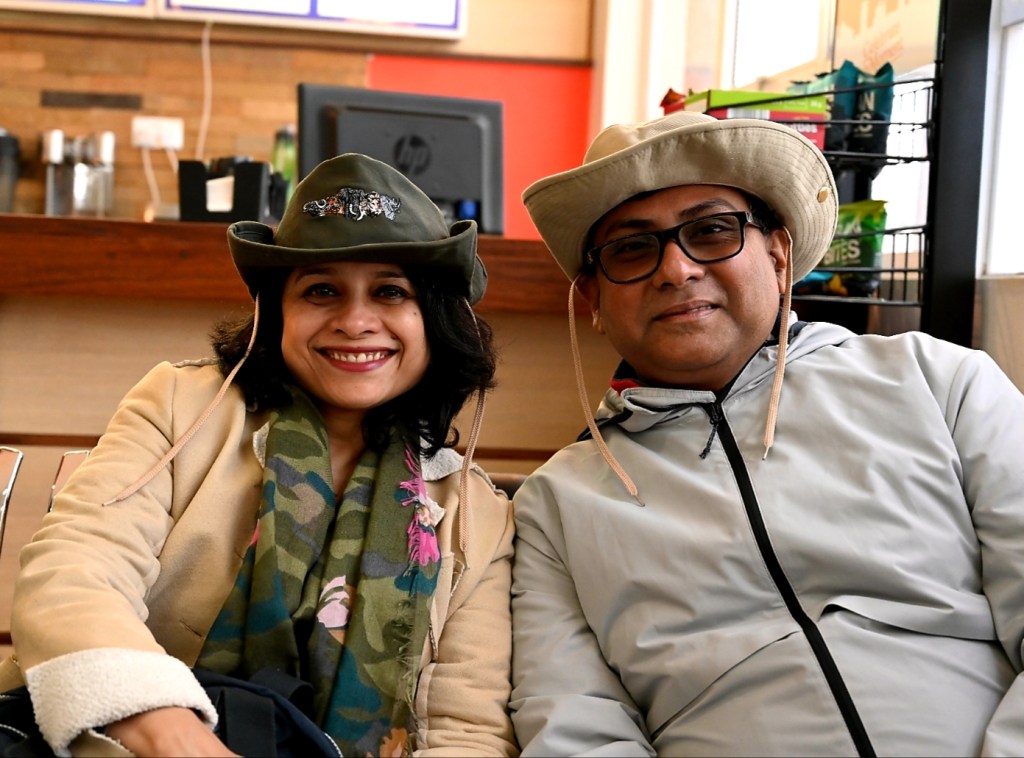
Manobina and her Husband Sudipto,who is in the hospitality industry,and their cousins from USA,Sudeshna and Sourav.
Mithu with AnitaThe ladies gang,Sudeshna,Manobina and AnitaSudeshna with SouravThe group.Sudeshna,Sourav,Manobina,Anita,Sudipto
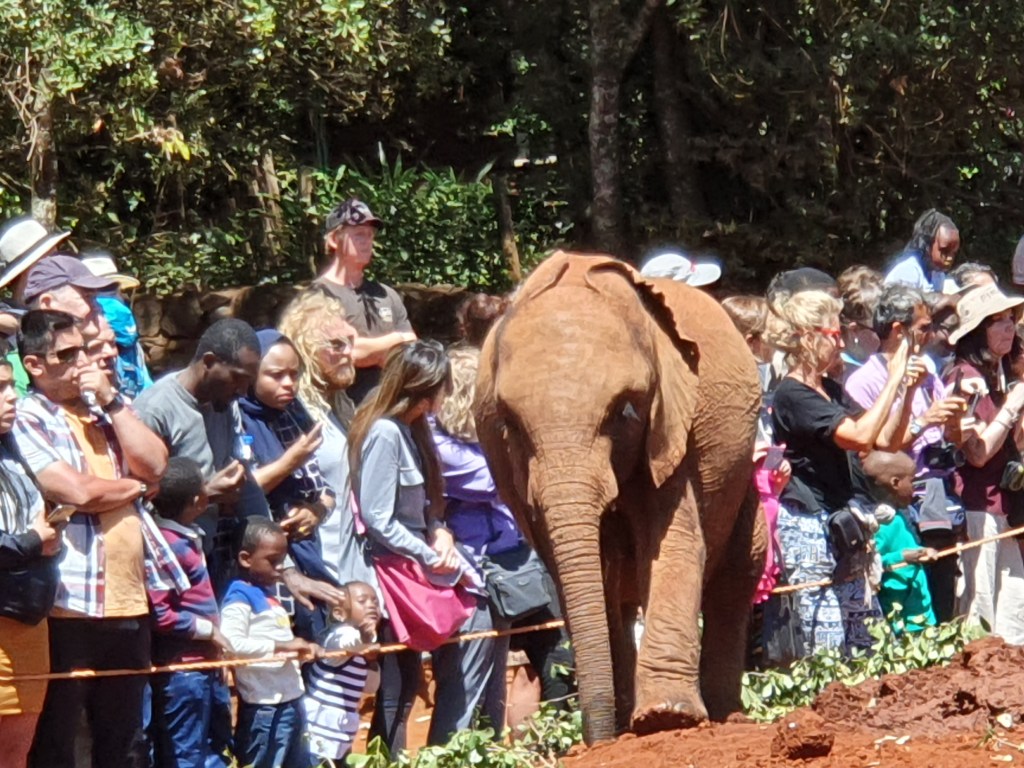
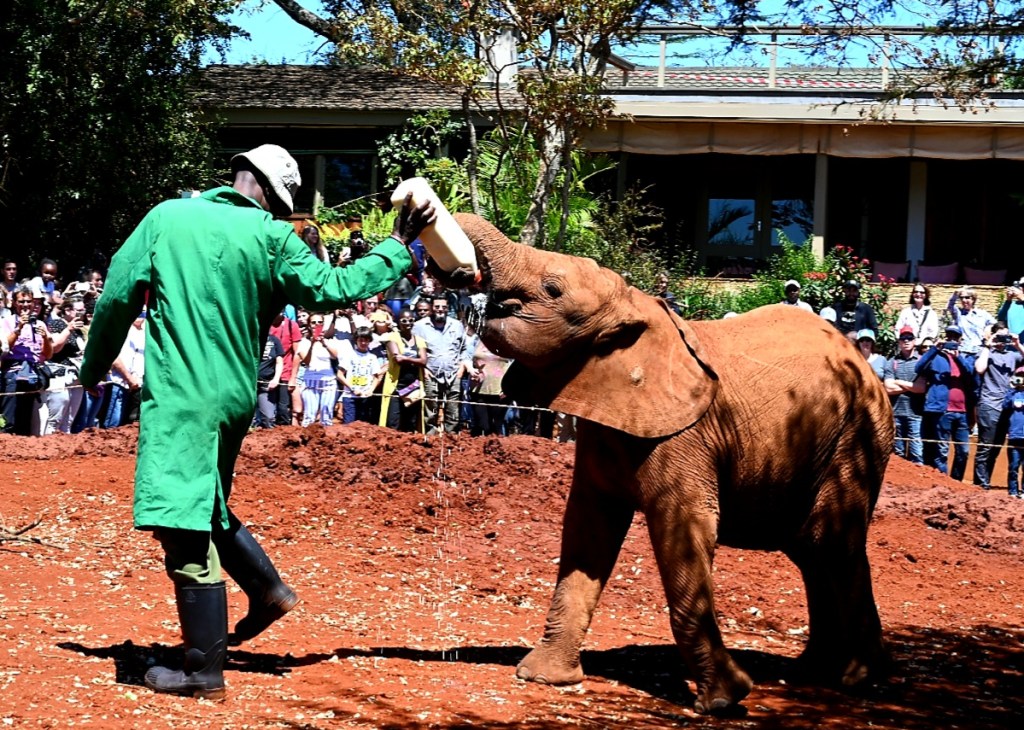
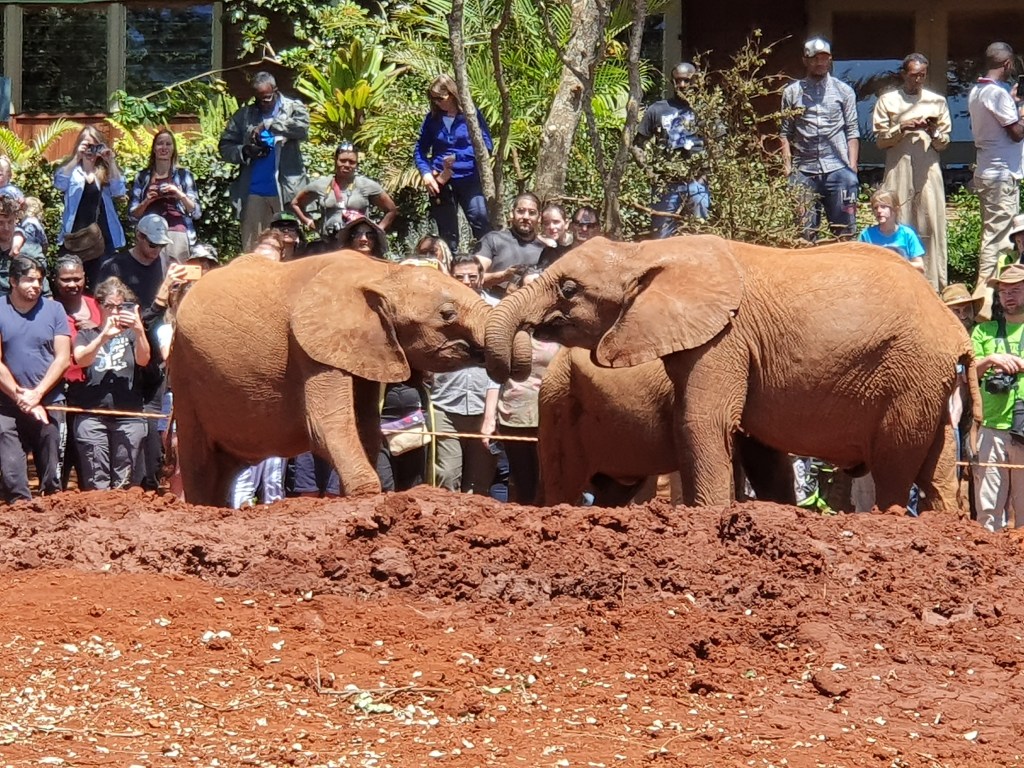
Next morning, it is time for local Nairobi sightseeing, something we missed during our last visit. After breakfast, we first visit the Elephant orphanage,where baby elephants whose mothers have died or deserted are taken care of before they grow up and are released to the wild again.
There were 9 such babies at this time ,of varying maturities,starting from 3 months. They came rushing from their holding pens, looking for giant sized milk bottles, and gulping them down in a flash. Then there was time for play and eating other treats.The project is run on donations and is highly impressive .
Baby elephants with visitorsI love milk Playtime
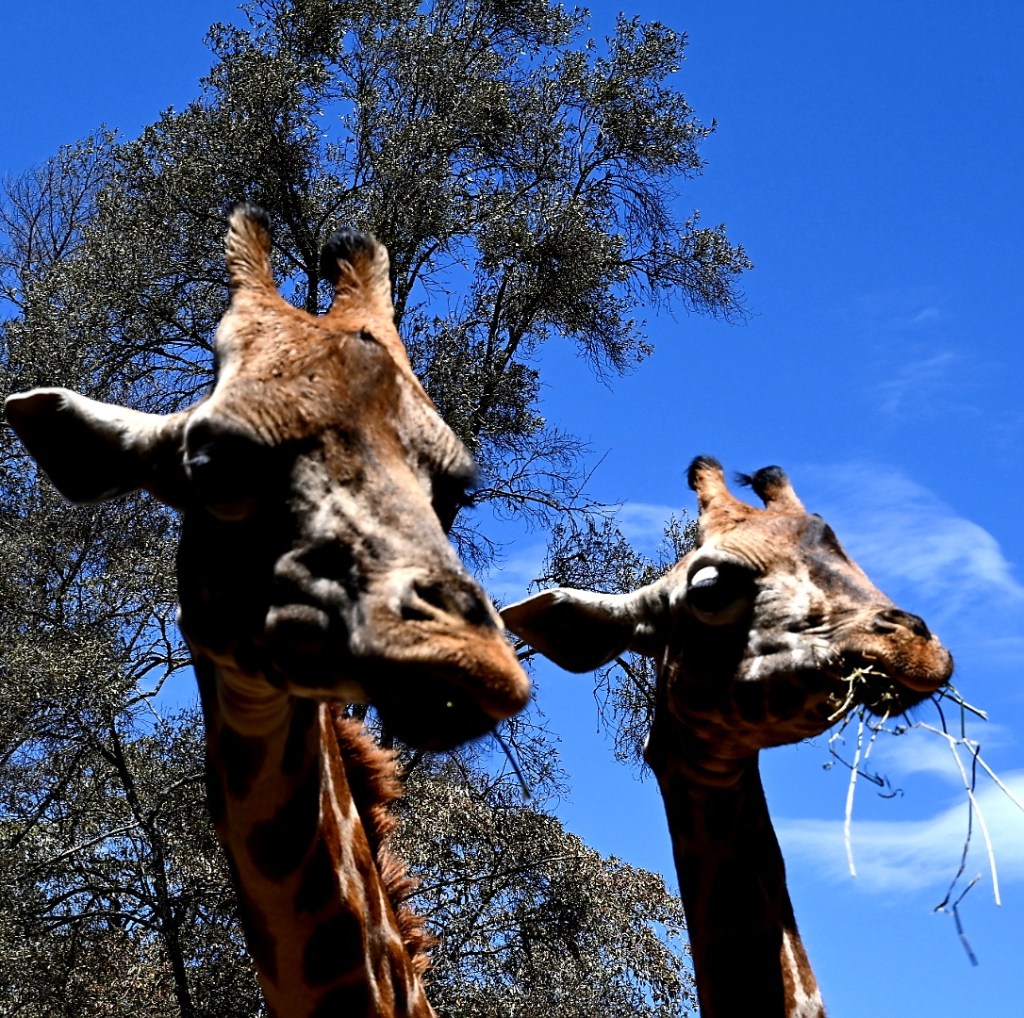
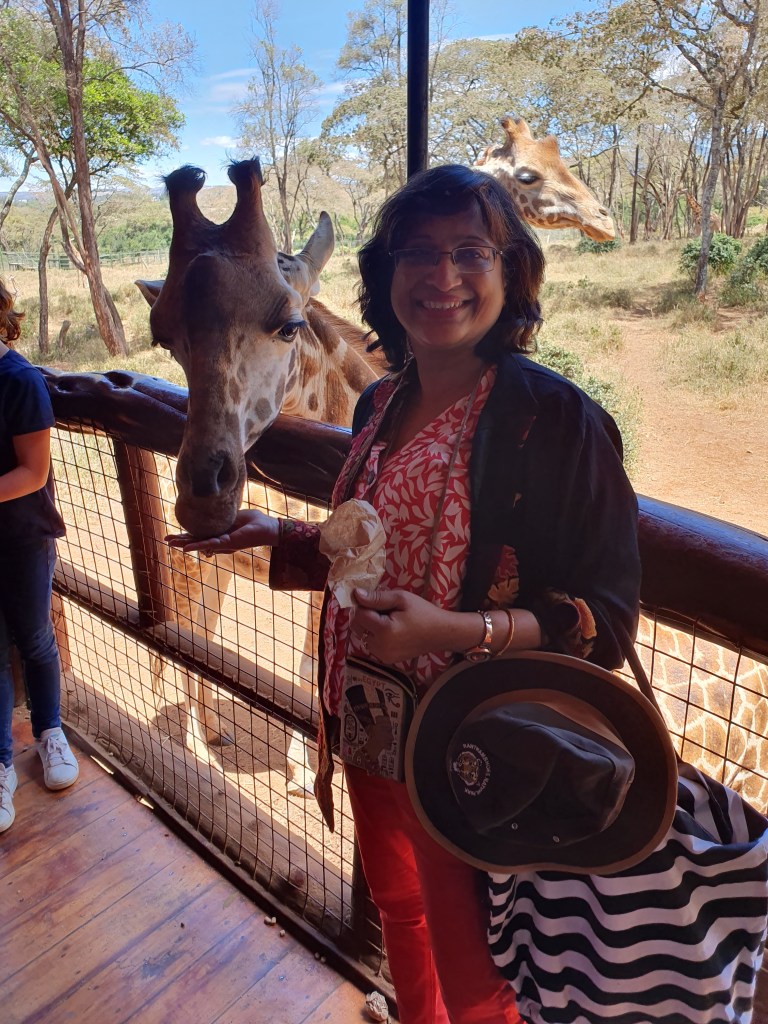
Next we go to the giraffe center,where there is a sizable collection of rescued giraffes and a chance to feed them ,with the ubiquitous Cafe and gift shop thrown in,thronging with tourists.In kenya there are three types of Giraffes,out of total nine varieties.Reticulated,Masaimara and Rothschild.
A close up viewFeeding time
Tourism is the major source of revenue for Kenya. Floriculture,coffee ,and other agriculture based activities bring the rest.60 percent of the countries population stay in Nairobi. Because of the long history of British colonial rule,there are lot of old colonial style buildings.But there are a lot of modern budings,new roads,and education is on the upswing.
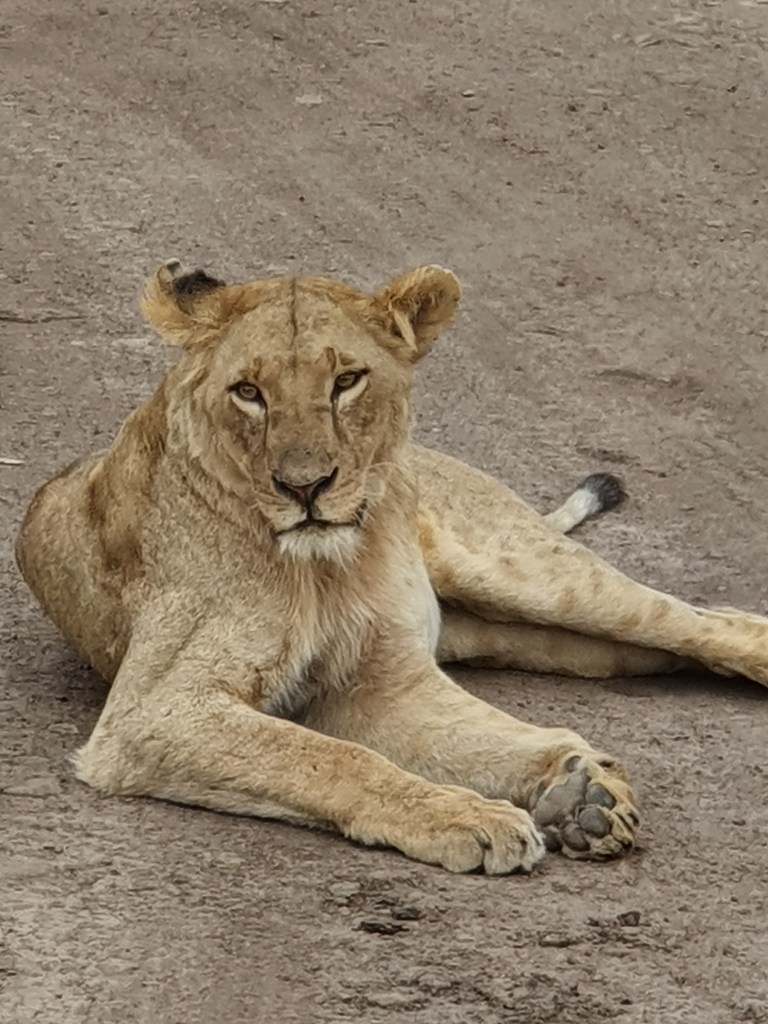
Next we visit the Nairobi national park, which is a large area on the outskirts of Nairobi. The Park has a number of lions and other fauna and birds.
Lion at the Nairobi national park
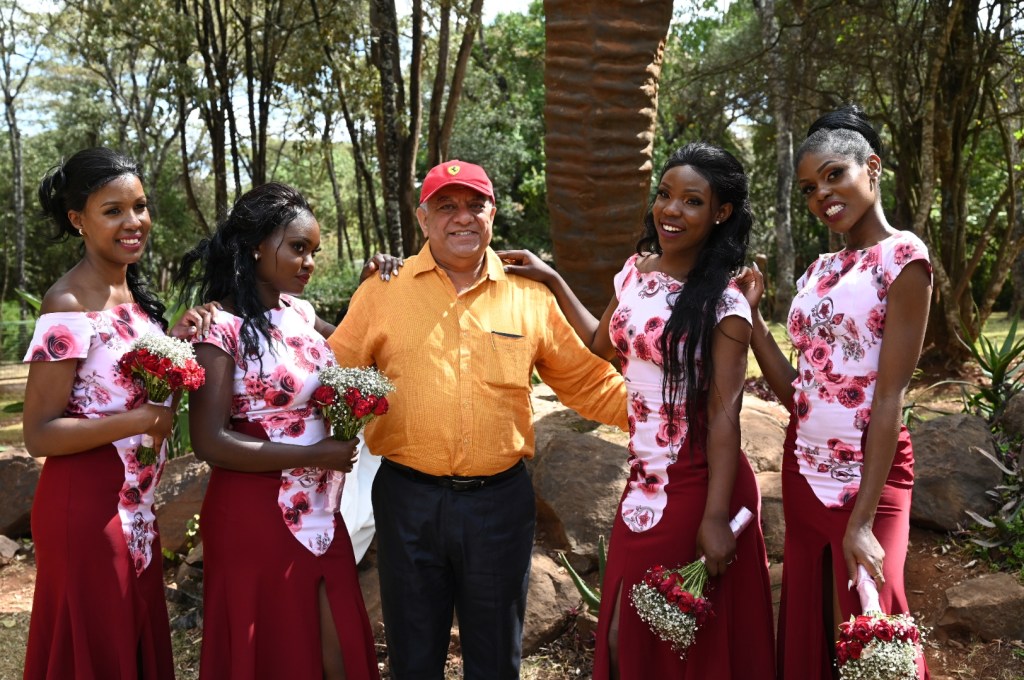
Our next stop is at Macbronze,a studio manufacturing Bronze artifacts .It us an unique place, full if exquisite pieces.I take this opportunity to take a photo with some Kenyan beauties who are there as bridesmaids at a marriage
With some beauties
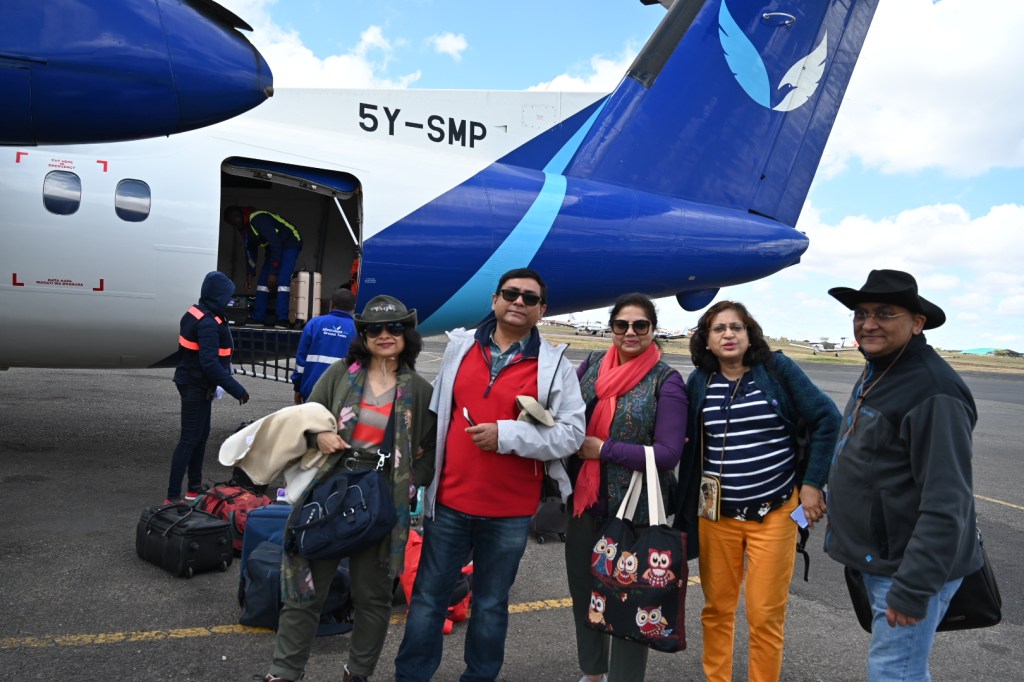
Next day we meet at the airport to catch the flight to Masaimara. The airport is small and devoid of the security that today’s airports entail.The weather is bright, the aircraft small and the flight time us Forty-five minutes. In no time we have landed at our of the airports of Masaimara.
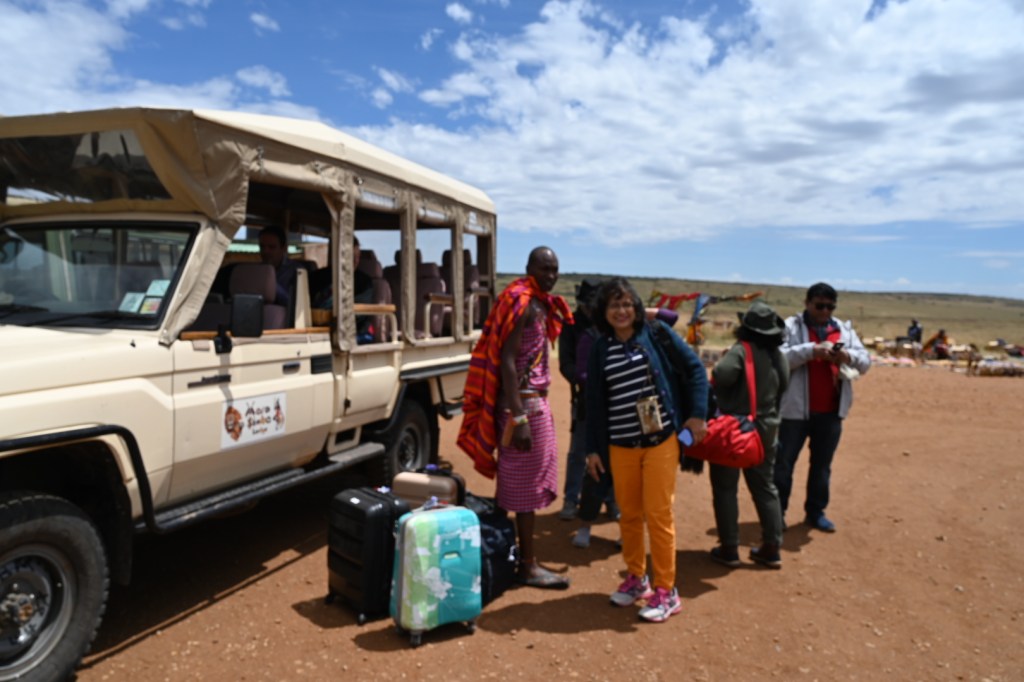
Our Masai driver and guide ,Benson,is six and a half feet tall.He welcomes us with a Toyota land cruiser,and we are off.
With Benson and our vehicle.
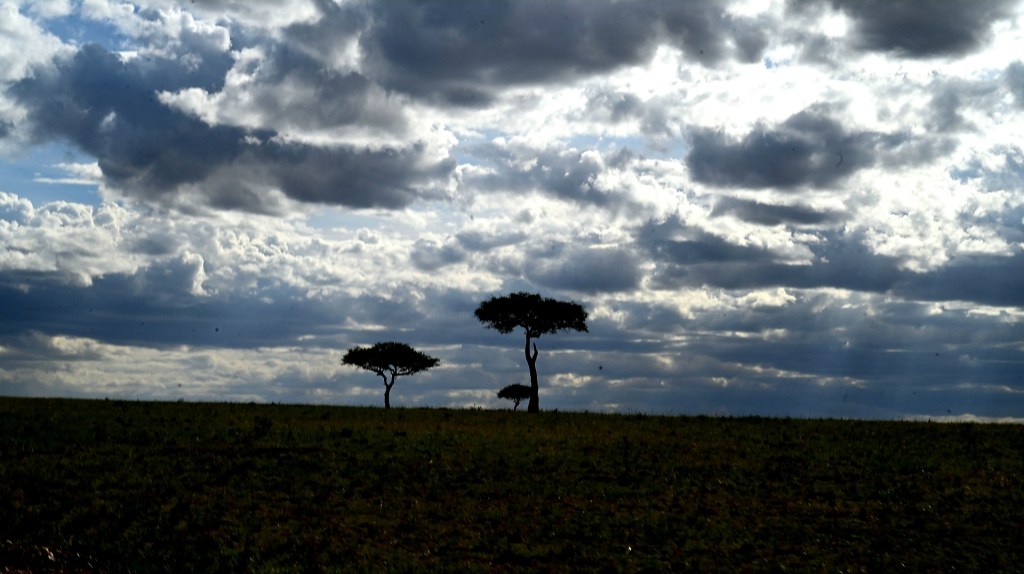
Most of Masaimara comprises the savanna.The African Savanna ecosystem is a tropical grassland with warm temperatures year-round and with its highest seasonal rainfall in the summer.The savanna is characterized by grasses and small or dispersed trees that do not form a closed canopy, allowing sunlight to reach the ground.Visibility is excellent.
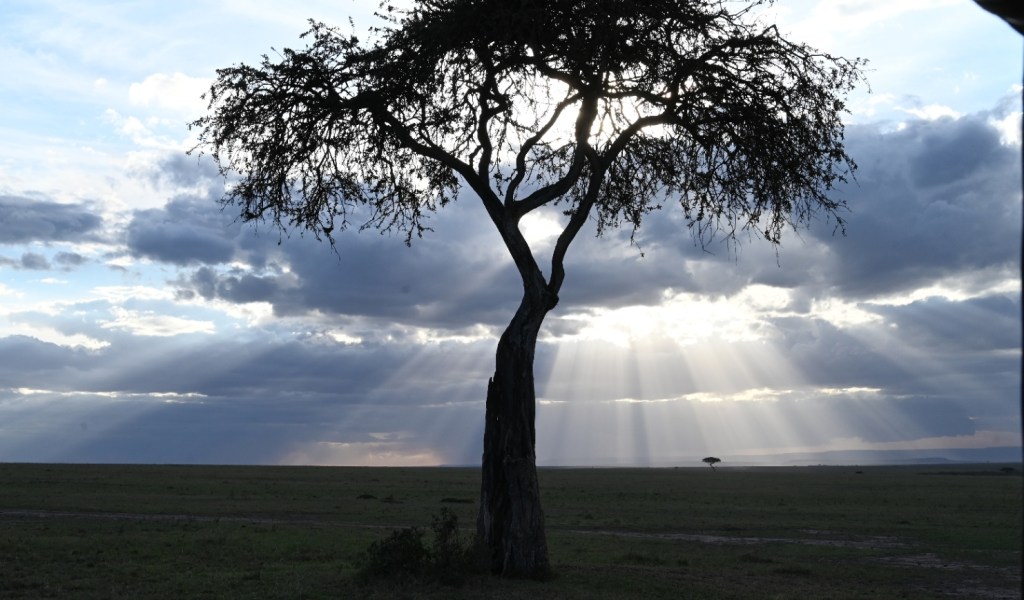
The Acacia tree is one of the most iconic sights in the grasslands
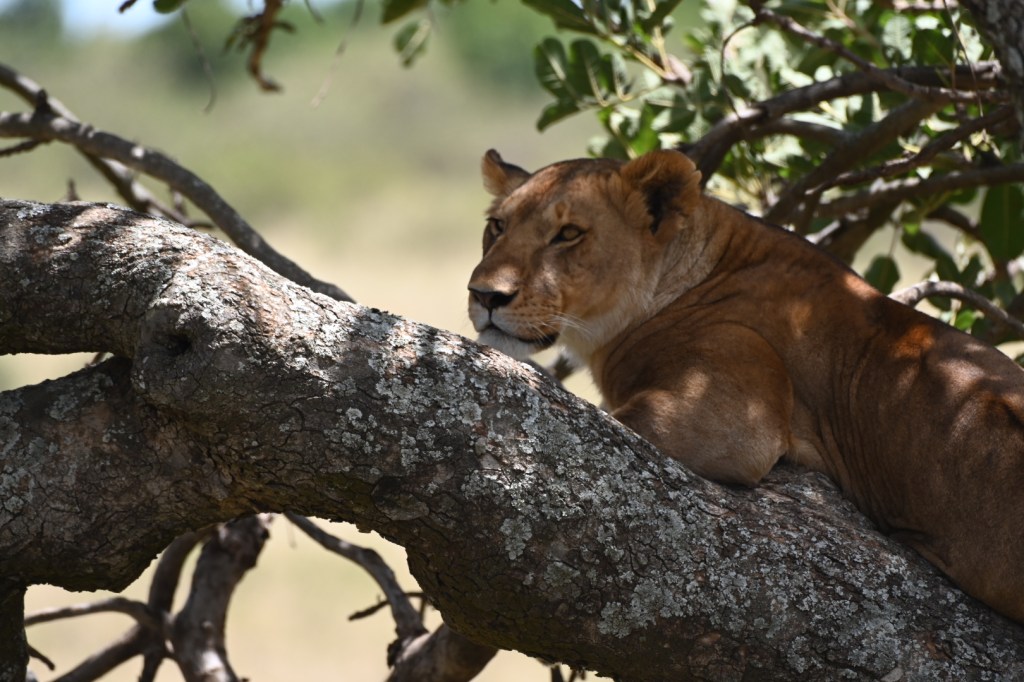
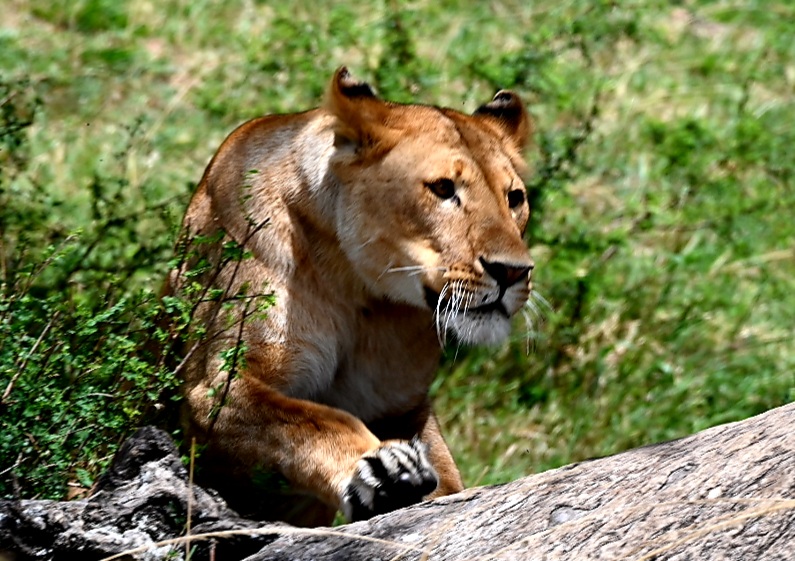
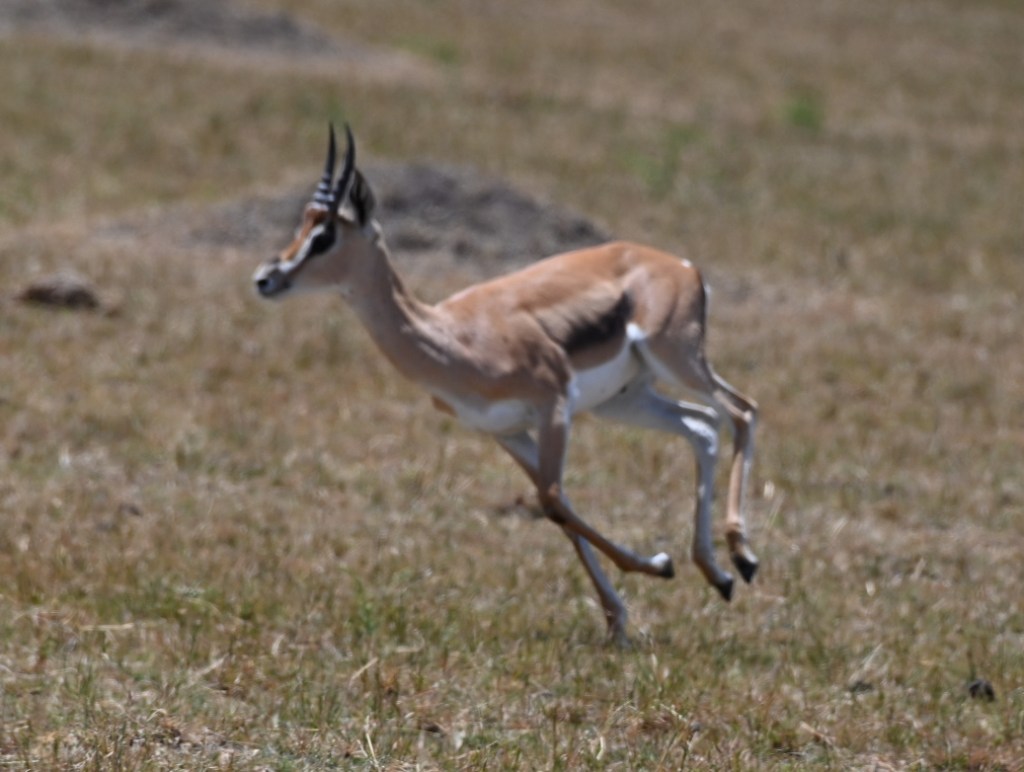
Our resort is around 40 minutes drive from the airport.On the way we come across some antelopes and a family of lions.
Resorts in Kenya are of a standard quality.A lot iof them are owned by people of indian origin,so there is a section devoted to Indian food.The best part of our rooms was its proximity to the dining area.There was a small stream adjacent to the resort,with a resident croc.
After Lunch it is time for our afternon game drive.The thong about wildlife in Africa is the huge numbers that they are available.Apart from the 2 million migrating animals,the grasslands of Masaimara are homr to a large numbers of carnivores,herbivores as well as birds.The great five,Lion,Buffalo,Elephant,Leopard and Rhinos are there,as well as antelopes Giraffes and other animals.
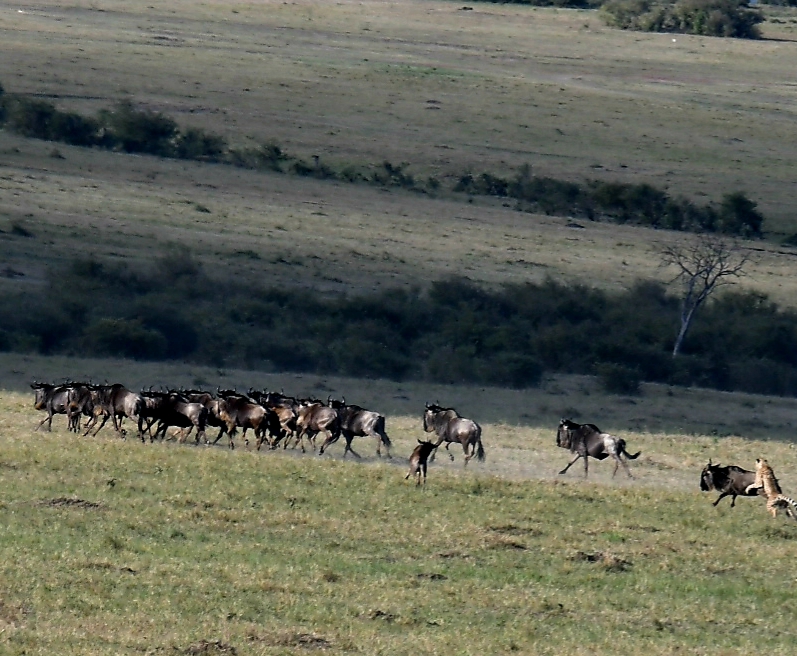
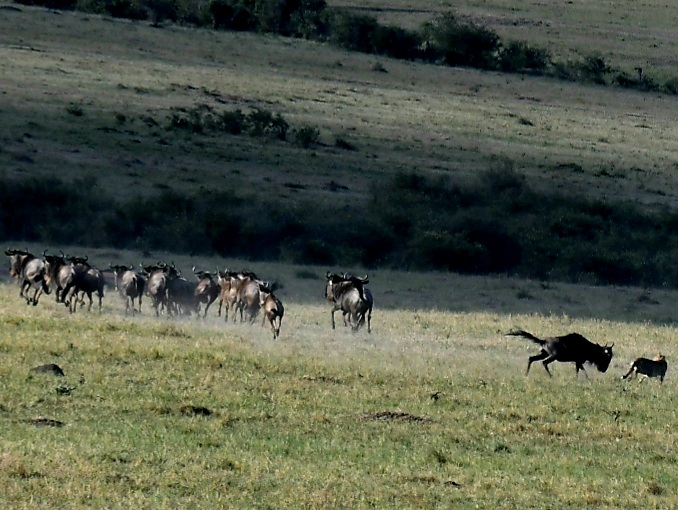
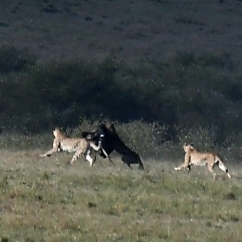
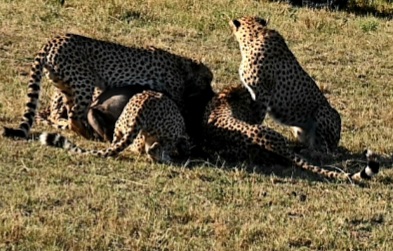
After couple of hours of game viewing,we suddenly come across a large number of safari vehicles congregating at a place.They stand two cars deep.We are told that a chase is on view.Benson takes a wide detour and moves one km away to the other side of the open grassland.Five Cheetahs are chasing a herd of Wildebeest.It is a high speed chase,and we also join them in a parralal chase,half a km away.Suddenly a male wildebeest turns around,confronting the chasing pack,allowing the rest of the herd to run to safety.The brave animal however is caught by the pack and brought down.All the vehicles run for a photoshoot of the kill,though it is not permitted to go that close to a kill.We all disperse quickly before the rangers arrive.
The chaseThe confrontation The captureThe kill
For the tourists,the great east afican migration has two components.
The Migration, whereby you come across the large number of animals taking part in the annual migration.
And the Crossing,where animals cross the Mara river in large numbers.
Aprat from couple of very expensive resorts situated on the serengeti side of Mara river,all other resorts are at least 2 hours of drive away.One has to start early in the morning after breakfast,carrying a packed lunch and lots of water,and lots and lots of patience.On the way apart from the usual viewing,the greatly incresaed number of wildebeests and zebras is eyecatching.In large groups they all are moving inexorably towards the Mara river.The closer you get to the river,their numbers keep on increasing.From the last vintage point,one can see the whole plains beloww covered with dark specs.Then it is time to go down to the riverside.
Watching the crossing is a trial of your patience.Animals will cross the river at ttheir own convenient time.The crossing takes place over a long length of the meandering river.They may change the site frequently.Crossings can take place simultaneously at two adjacent or distant places.Park Rangers usually are there to prevent visitors from getting too close.We waited for around two hours.The animls gradually gathered in large numbers by the riverbank.They were pering down the incline.We thought the crossing was going to start.Then suddenly the leading group turned arond and started waking back,and the others all followed suit,and the bank ws clear.We were heartbroken,but decided to stay back.Many vehicles gradually left,after sometime the Rangers left also.It was along wait but we were desperate.Suddenly from far away,a large group o,of animals started turning back to the river bank,and others followed suit.Soon a houge number of them had aggregated at the river side.Suddenly the lead animal jumped down and others followed.All hell broke loose,ther was tremendous noise,a lot of dust,ad we also lurched forward for a better view.Itvwas an experience of a lifetime.The whole process went on for about half an hour,involving at least ten thousand animals.then it was silent again.
We turned back,planning to go back.Suddenly one of the ladies pointed to a group of animals at least a mile away.They seemed to be making a crossing.So we rushed to the site and had another 15 minutes of crossing view.Then it was time to go back,stopping for lunch on the way.
I first came across Konyak tea county,a home stay,on April 2019.I quite liked the information and the photos provided,and immediately started planning for a trip.However,the weekend requested by me was already booked seven months in advance. Ultimately I managed to book the next week,end November.Sushanta and Sarbani,with whom I had made couple of trips before,would be our companions.
Konyak’s are one of the sixteen Naga tribes.They are spread over a large area in eastern Nagaland in the Mon district and adjoining Myanmar.One can go both from Dibrugarh and Jorehat.We started from Jorehat.Because of my childhood in Assam,Everytime I visit the state,I feel very nostalgic.
It is a seven hour 220 km journey from Jorehat.The last 35 aims are absolutely roadless.Phejin,who runs the homestay had warned us not to take an innova and take a Scorpio.Now I knew why.The last one and half hours were spent travelling in absolute darkness through roadless roads.Sarbani was repeatedly asking me whether our destination really exists.The driver ,who regularly takes this route assured us that all is well.At last there was light,a few houses cropped up,we were through a gate into a stone driveway,and there was a largish house.We had arrived.
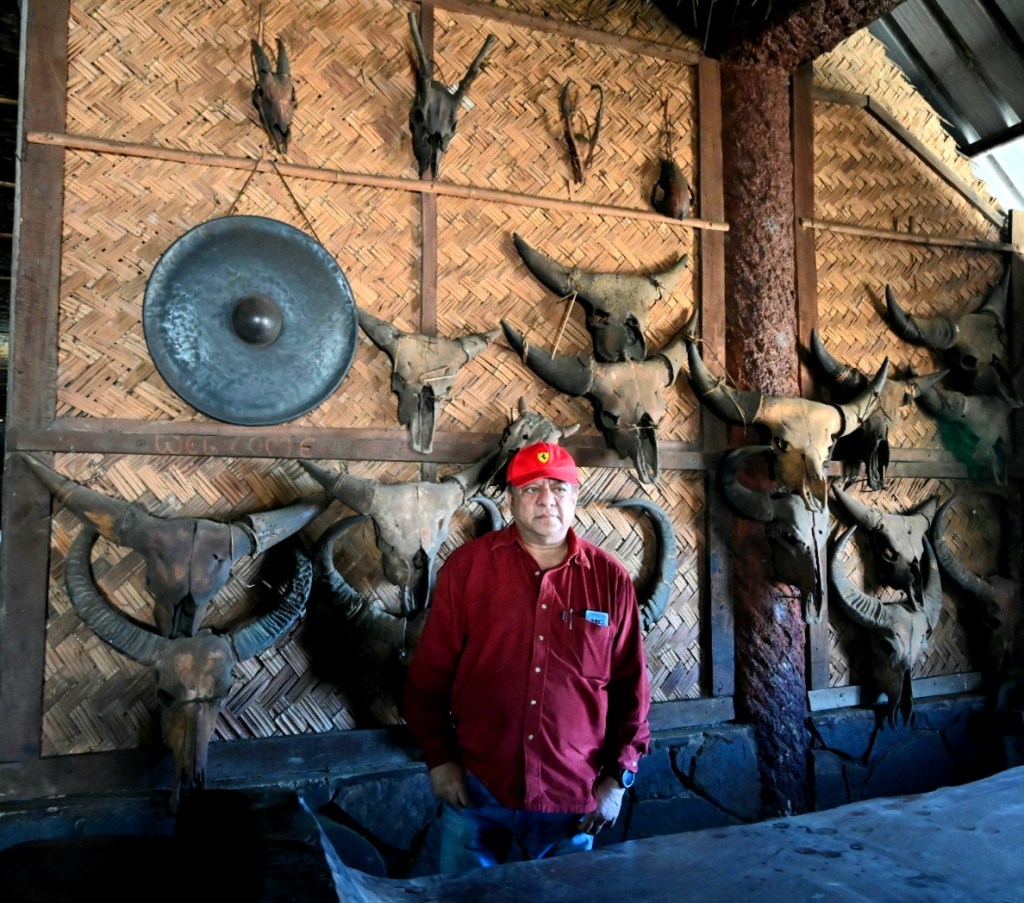
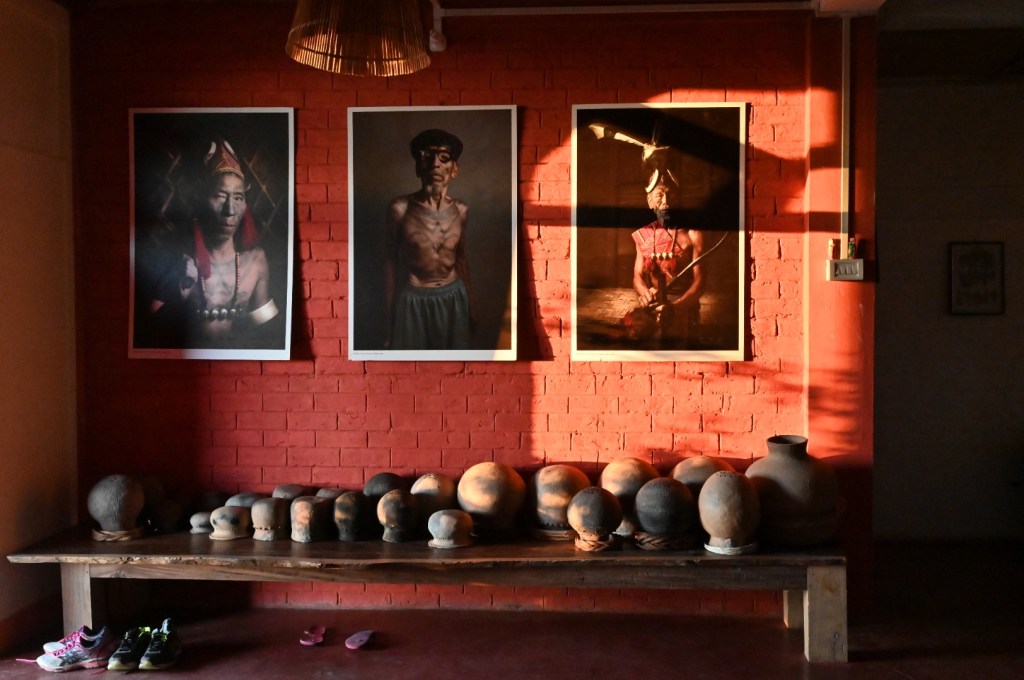
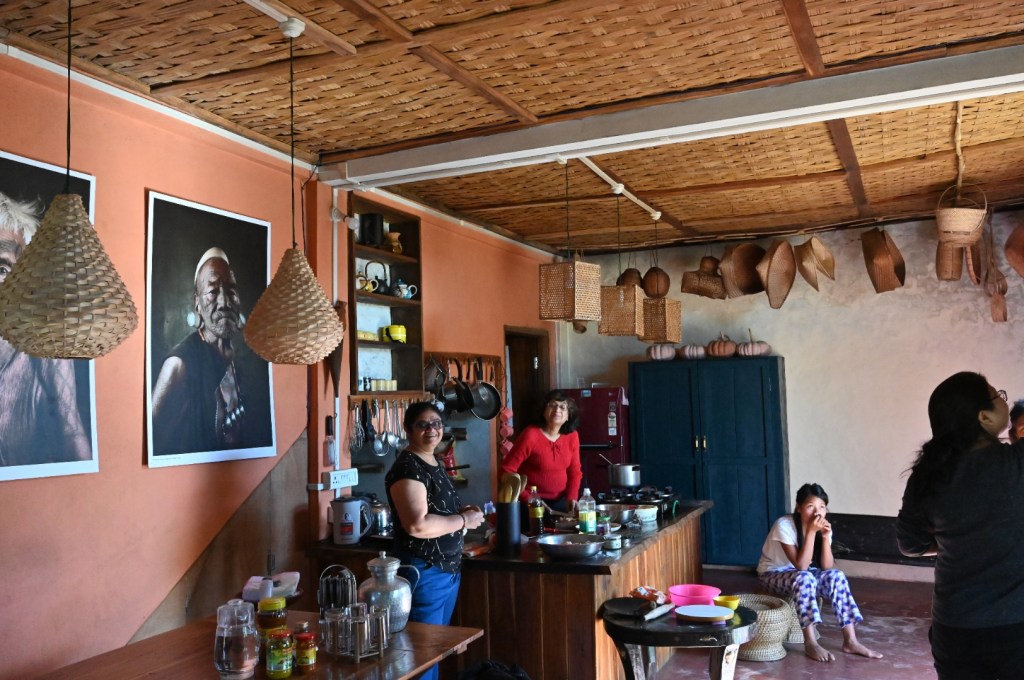
Phejin,our host met us and made us comfortable.The homestay is a 2 bedroom house where the owner stays.When tourists come,she vacates the house and moves to the staff quarters.We were given her bedroom to stay,Sushanta got the other bedroom. It is a nice and comfortable house with big bathrooms and a large lobby with a long wooden dining table.Above the dining table hangs large photos of Tattoed headhunters of Konyak.
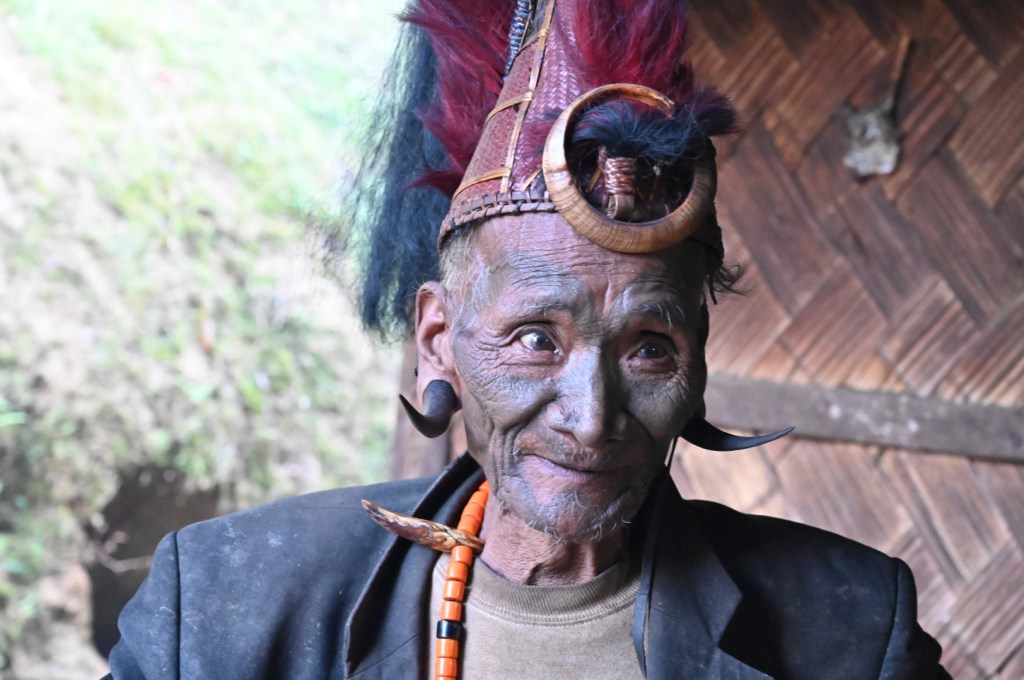
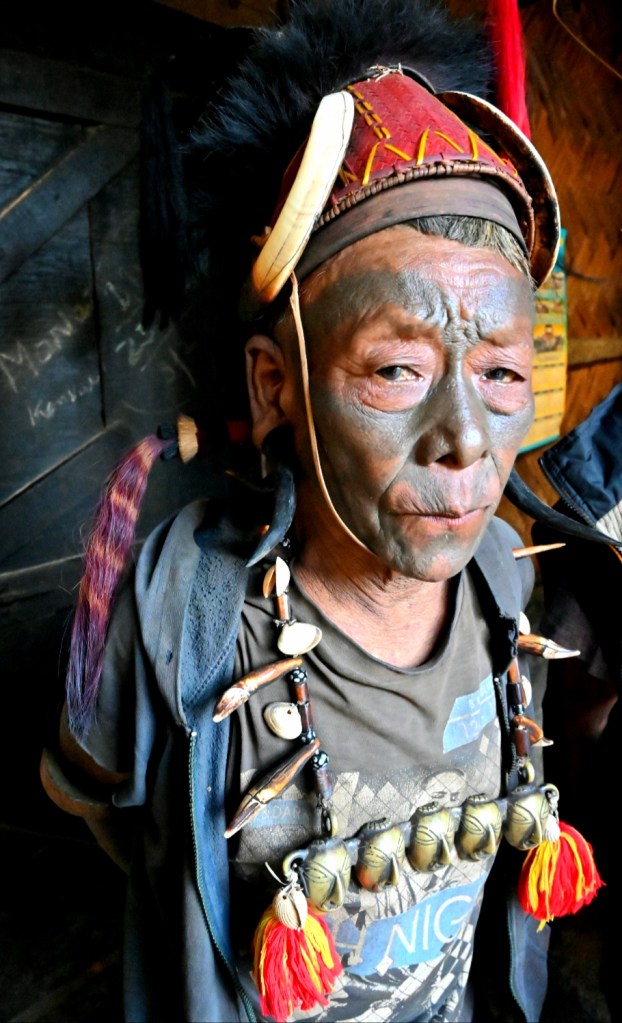
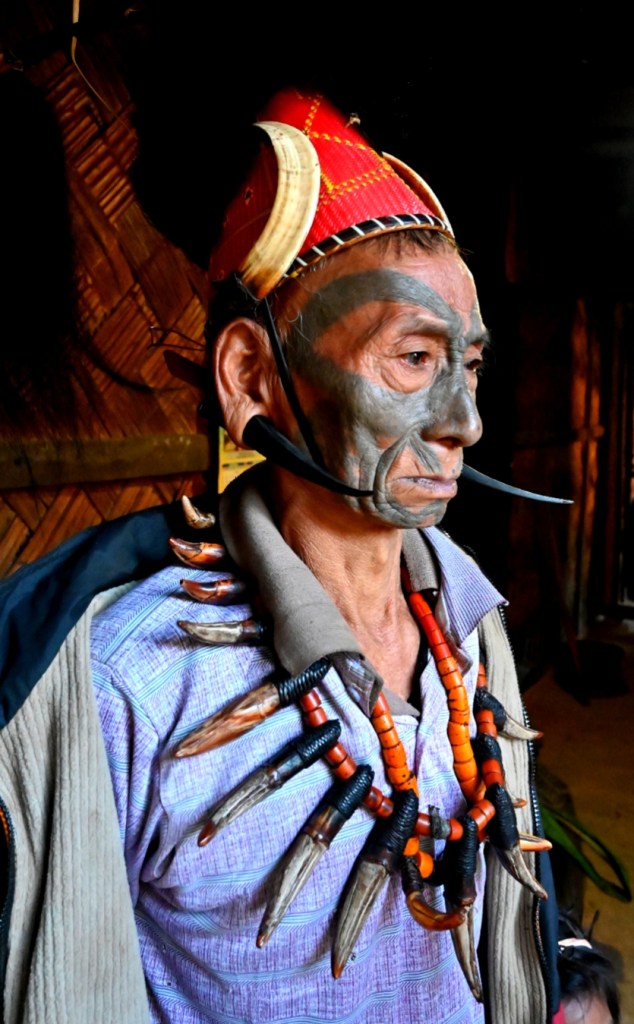
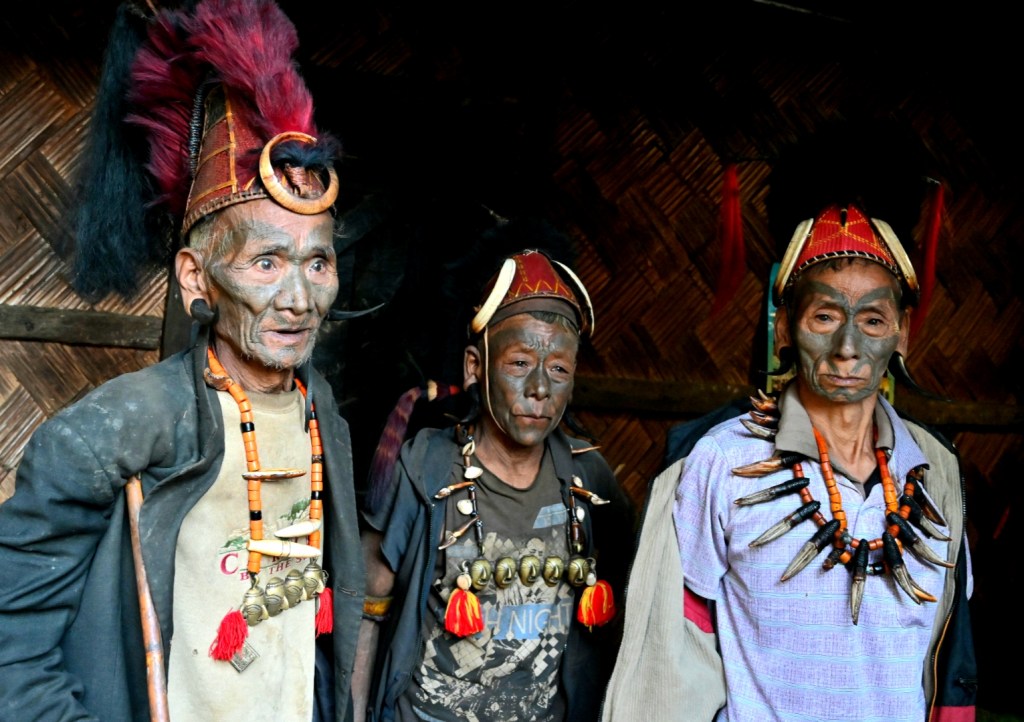
The main reason for going on this trip was to meet these tattoed headhunters of Konyak.The practice of headhunting has been banned by the government in 1967.These days around 60 such head hunters still exist,all in their eighties.After their demise the story of the headhunters will have no tellers.Phejin has helped in bringing out a coffee table book titled The headhunters of Konyak.It is available on Amazon.There was nothing much to do that night.It was pitch dark outside.Not a sound to disturb us.We had a couple of drinks.Dinner was Roti and chicken.Then we put our tired bodies to sleep.
What we do bestView from the tea table
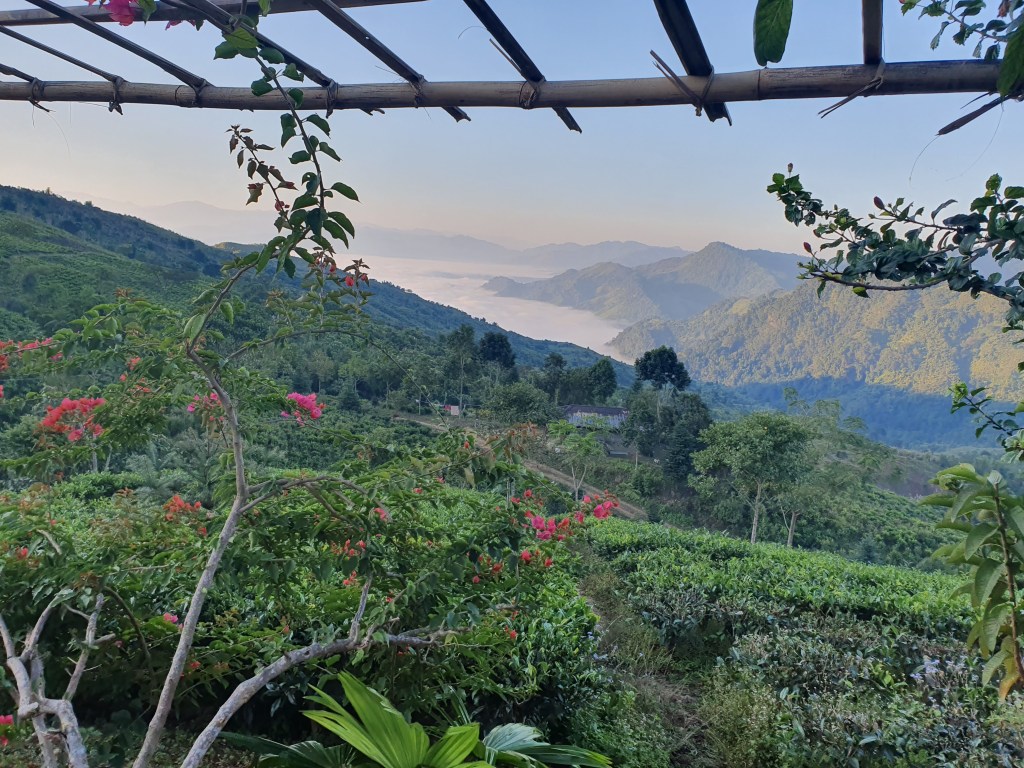
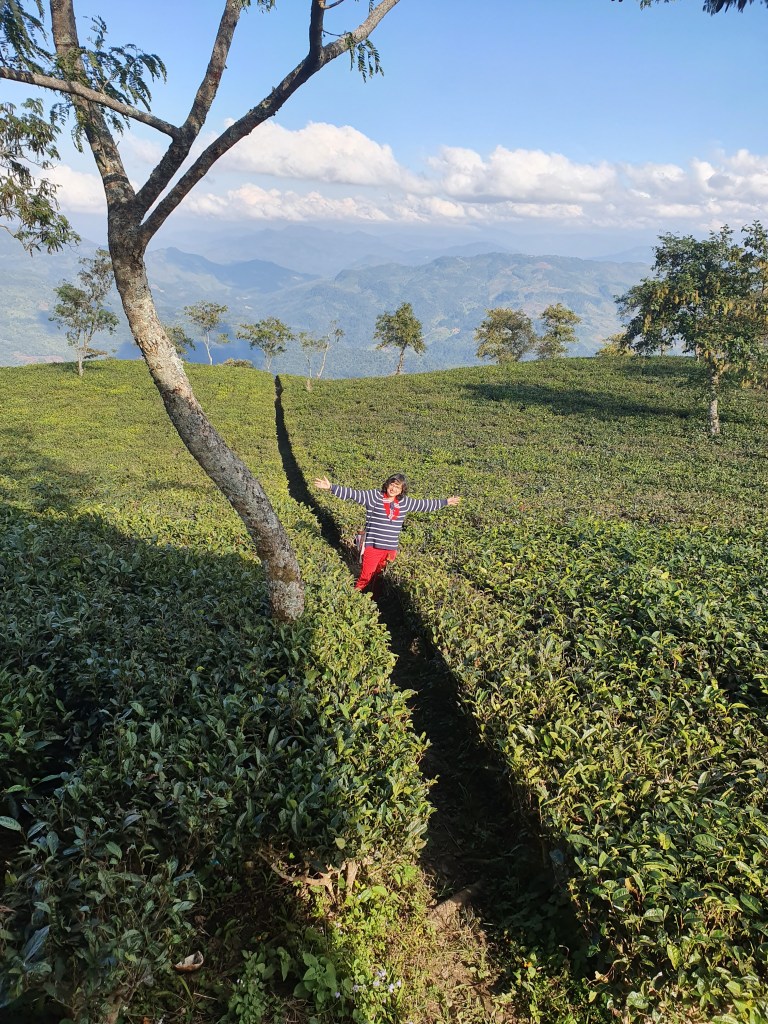
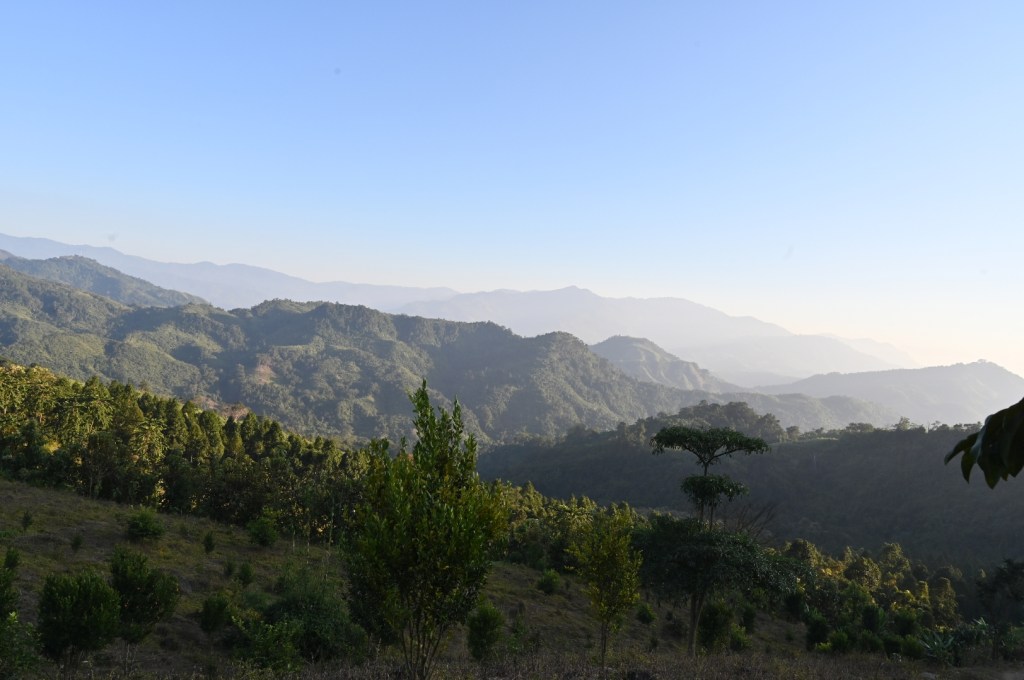
Because of its easternmost position, the sun gets up very early at Nagaland. So at 5 30 am we are sitting outside in front of a bamboo table, sipping local tea. We are at a height of 4000 ft and in front of us there’s a layer of cloud stretching to the infinity.It is eerily silent.We are on the top of a hill,and all around us are tea gardens whose produce we are sipping.
Phejins family are big landowners here.She herself studied in a premier institution in New Delhi and Ahmedabad before deciding to come back and settle here.That is one chapter of her life she is not willing to discuss.They have a 200 acre tea plantation,Orange orchard producing 5 lac oranges a year,Teak plantations, and have recently diversified into coffee and sunflower plantation.They also have 80 heads of cattle.Apparently there is no land ceiling act in Nagaland.
Despite all these properties,she came across as a very down to earth and hardworking person.She never had food with us,always sharing with her staff whatever was left,and shared their quarters,her bedroom being taken by us.Her mother came to work in the fields every day.Having being asked,she told me that unless she worked with them,she won’t be respected by them.There is no class distinction in Nagaland. After working hours everyone sits together and shares food and drink.
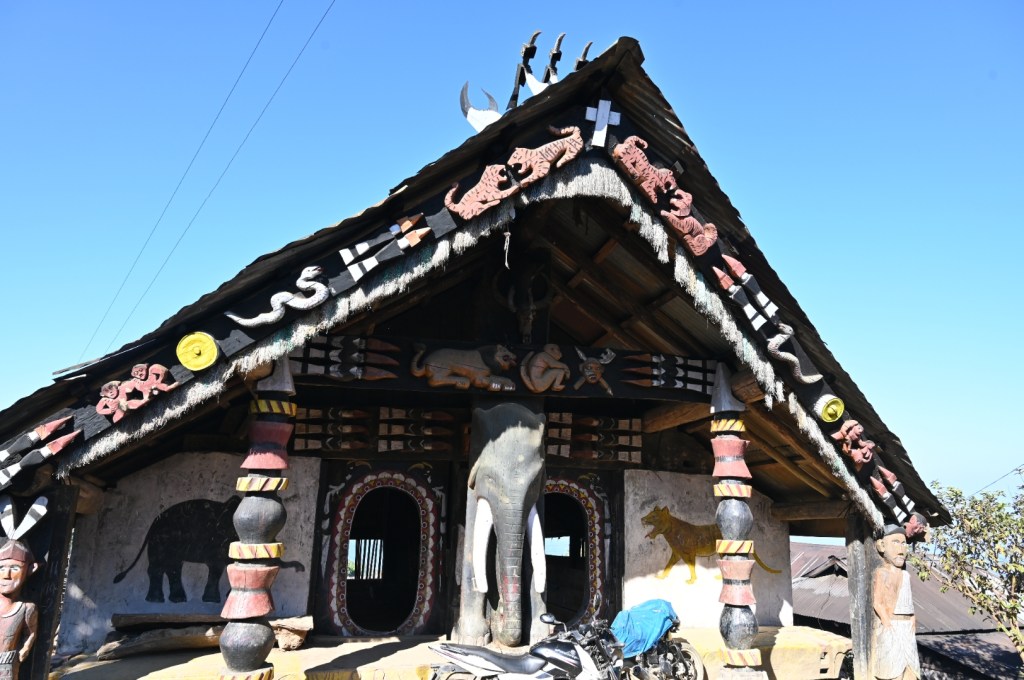
Community center A colorful community center The ubiquitous machette
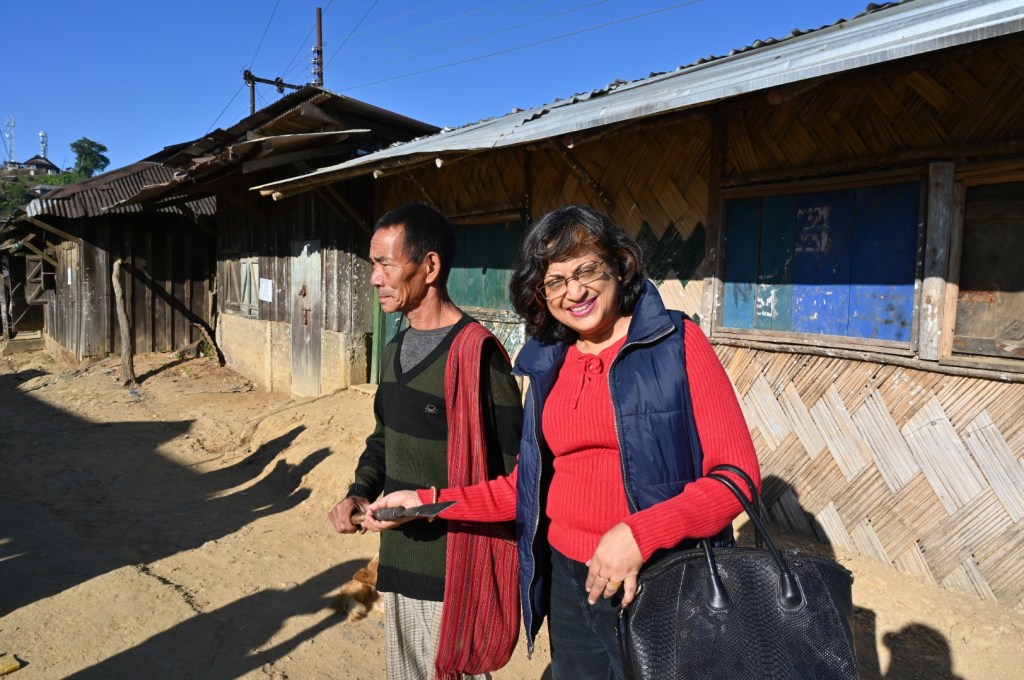
The ladies decide to have Luchi torkari for breakfast and there being no maida,we take our jeep to the village.Everybody knows Phejin.No wonder since half of the village work for their family.All able-bodied men carry a machete in their hands.The sky is brilliantly blue.
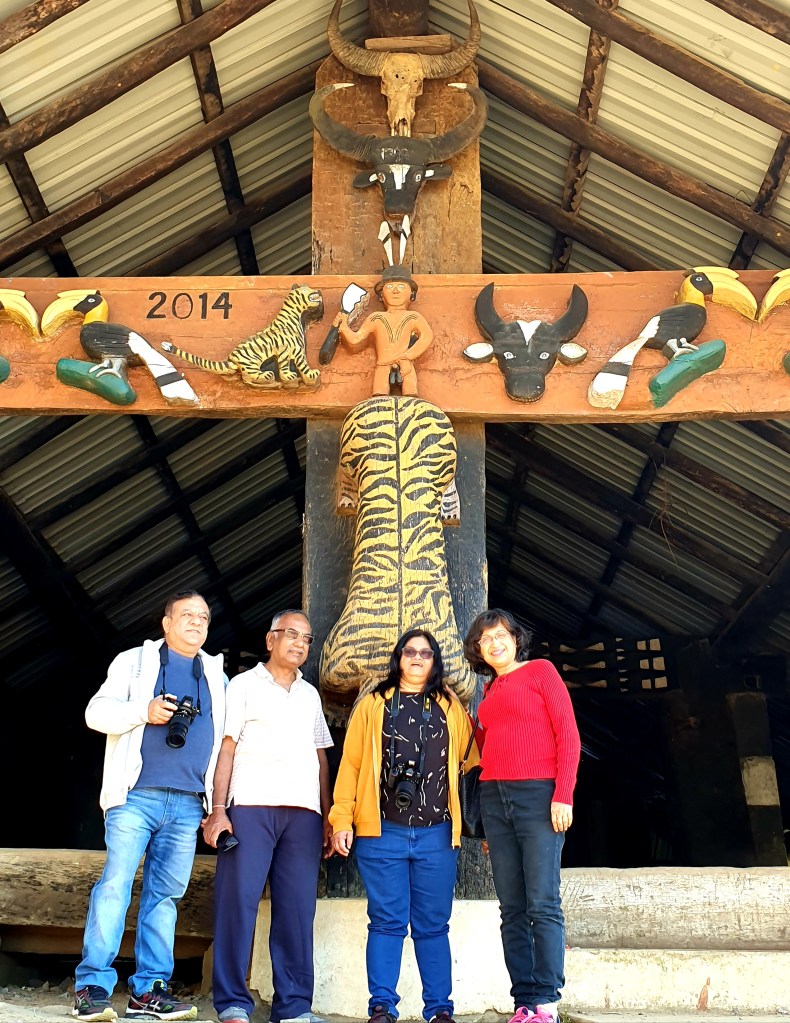
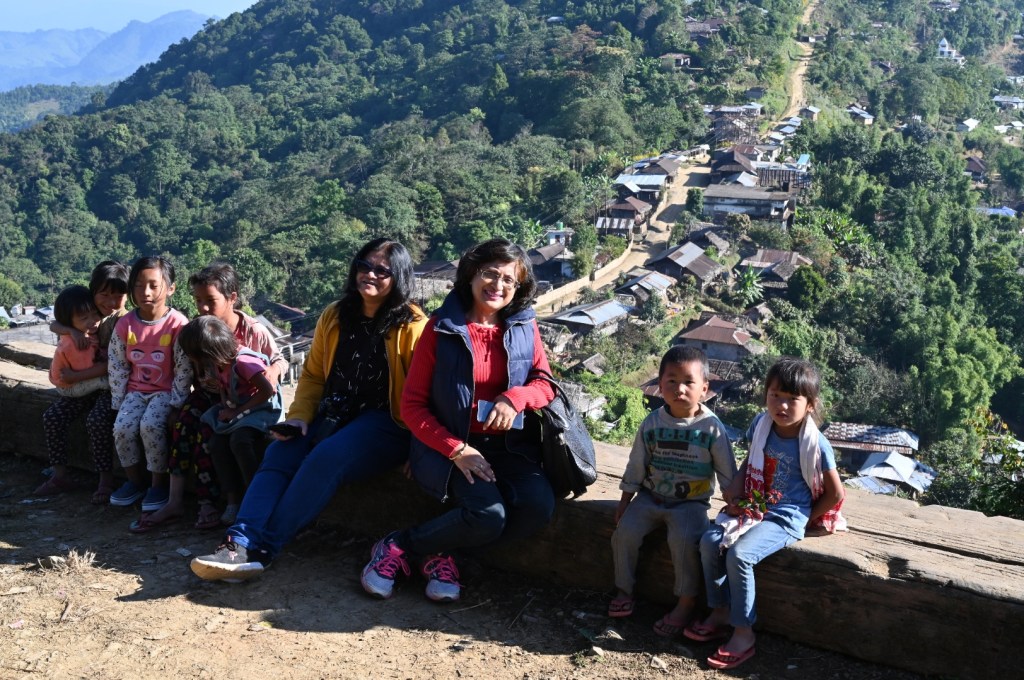
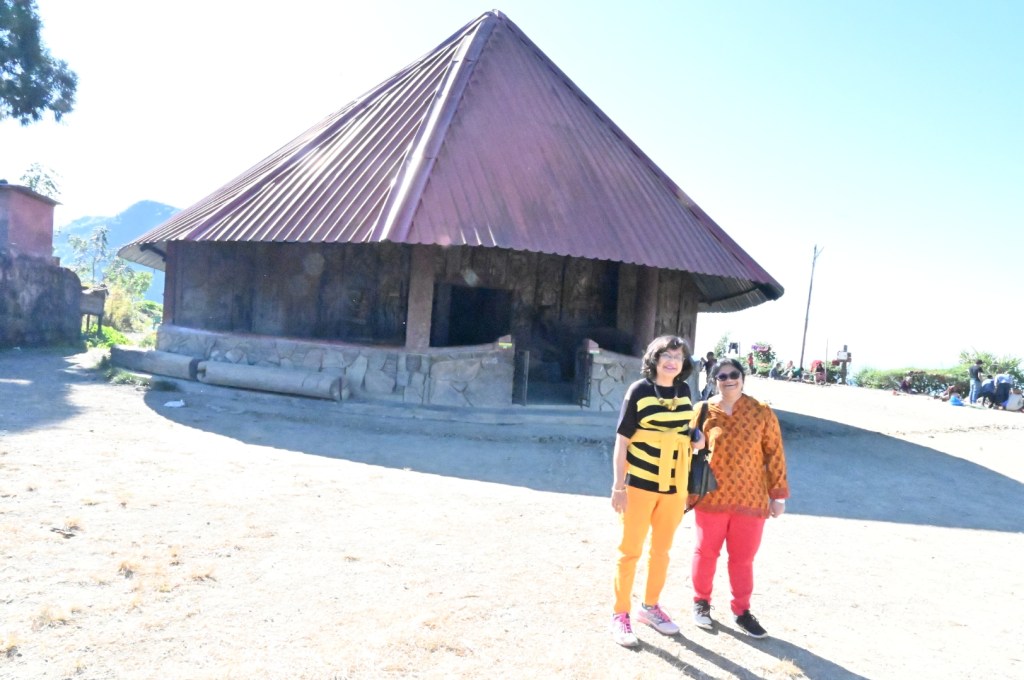
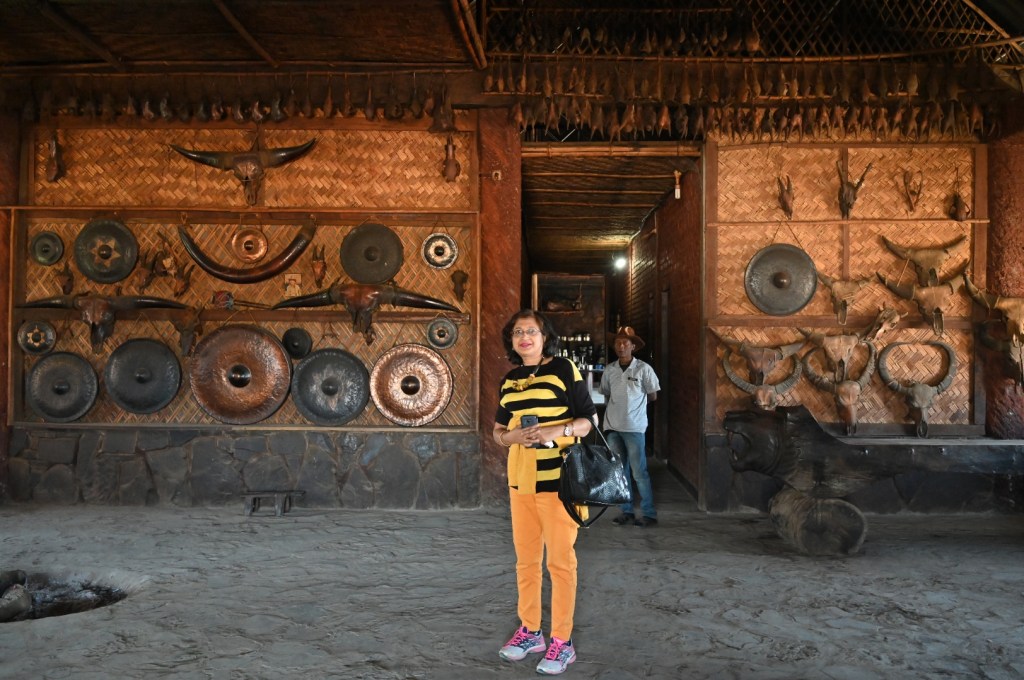
Children are going to school.Women are going to work. We come across large wooden halls decorated with colorful motifs.They are community centres where meetings were held,and important decisions were taken.The village has 6 such halls.Each of them have a hollowed out treetrunk which was used as a drum to call people.
Now a days it has been replaced by mobile and whats app.
We go round the village for quite some time, and then come back for breakfast. The dining table is laden with all kinds of fruit from their gardens.The papaya and oranges taste divine.
Tea queenTea garden surrounding our houseIn front of our homestay
After breakfast we are taken to Phejin’s new plantation.She has started a coffee plantation,the first of its kind in Eastern India.Also there are sandalwood trees.More than 20000 saplings have been brought from Karnataka and they are growing quite well.
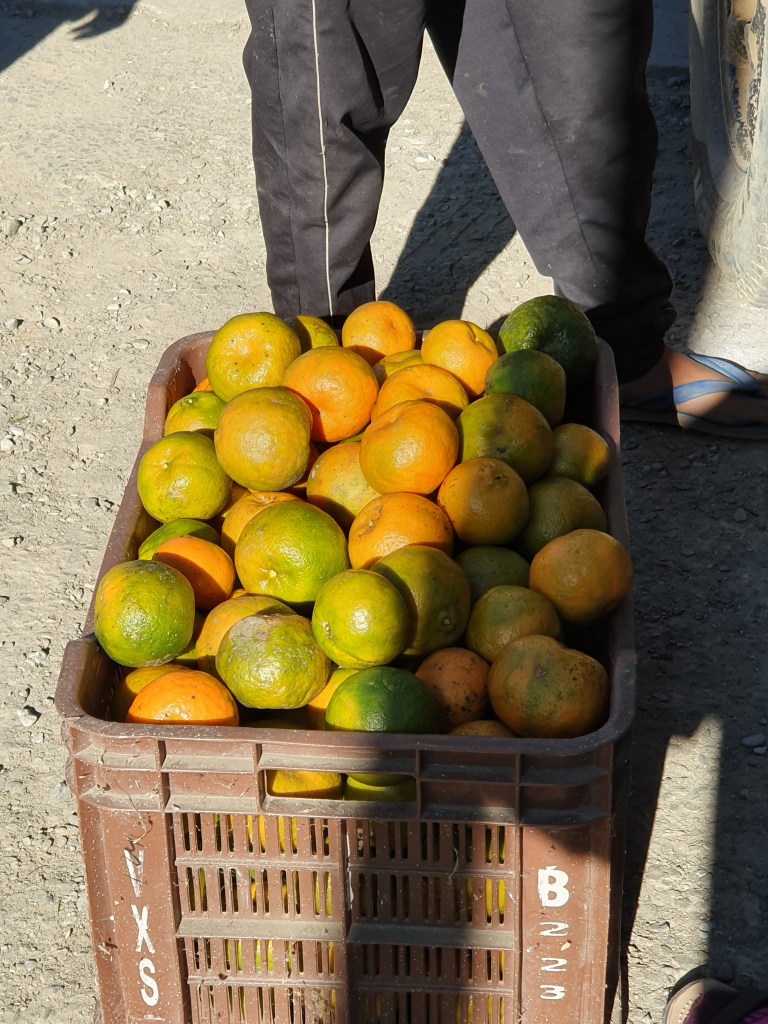
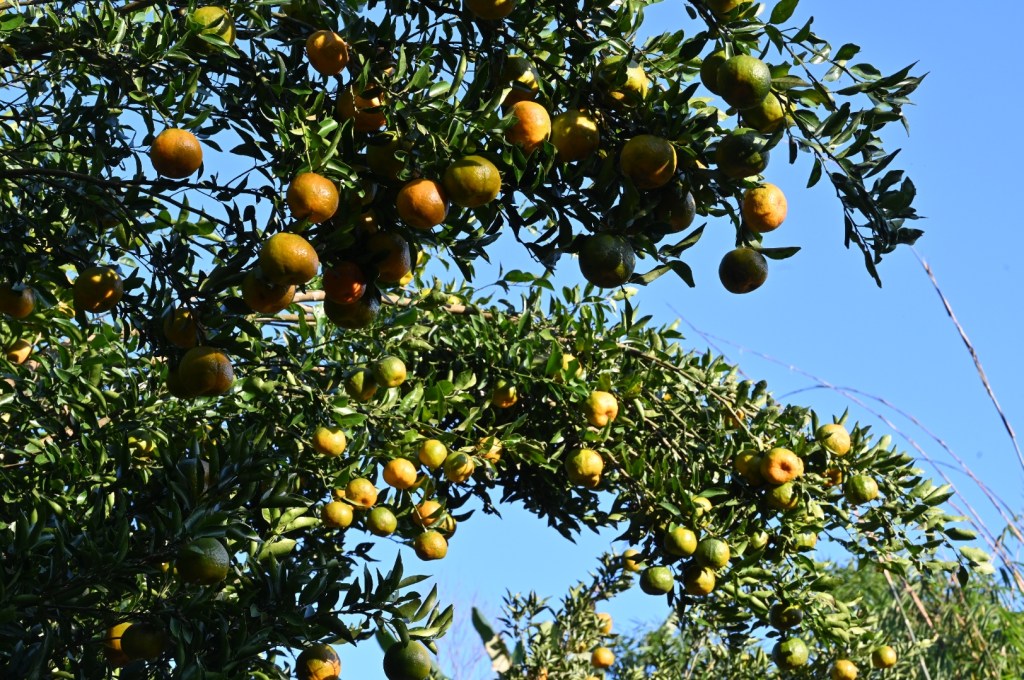
After lunch it is time to visit the orange orchard.First we go to Phejin’s fathers house.It is a large double storied house inside the village.Her duster in.law is vigorously cleaning a large sofa. The family pig sleeps languidly in the afternoon sun.Oranges are packed up in bamboo baskets.More oranges arrive in 4×4 jeeps. The ladies do a photoshoot in a tractor.The jeep carries us through rough kutccha roads to the bottom of a valley .We have come to the orchard. It is a large place with trees everywhere laden with ripe oranges.We are encouraged to eat as many as we can.Phejin’s parents are there supervising the harvest.His father proudly shows us his land.It stretches to the horizon. Across the valley are hills,and Myanmar beyond them.Her mother is sitting by an open fire. There is pork roasting above the fire.Workers sit by the fire.Empty liquor bottles line the corner.Alcohol is officially prohibited in Nagaland
Orsnges being taken down from the jeep
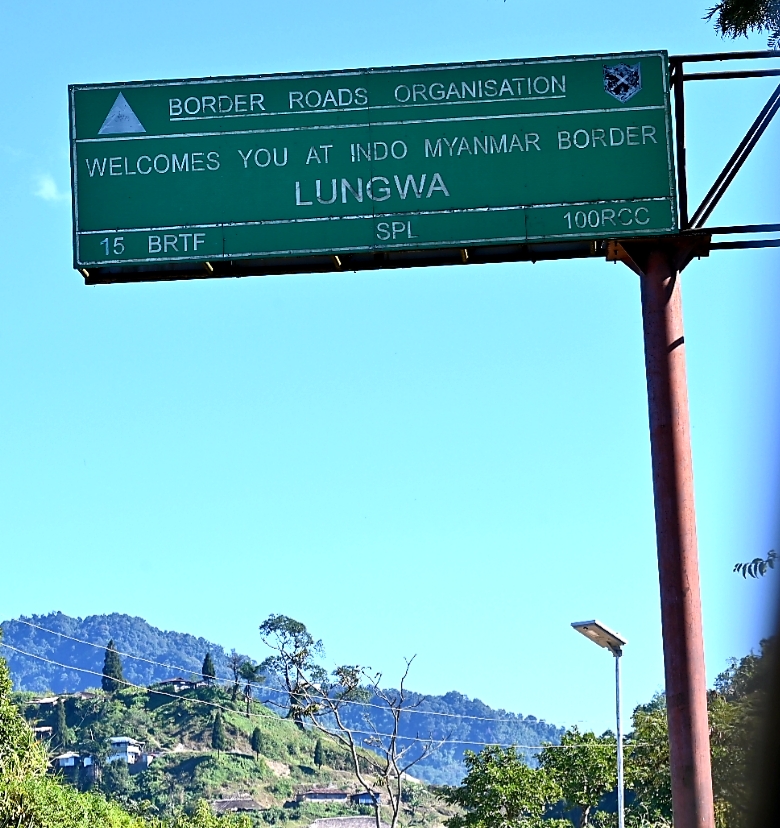
The next morning we are off to Lungwa to meet the Tattoed headhunters.Lungwa is a village in the Indo Myanmarese border. We start early.First stop is Mon,the district headquarters, where we have breakfast at a hotel run by Phejin’s cousins.There are lots of Foreigners at the hotel,workers move happily with dollar tips.
HappinessOrange treesThe last line of hills is Myanmar
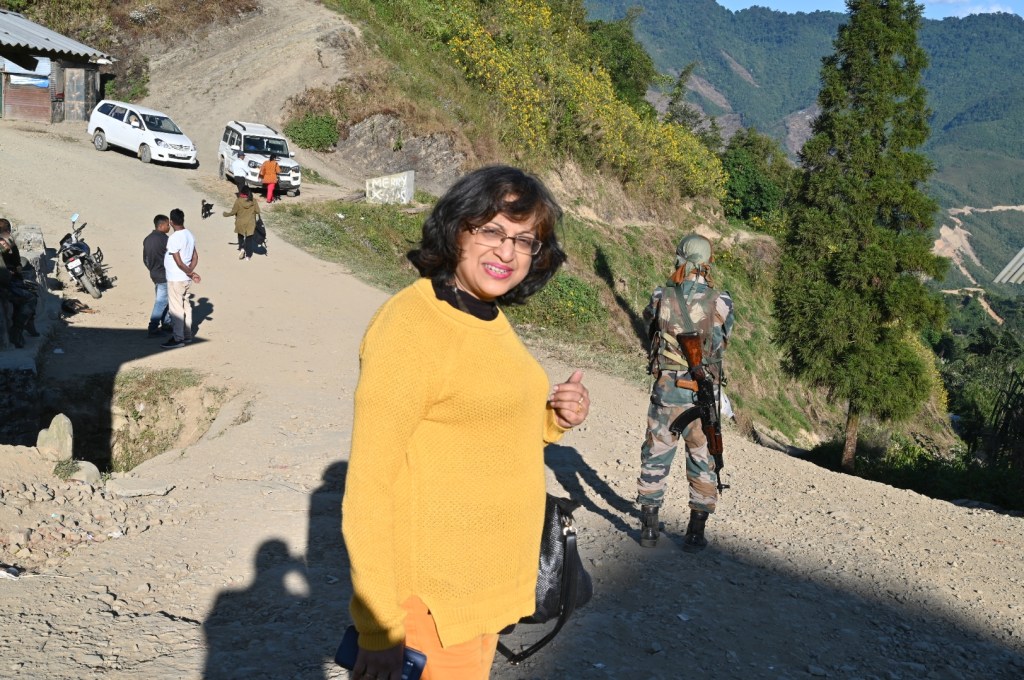
In Lungwa there is no hard international border between India and Myanmar. Local people have the right to freely go across the border and study in Myanmarese schools and colleges. Job opportunities are better on the Myannsrese side.Due to couple of recent incidents by tourists,there is an army presence there.Your papers are checked.But you can go to the other side with their permission.
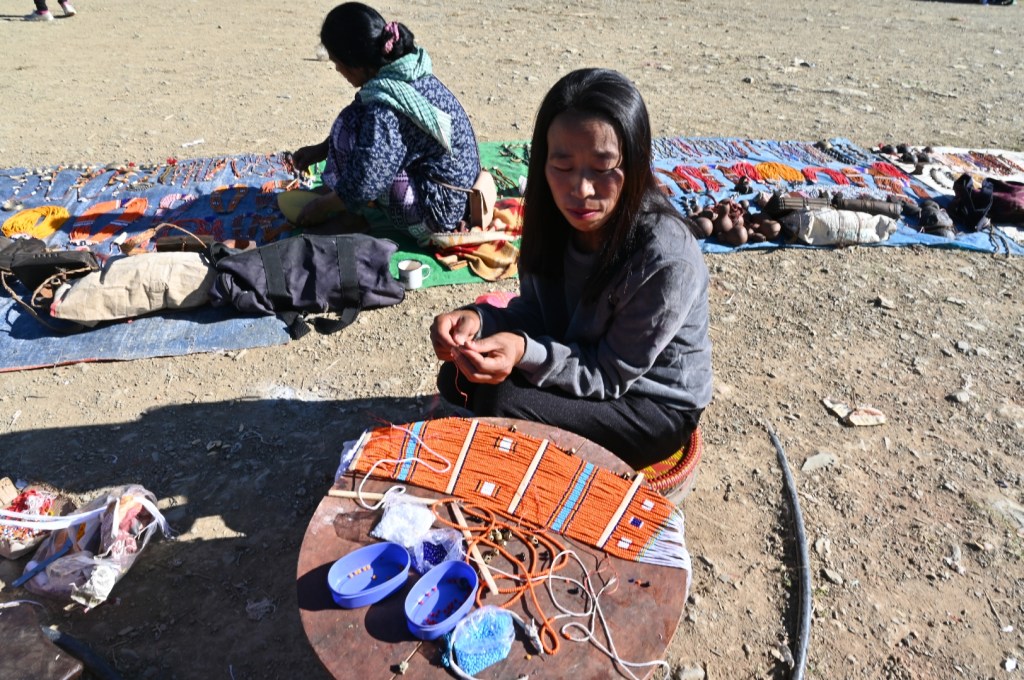
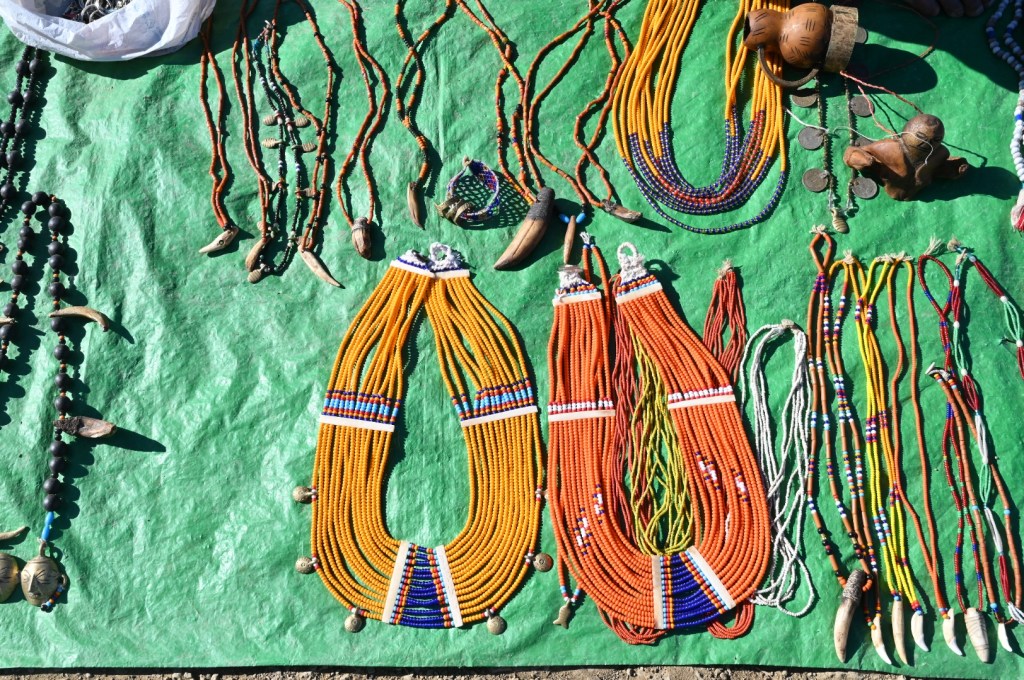
The kings abode Left of the doorway is Myanmar and right is IndiaHandicrafts for touristsInside the kings house
The king ‘s house at Lungwa straddles both countries. The border goes through the center of the house.Once upon a time ,he had 51 wives,but these days he must be feeling the pinch.It is a tourist attraction now,perched on top of a hill.On the Myanmarese side ,one can see a road being built.I aim told that the konyak tribesmen also have a sizable population on the myanmarese side.
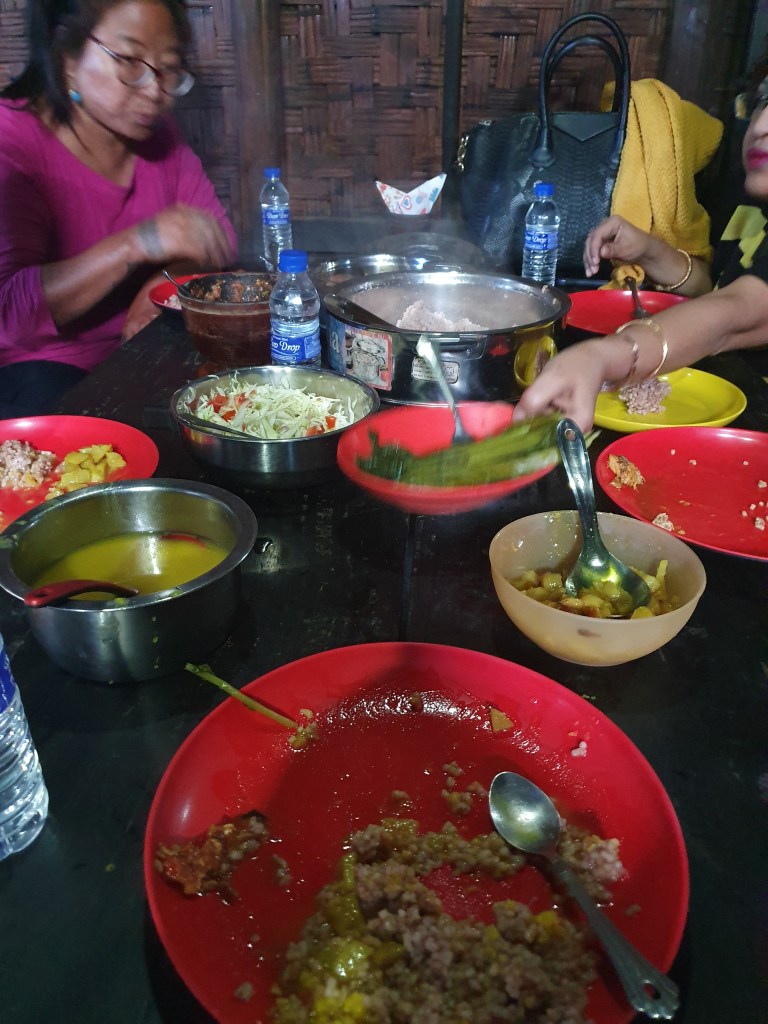
Next we break for lunch,to be had at a hotel where we are supposed to meet the headhunters.They are late.Word is sent out and we have lunch.It is a basic affair with rice and chicken,very tasty.
Lunch with Phejin,our hostess
Then the excitement,the old headhunters have arrived.There are three of them.They look frail and must have been above 75 yes of age.Wearing their ceremonial dresses which have seen better days, they meet us.One of them has a child with him.We are told that they still work in the fields.Interacting with tourists and photo sessions are a major source of income for them. One hour passes in a blink.It is time to wonder as to the end of this chapter in our social history.
Time to go back.We are silent now, another trip coming to an end.Stopping at Mon,we pick up some alcohol before reaching our homestay.An early start tomorrow on the way back.
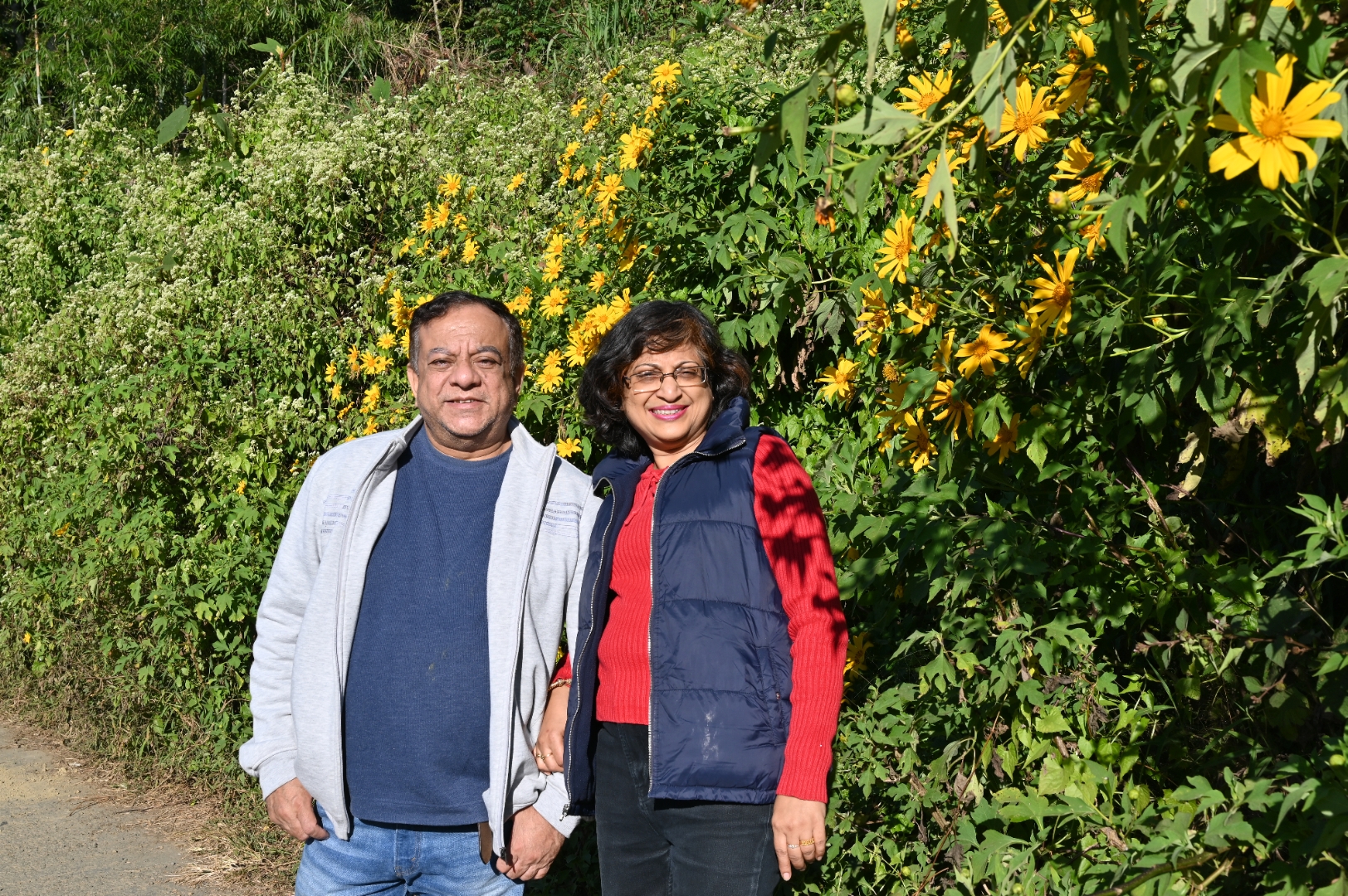
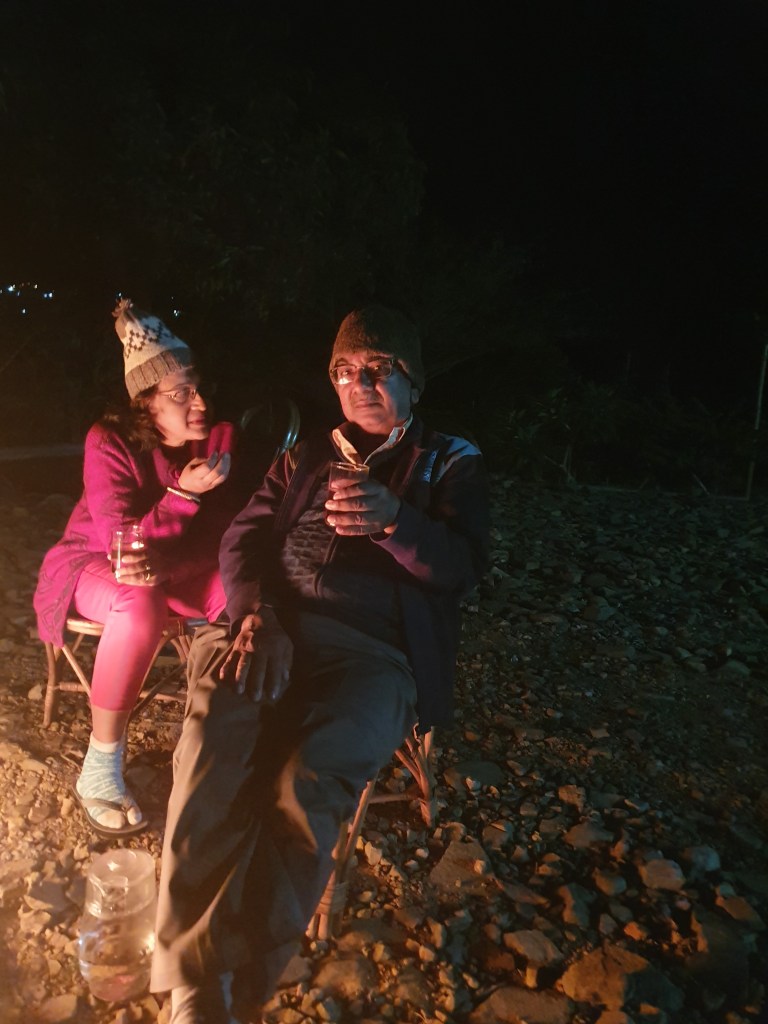
At LungwaInside our homestayLadies cooking up a storm Sushanta and Sarbani, our companionsAnd lastly,usBonfire
Next morning ,another six hour journey,this time to Dibrugarh,as another adventure comes to an end..
 Memories and musings