I first came across Konyak tea county,a home stay,on April 2019.I quite liked the information and the photos provided,and immediately started planning for a trip.However,the weekend requested by me was already booked seven months in advance. Ultimately I managed to book the next week,end November.Sushanta and Sarbani,with whom I had made couple of trips before,would be our companions.
Konyak’s are one of the sixteen Naga tribes.They are spread over a large area in eastern Nagaland in the Mon district and adjoining Myanmar.One can go both from Dibrugarh and Jorehat.We started from Jorehat.Because of my childhood in Assam,Everytime I visit the state,I feel very nostalgic.
It is a seven hour 220 km journey from Jorehat.The last 35 aims are absolutely roadless.Phejin,who runs the homestay had warned us not to take an innova and take a Scorpio.Now I knew why.The last one and half hours were spent travelling in absolute darkness through roadless roads.Sarbani was repeatedly asking me whether our destination really exists.The driver ,who regularly takes this route assured us that all is well.At last there was light,a few houses cropped up,we were through a gate into a stone driveway,and there was a largish house.We had arrived.
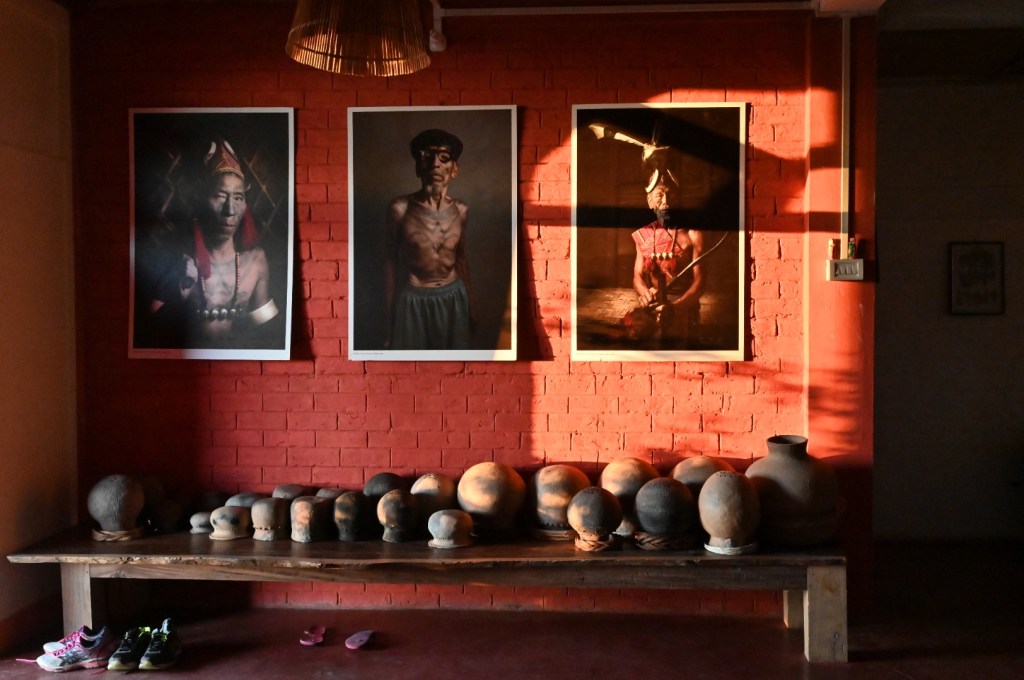
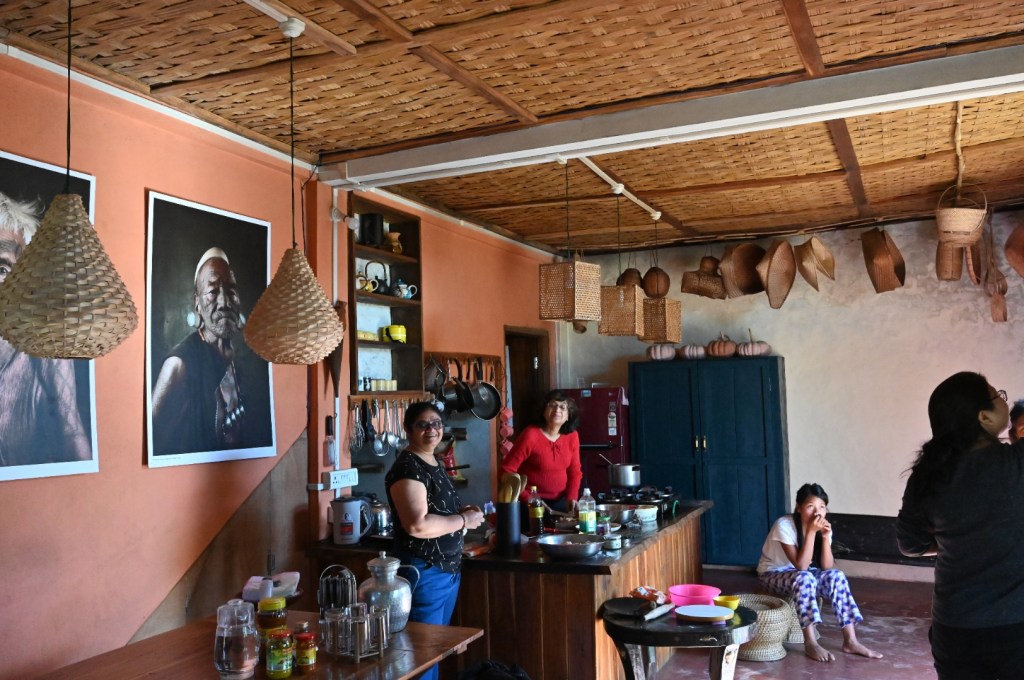
Phejin,our host met us and made us comfortable.The homestay is a 2 bedroom house where the owner stays.When tourists come,she vacates the house and moves to the staff quarters.We were given her bedroom to stay,Sushanta got the other bedroom. It is a nice and comfortable house with big bathrooms and a large lobby with a long wooden dining table.Above the dining table hangs large photos of Tattoed headhunters of Konyak.
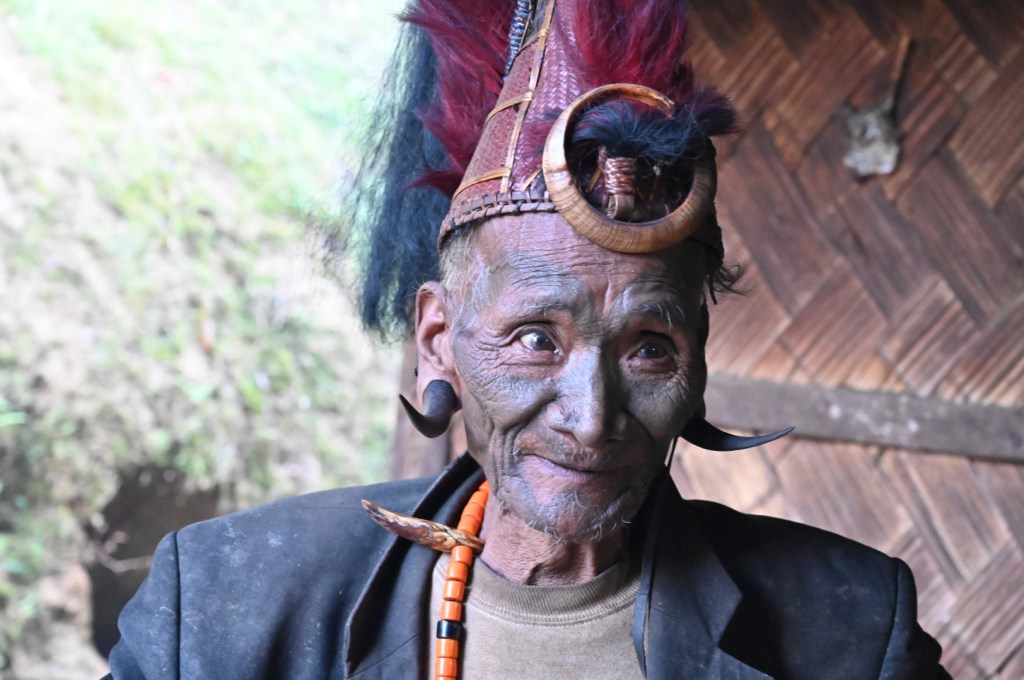
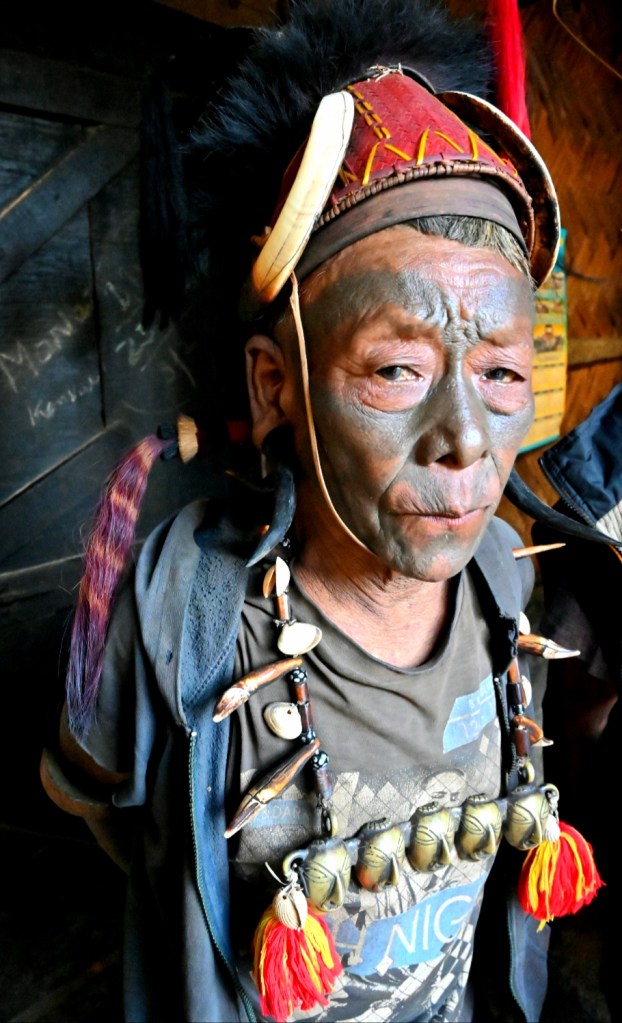
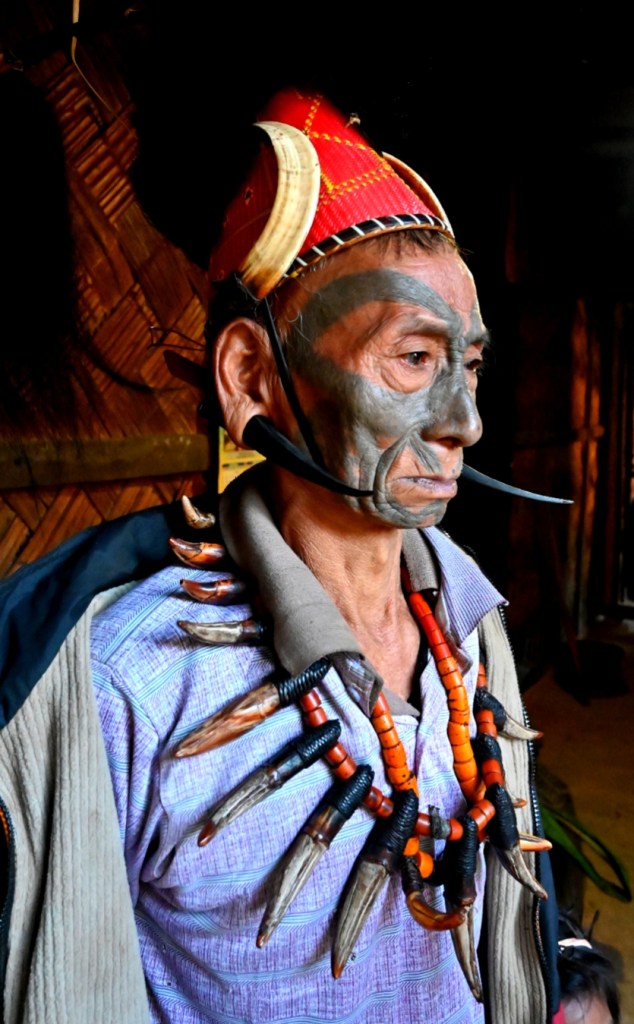
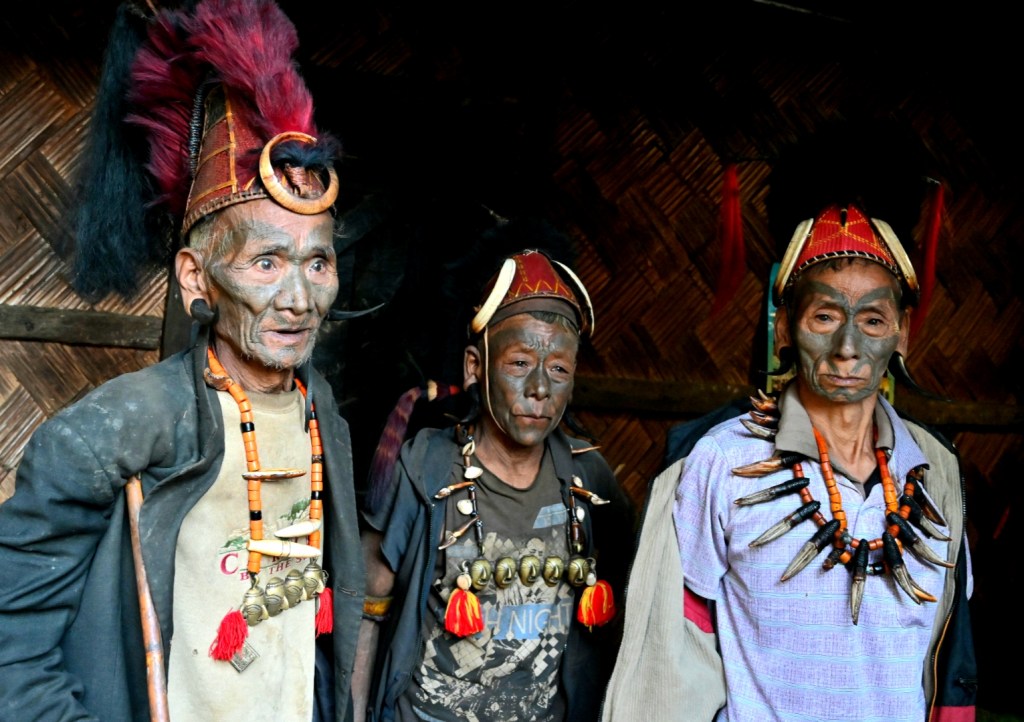
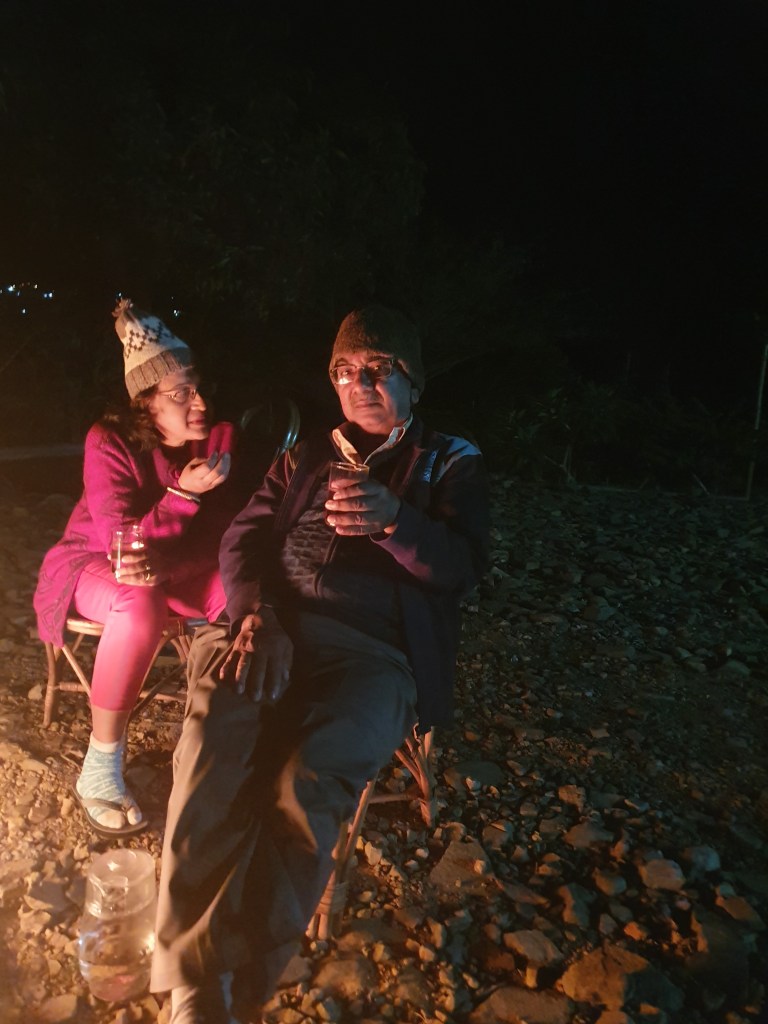
The main reason for going on this trip was to meet these tattoed headhunters of Konyak.The practice of headhunting has been banned by the government in 1967.These days around 60 such head hunters still exist,all in their eighties.After their demise the story of the headhunters will have no tellers.Phejin has helped in bringing out a coffee table book titled The headhunters of Konyak.It is available on Amazon.There was nothing much to do that night.It was pitch dark outside.Not a sound to disturb us.We had a couple of drinks.Dinner was Roti and chicken.Then we put our tired bodies to sleep.
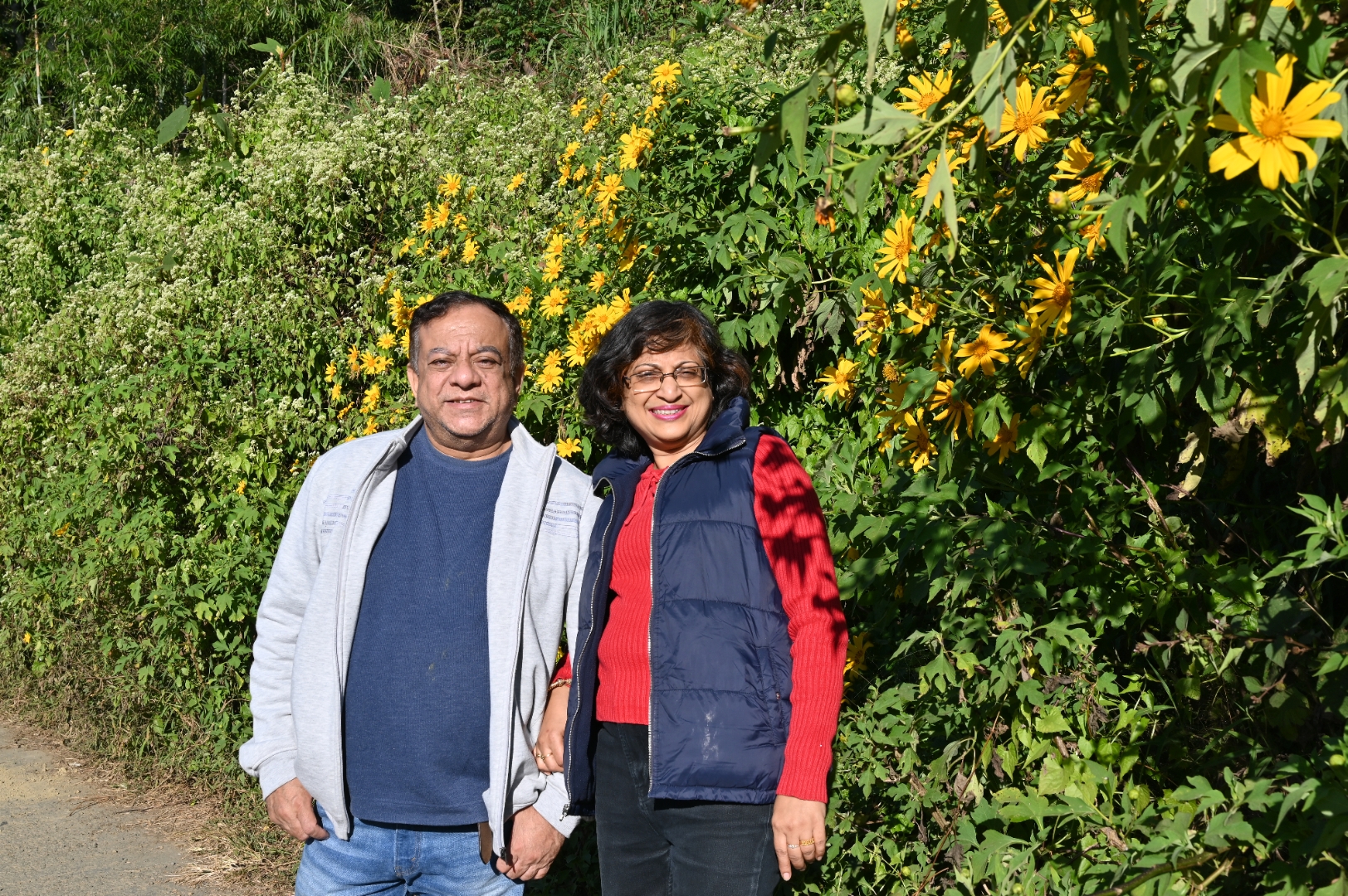
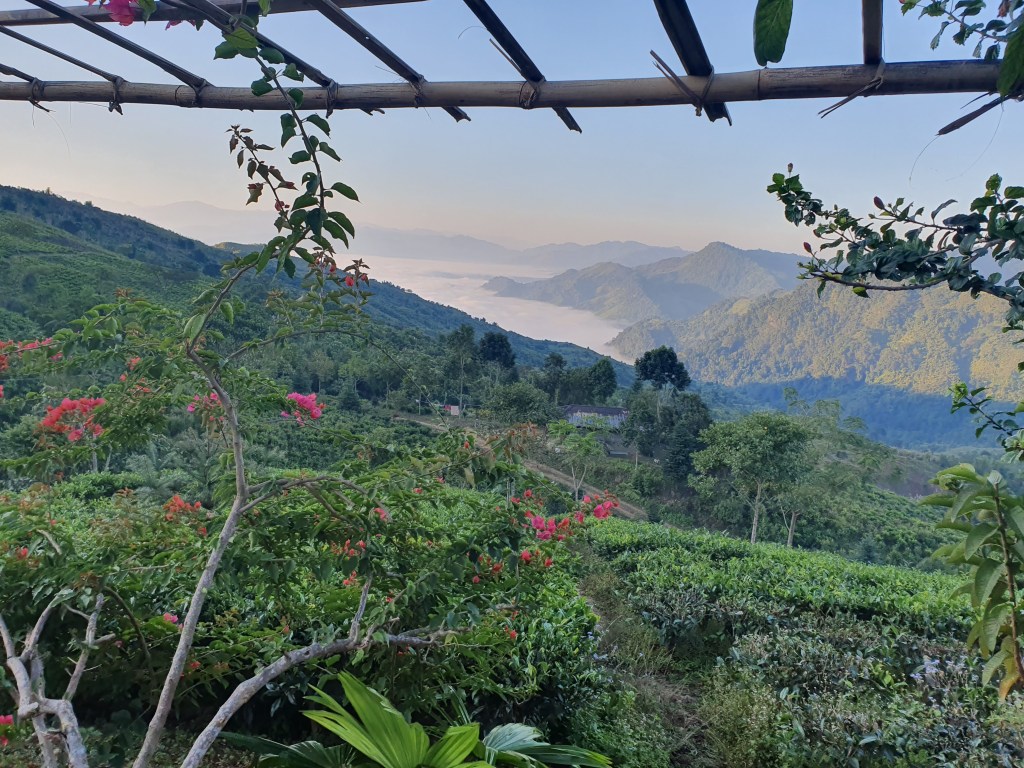
Because of its easternmost position, the sun gets up very early at Nagaland. So at 5 30 am we are sitting outside in front of a bamboo table, sipping local tea. We are at a height of 4000 ft and in front of us there’s a layer of cloud stretching to the infinity.It is eerily silent.We are on the top of a hill,and all around us are tea gardens whose produce we are sipping.
Phejins family are big landowners here.She herself studied in a premier institution in New Delhi and Ahmedabad before deciding to come back and settle here.That is one chapter of her life she is not willing to discuss.They have a 200 acre tea plantation,Orange orchard producing 5 lac oranges a year,Teak plantations, and have recently diversified into coffee and sunflower plantation.They also have 80 heads of cattle.Apparently there is no land ceiling act in Nagaland.
Despite all these properties,she came across as a very down to earth and hardworking person.She never had food with us,always sharing with her staff whatever was left,and shared their quarters,her bedroom being taken by us.Her mother came to work in the fields every day.Having being asked,she told me that unless she worked with them,she won’t be respected by them.There is no class distinction in Nagaland. After working hours everyone sits together and shares food and drink.
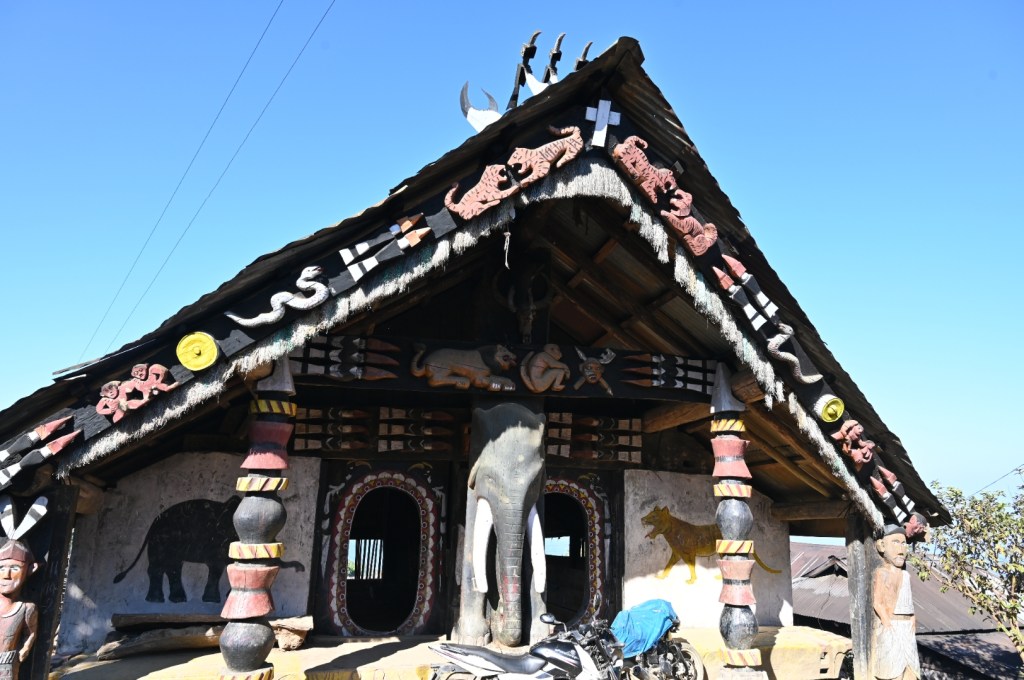
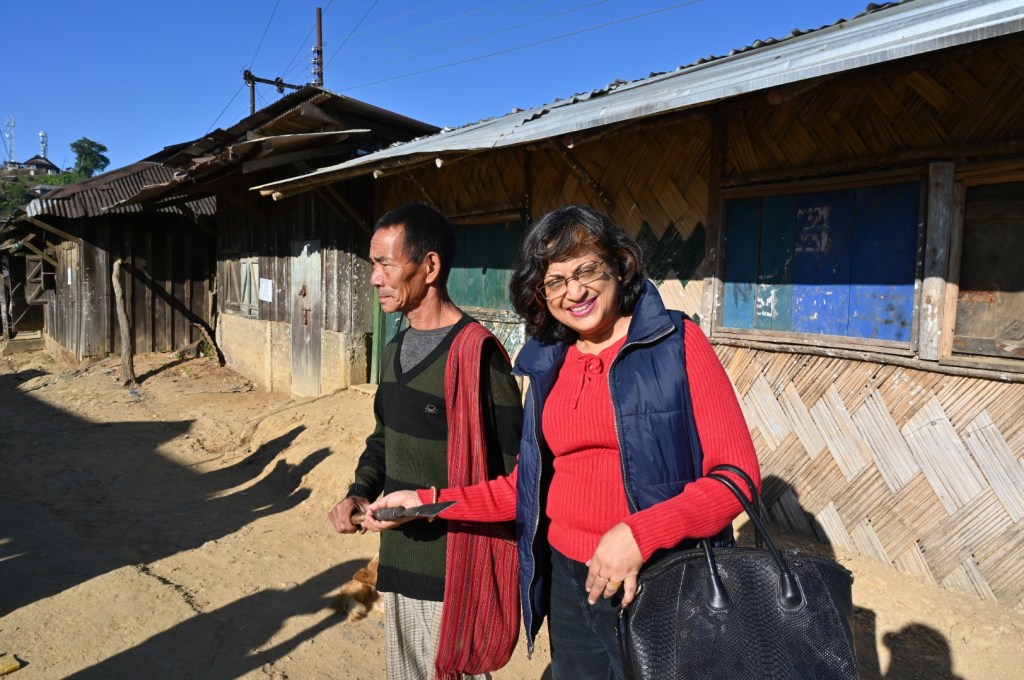
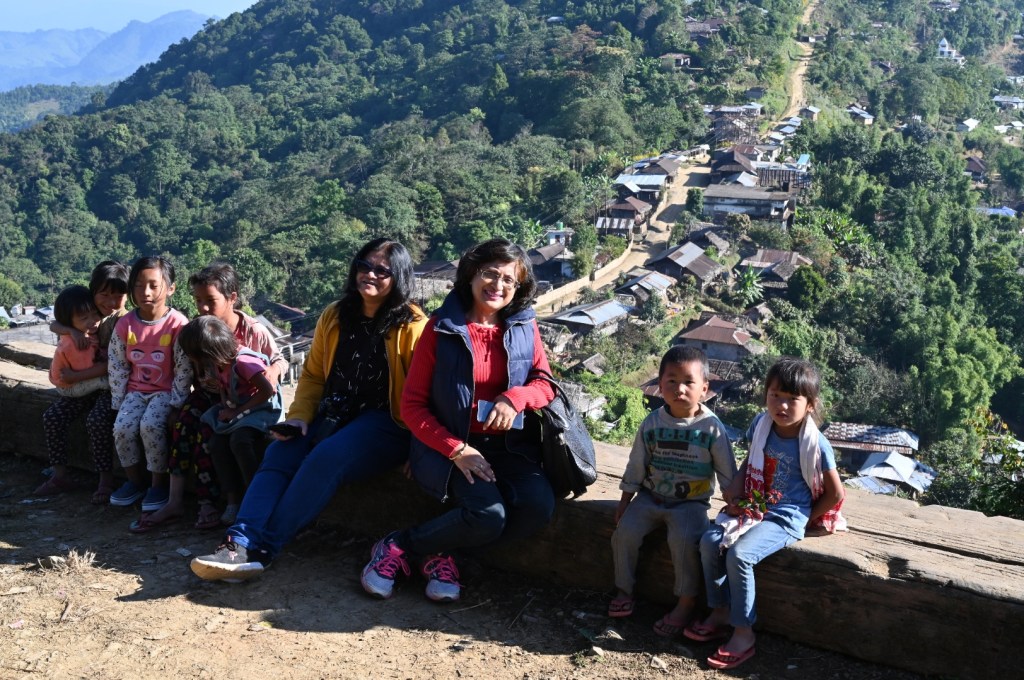
The ladies decide to have Luchi torkari for breakfast and there being no maida,we take our jeep to the village.Everybody knows Phejin.No wonder since half of the village work for their family.All able-bodied men carry a machete in their hands.The sky is brilliantly blue.
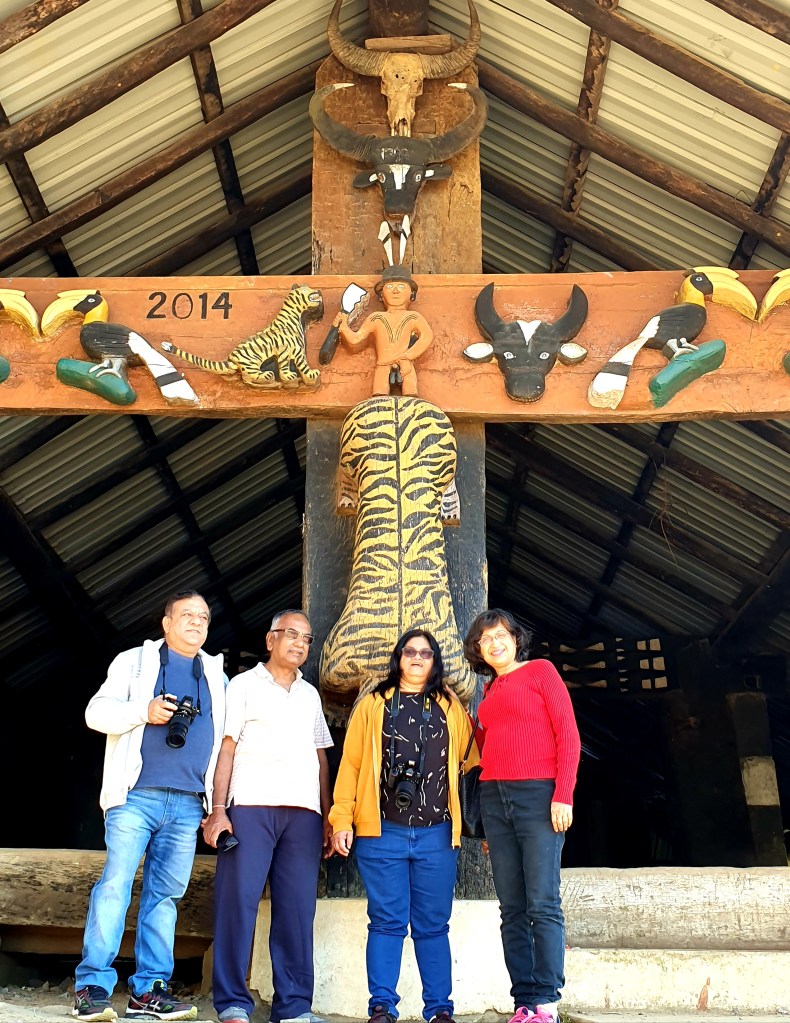
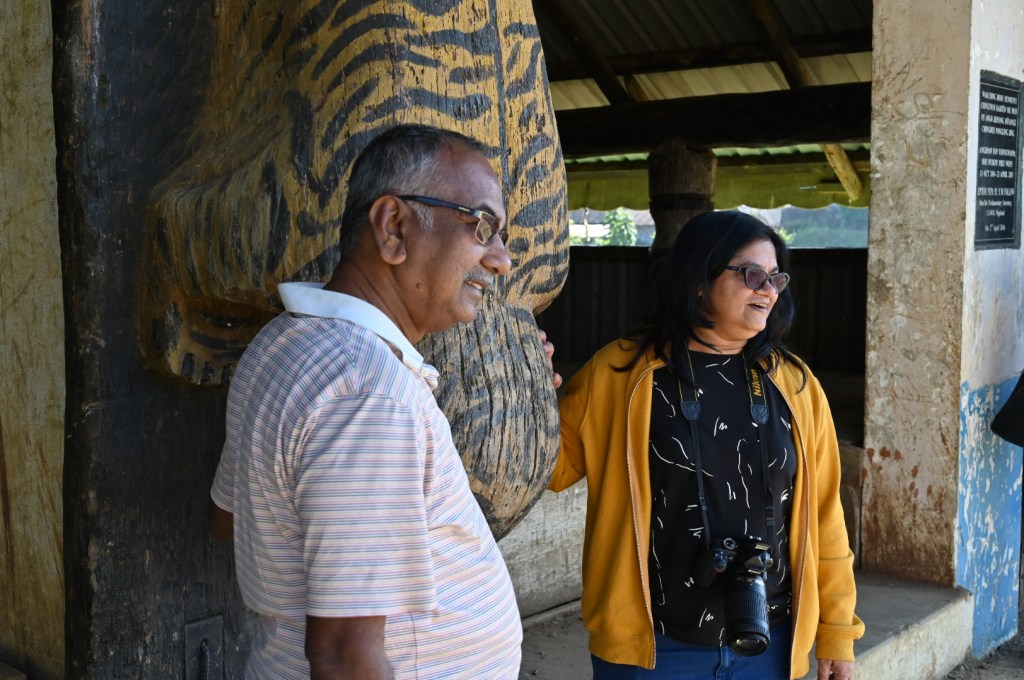
Children are going to school.Women are going to work. We come across large wooden halls decorated with colorful motifs.They are community centres where meetings were held,and important decisions were taken.The village has 6 such halls.Each of them have a hollowed out treetrunk which was used as a drum to call people.
Now a days it has been replaced by mobile and whats app.
We go round the village for quite some time, and then come back for breakfast. The dining table is laden with all kinds of fruit from their gardens.The papaya and oranges taste divine.
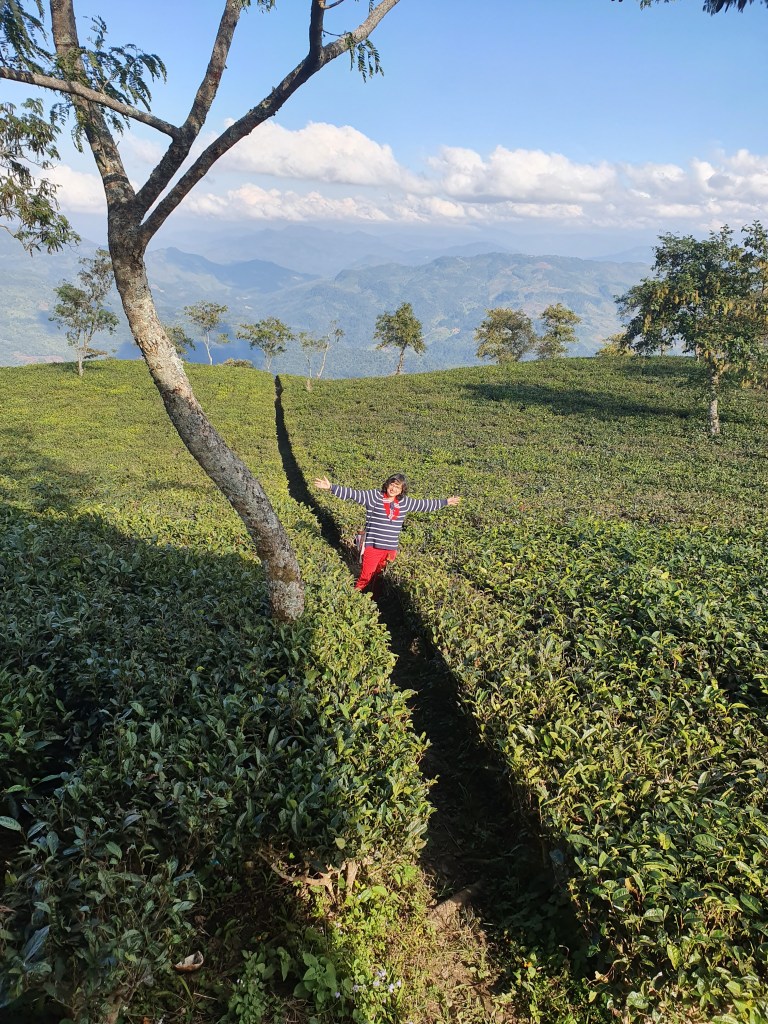
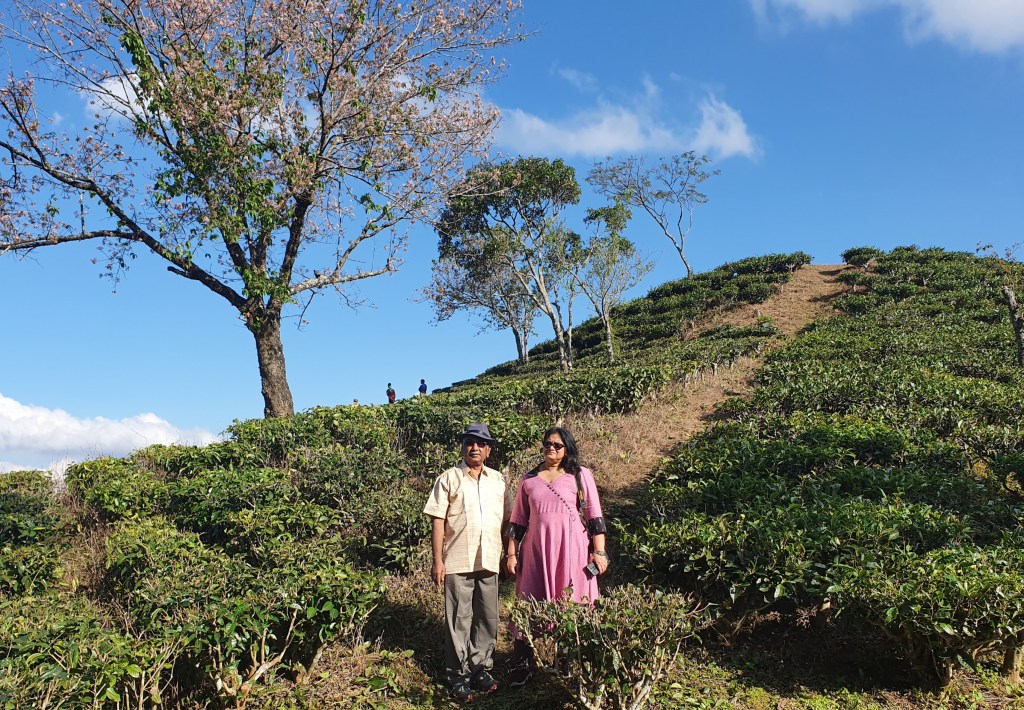
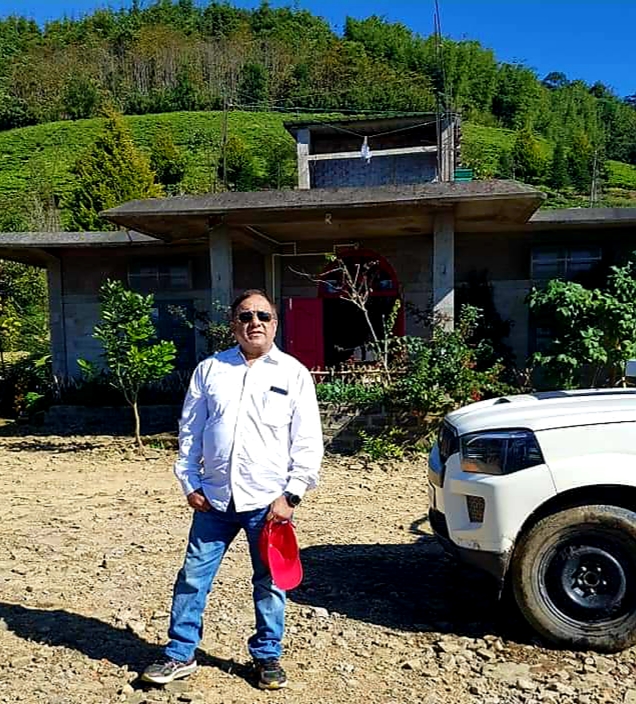
After breakfast we are taken to Phejin’s new plantation.She has started a coffee plantation,the first of its kind in Eastern India.Also there are sandalwood trees.More than 20000 saplings have been brought from Karnataka and they are growing quite well.
After lunch it is time to visit the orange orchard.First we go to Phejin’s fathers house.It is a large double storied house inside the village.Her duster in.law is vigorously cleaning a large sofa. The family pig sleeps languidly in the afternoon sun.Oranges are packed up in bamboo baskets.More oranges arrive in 4×4 jeeps. The ladies do a photoshoot in a tractor.The jeep carries us through rough kutccha roads to the bottom of a valley .We have come to the orchard. It is a large place with trees everywhere laden with ripe oranges.We are encouraged to eat as many as we can.Phejin’s parents are there supervising the harvest.His father proudly shows us his land.It stretches to the horizon. Across the valley are hills,and Myanmar beyond them.Her mother is sitting by an open fire. There is pork roasting above the fire.Workers sit by the fire.Empty liquor bottles line the corner.Alcohol is officially prohibited in Nagaland
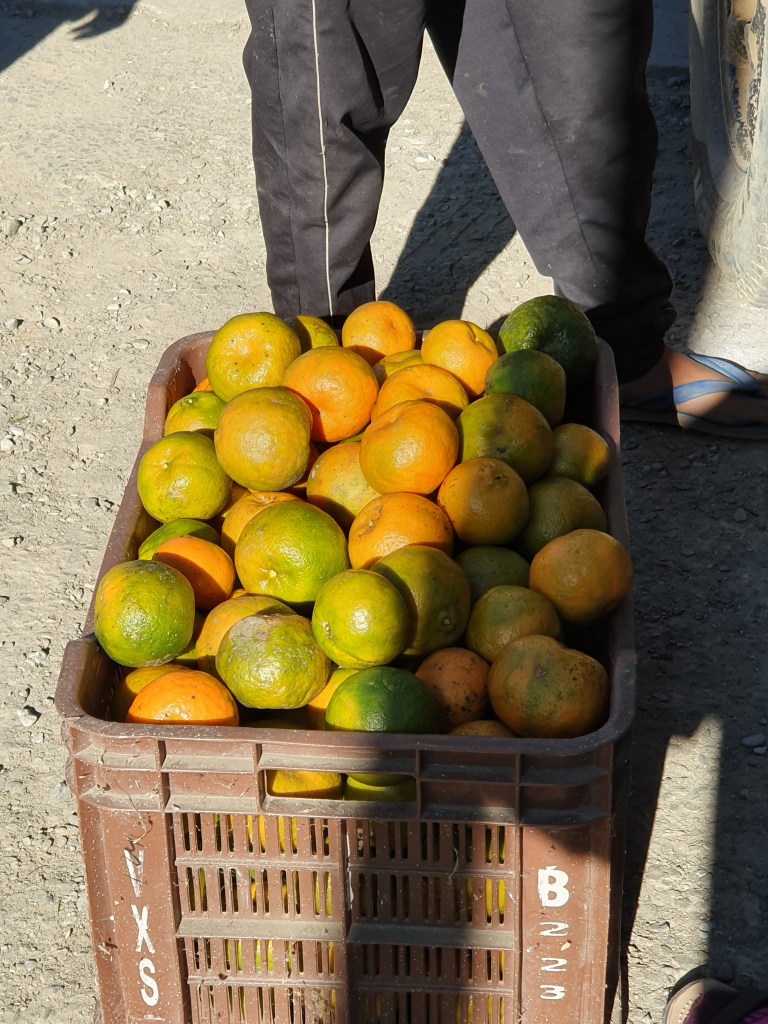
The next morning we are off to Lungwa to meet the Tattoed headhunters.Lungwa is a village in the Indo Myanmarese border. We start early.First stop is Mon,the district headquarters, where we have breakfast at a hotel run by Phejin’s cousins.There are lots of Foreigners at the hotel,workers move happily with dollar tips.
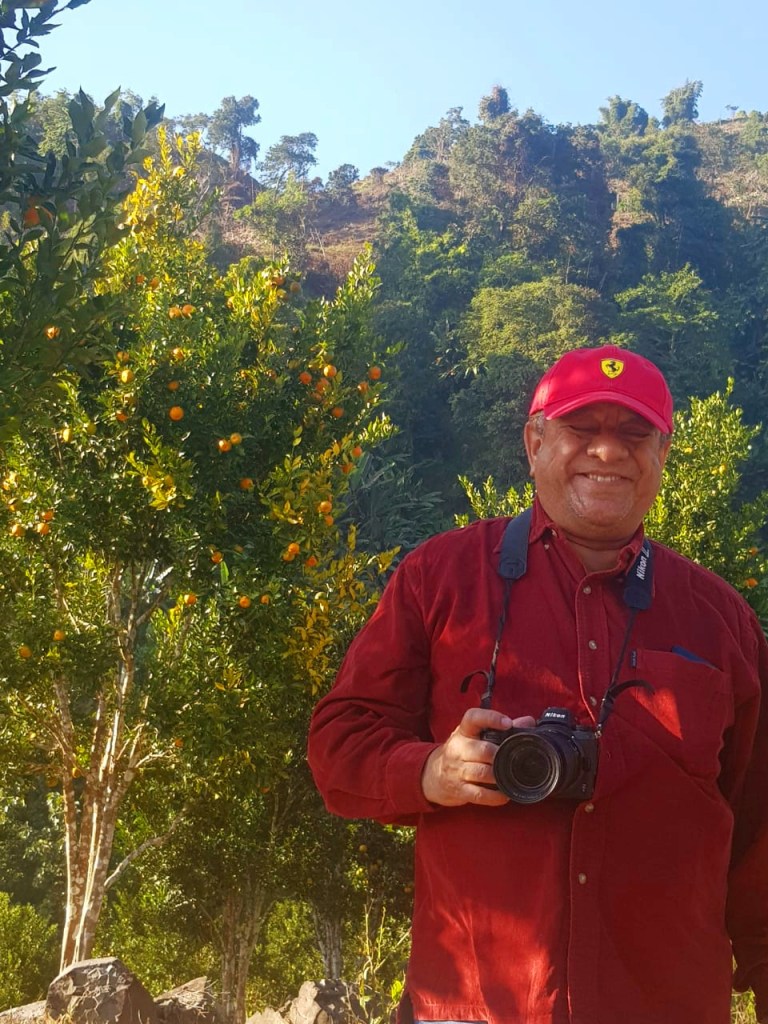
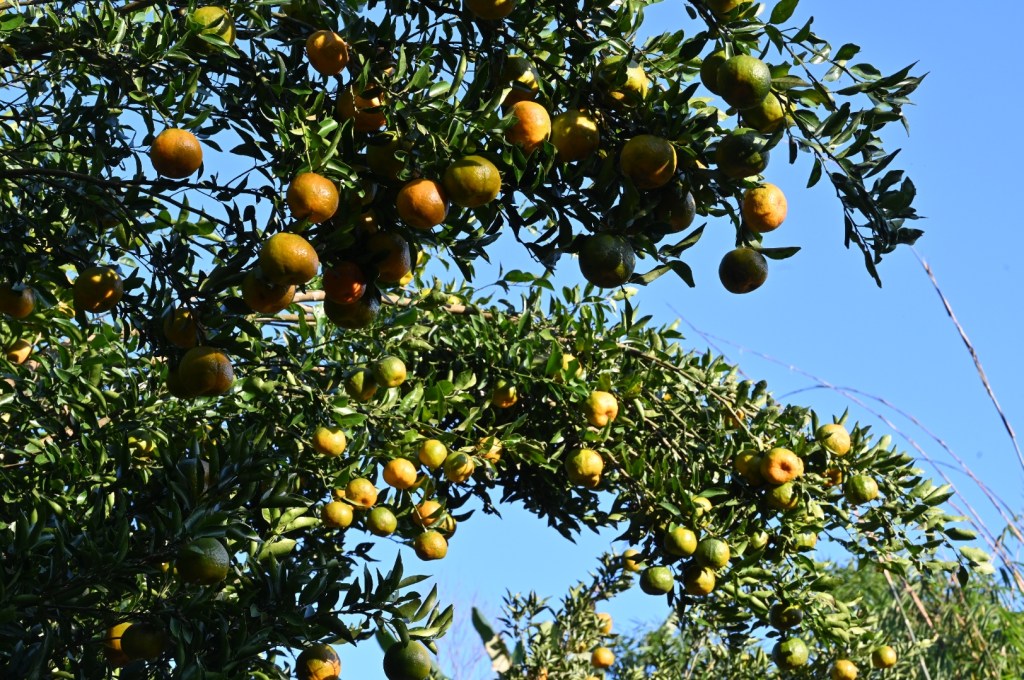
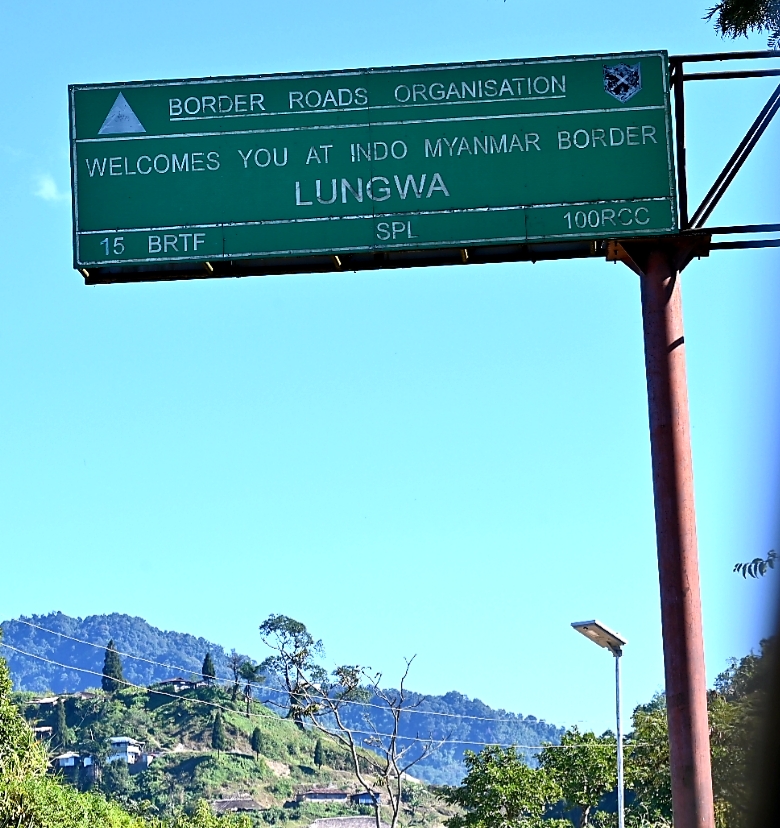
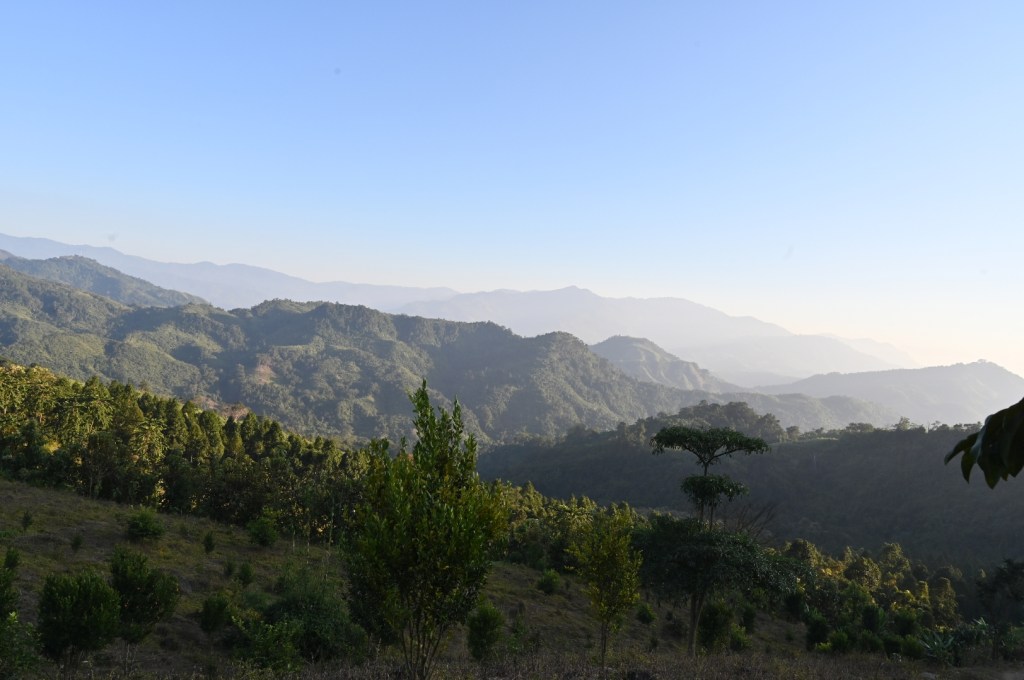
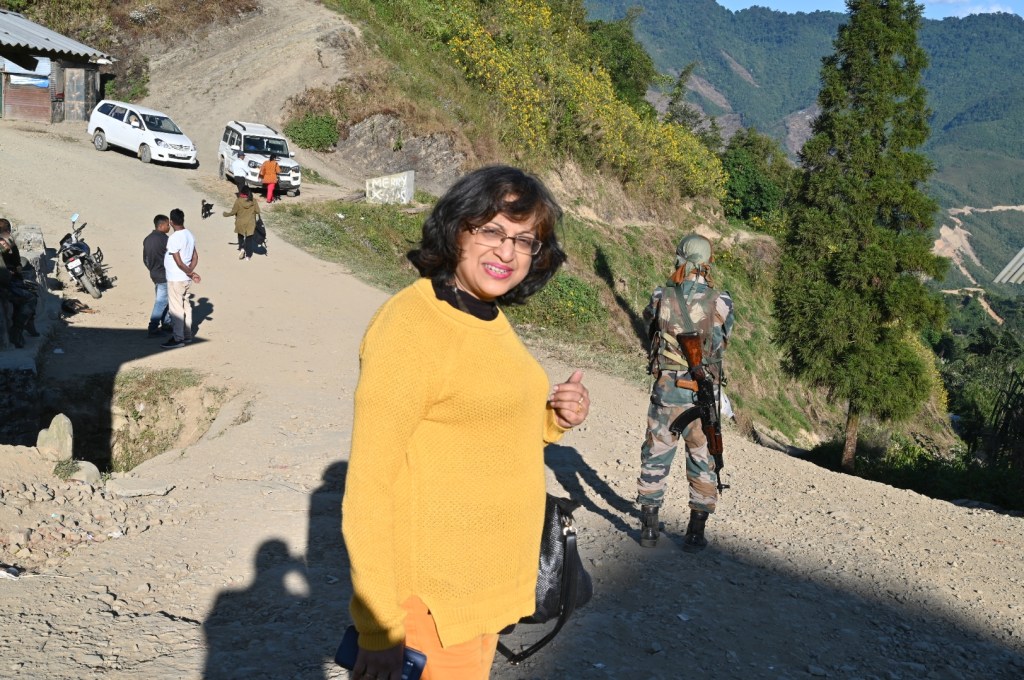
In Lungwa there is no hard international border between India and Myanmar. Local people have the right to freely go across the border and study in Myanmarese schools and colleges. Job opportunities are better on the Myannsrese side.Due to couple of recent incidents by tourists,there is an army presence there.Your papers are checked.But you can go to the other side with their permission.
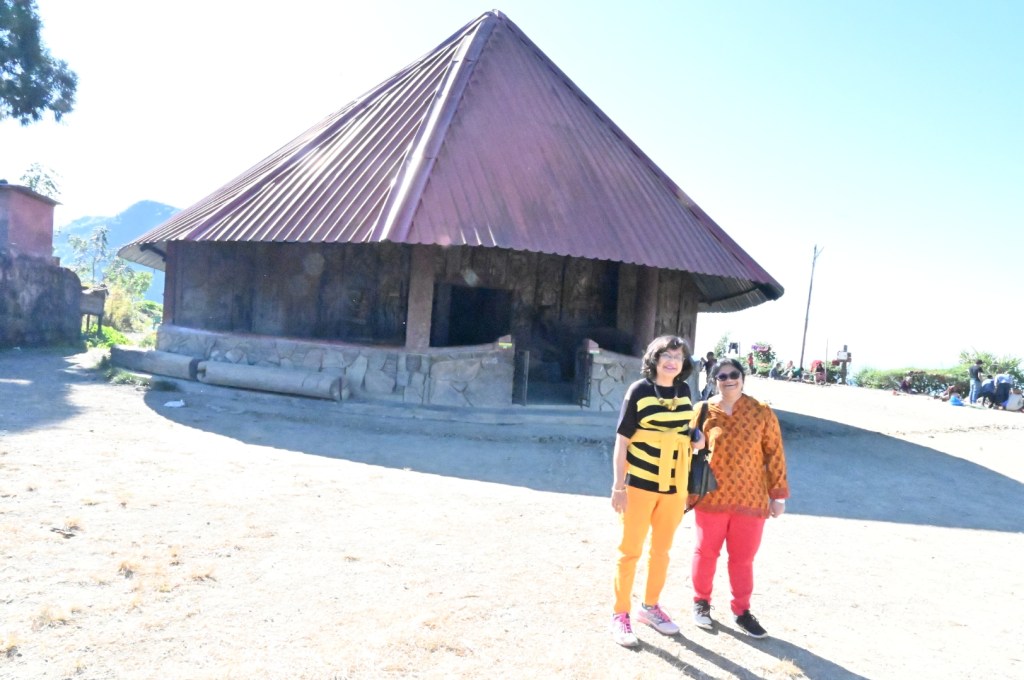
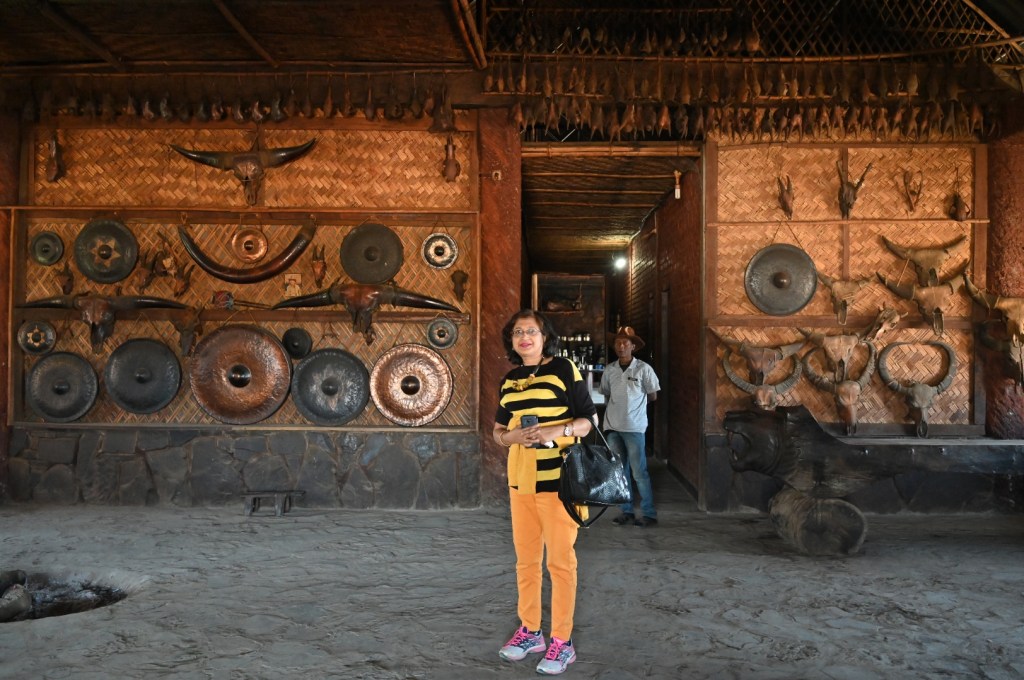
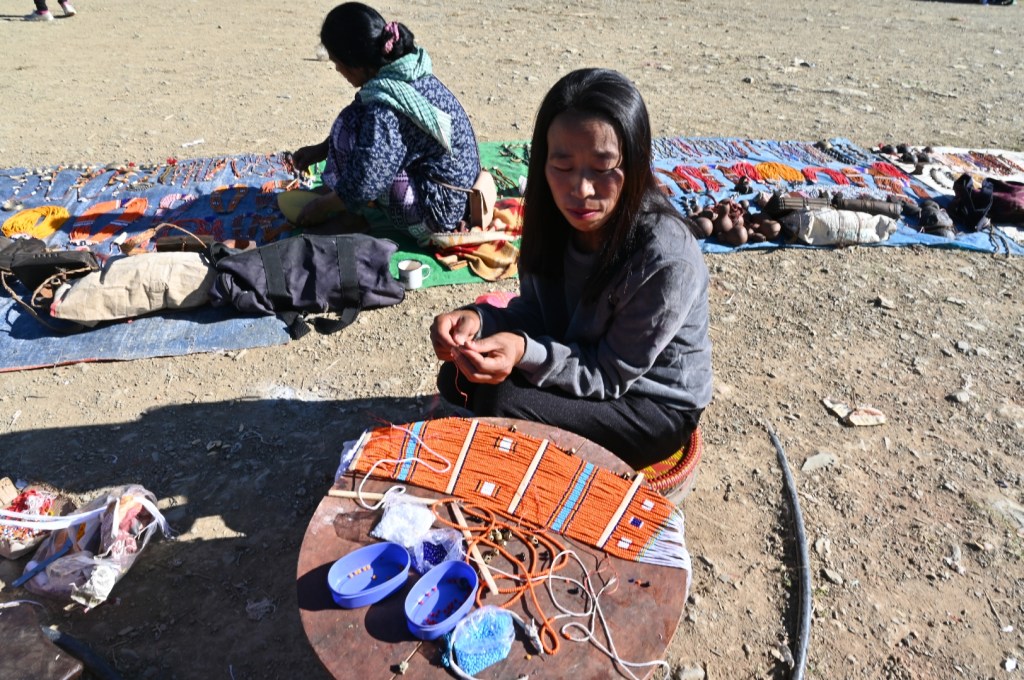
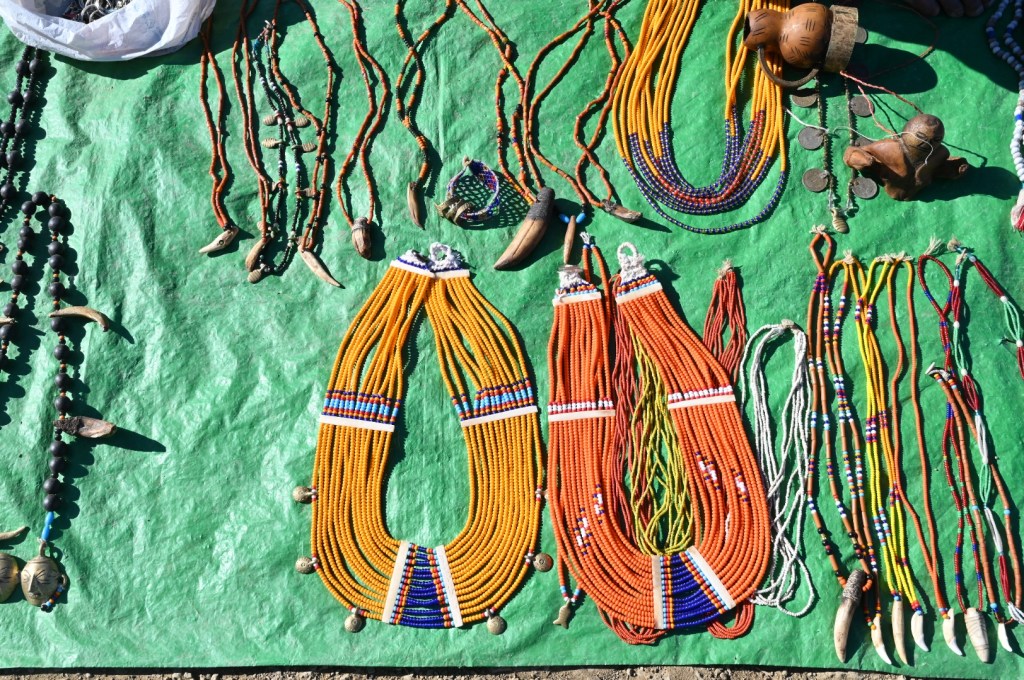
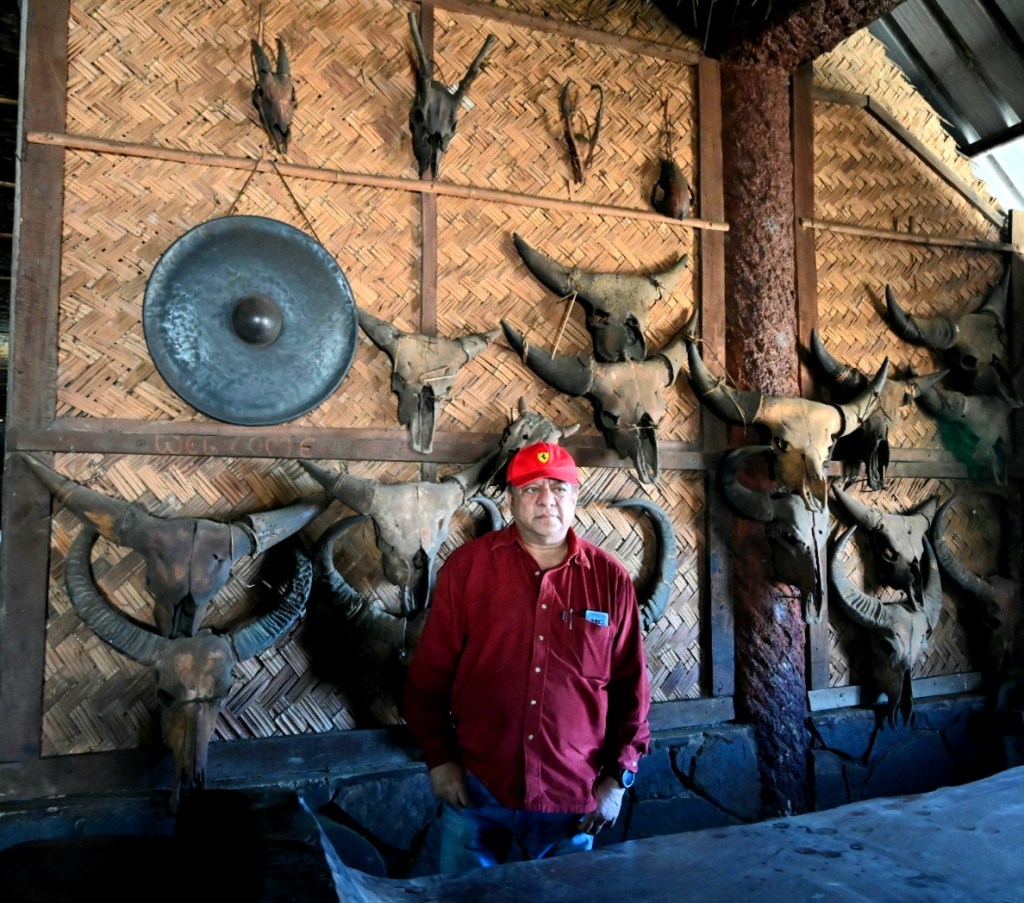
The king ‘s house at Lungwa straddles both countries. The border goes through the center of the house.Once upon a time ,he had 51 wives,but these days he must be feeling the pinch.It is a tourist attraction now,perched on top of a hill.On the Myanmarese side ,one can see a road being built.I aim told that the konyak tribesmen also have a sizable population on the myanmarese side.
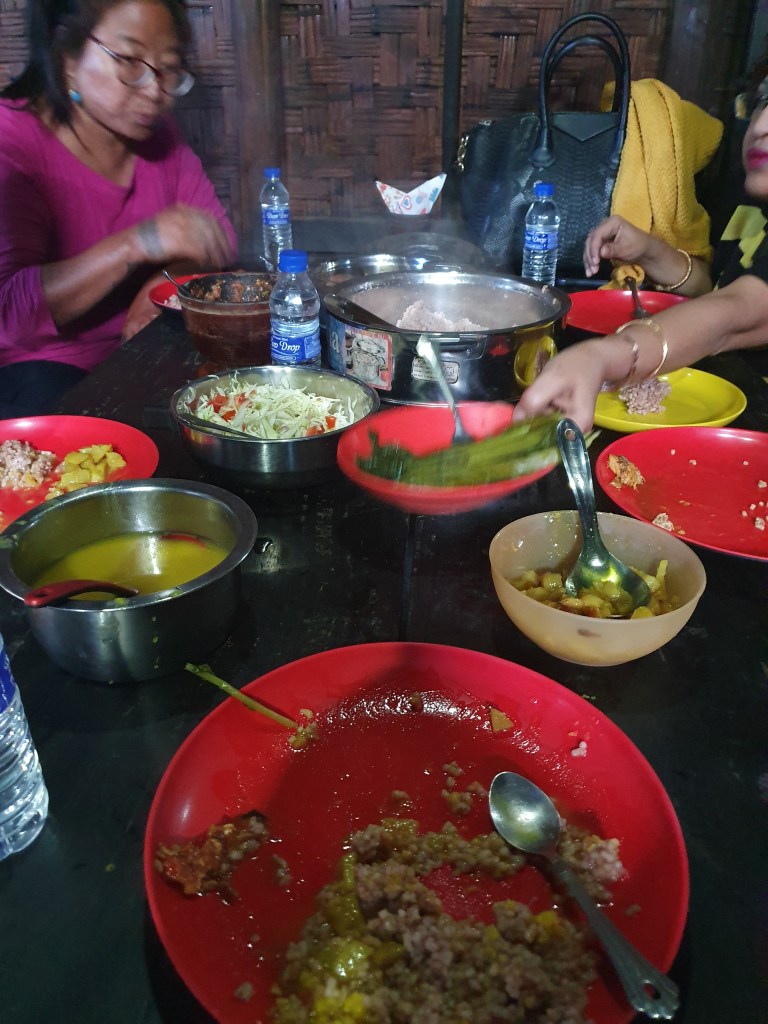
Next we break for lunch,to be had at a hotel where we are supposed to meet the headhunters.They are late.Word is sent out and we have lunch.It is a basic affair with rice and chicken,very tasty.
Then the excitement,the old headhunters have arrived.There are three of them.They look frail and must have been above 75 yes of age.Wearing their ceremonial dresses which have seen better days, they meet us.One of them has a child with him.We are told that they still work in the fields.Interacting with tourists and photo sessions are a major source of income for them. One hour passes in a blink.It is time to wonder as to the end of this chapter in our social history.
Time to go back.We are silent now, another trip coming to an end.Stopping at Mon,we pick up some alcohol before reaching our homestay.An early start tomorrow on the way back.
Next morning ,another six hour journey,this time to Dibrugarh,as another adventure comes to an end..
 Memories and musings
It is an extensive & beautiful narrative. But the proof-reader wasn’t very keen. You have captioned some of the photos but left out some. Moreover if had pointed out the brass medallions adorning the head-hunters necks as denoting the number of heads that hunter had chopped off, it would have been more interesting.
LikeLike